
Education Supplement Report – Nordic Business Journal
By Our Research & Insights Team
As global competition in higher education intensifies, Nordic universities continue to solidify their reputations as world-class institutions, combining academic rigor, research innovation, and strong public investment. Among them, Karolinska Institutet (KI) stands out as Sweden’s highest-ranked university and a leader in life sciences, reinforcing the region’s commitment to excellence in education and research.
Karolinska Institutet Tops Swedish Rankings
In the 2025 Academic Ranking of World Universities (ARWU)—commonly known as the Shanghai Ranking—Karolinska Institutet is ranked 50th globally, making it the top university in Sweden. This prestigious placement underscores KI’s leadership in medical and life sciences research, where it consistently ranks among the global top 10 in subject-specific evaluations.
The institution also performs strongly across other major ranking systems:
- Times Higher Education (THE) World University Rankings 2025: 49th globally
- QS World University Rankings 2025: Within the top 20 for Medicine and Life Sciences
With a mission cantered on advancing human health through research and education, Karolinska Institutet plays a pivotal role not only in Sweden’s academic landscape but also in shaping global medical science. Its annual awarding of the Nobel Prize in Physiology or Medicine further amplifies its international influence and prestige.
Sweden’s Strong Academic Presence
Beyond Karolinska Institutet, Sweden maintains a robust presence in global rankings with several institutions in the ARWU top 100–200:
- Uppsala University: 88th (ARWU), 130th (THE)
- Stockholm University: 100th (ARWU)
- KTH Royal Institute of Technology, Lund University, and Chalmers University of Technology all feature within the top 200 globally in at least one major ranking.
These institutions contribute significantly to Sweden’s innovation ecosystem, particularly in engineering, environmental sciences, and digital technologies—key sectors for Nordic economic competitiveness.
Nordic Universities: A Regional Overview
The broader Nordic region continues to boast some of Europe’s most respected universities, benefiting from strong public funding, international collaboration, and English-taught programs that attract global talent.
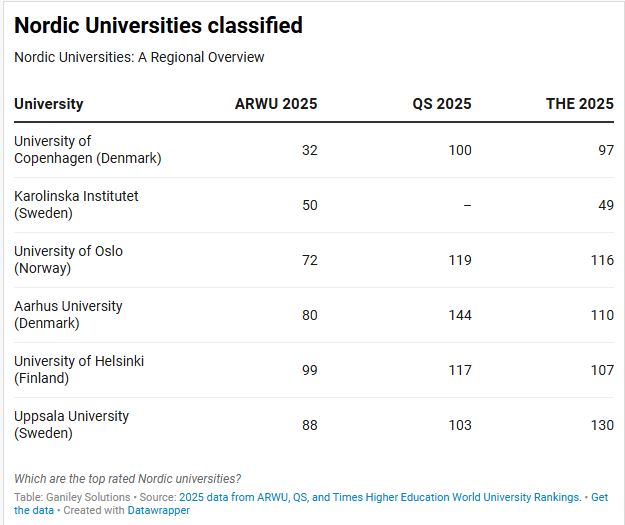
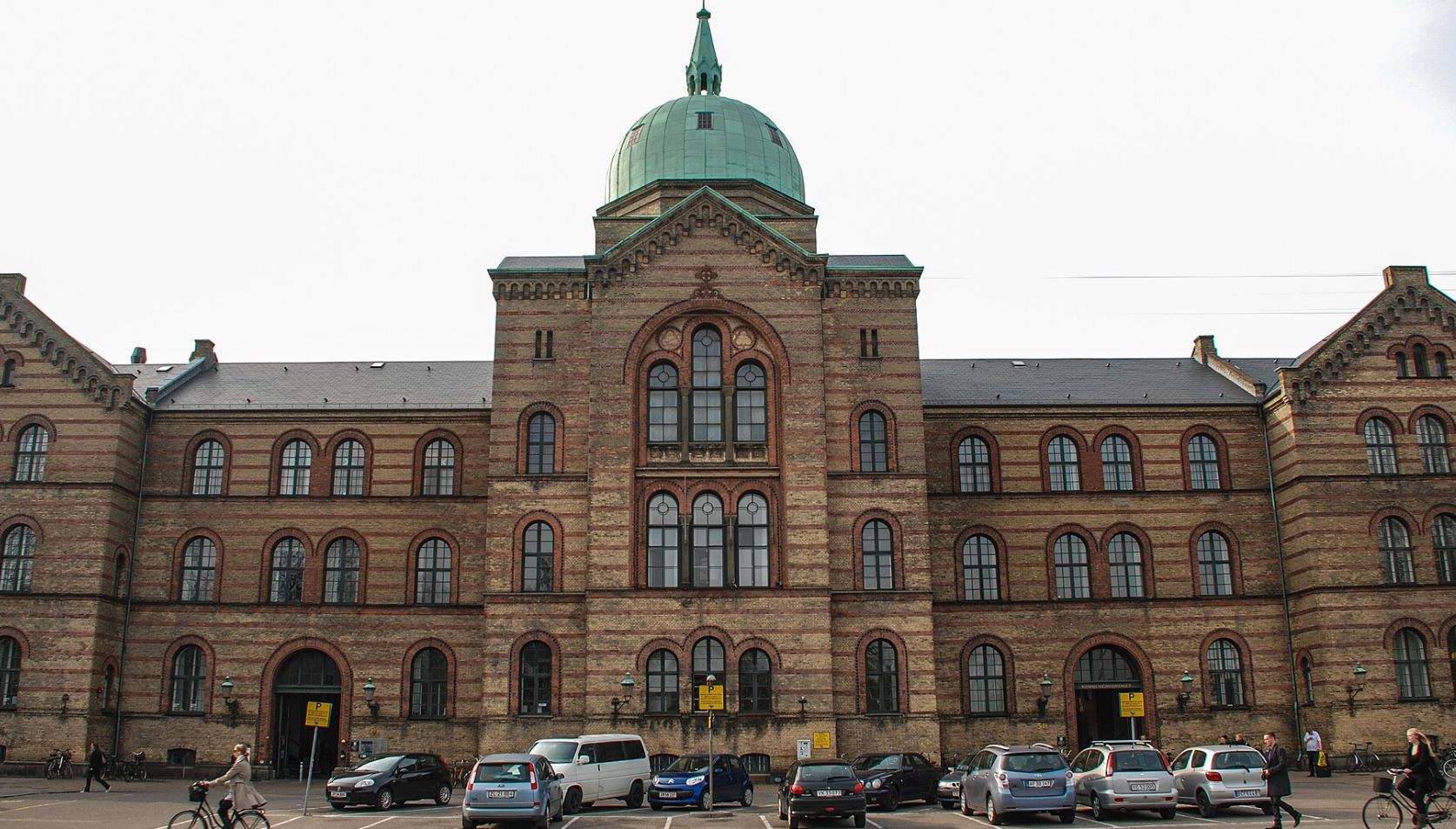
The University of Copenhagen remains the highest-ranked Nordic institution overall, placing 32nd in the ARWU—a testament to Denmark’s investment in interdisciplinary research and sustainability science. Meanwhile, Finland’s University of Helsinki and Norway’s University of Oslo demonstrate consistent performance across multiple ranking criteria, including research impact and international outlook.
Strengths of the Nordic Model
What sets Nordic universities apart is not just their academic output but their integration into broader societal goals:
- Publicly funded education ensures accessibility and equity.
- Strong emphasis on research integrity and open science.
- High levels of international collaboration, particularly within the EU’s Horizon Europe program.
- Focus on sustainability and digital transformation, aligning academic priorities with industry and policy needs.
These values are increasingly attractive to international students, researchers, and corporate partners seeking innovation with purpose.
Implications for Business and Innovation
The strength of Nordic higher education directly supports regional economic development. Universities like Karolinska Institutet and KTH are embedded in thriving innovation clusters—from Medicon Valley (Copenhagen-Malmö) to Stockholm’s tech hub—driving spin-offs, startups, and industry partnerships.
For Nordic businesses, this means access to:
- A highly skilled talent pool
- Cutting-edge R&D infrastructure
- Collaborative opportunities in health tech, green energy, AI, and biotechnology
Investing in university-industry collaboration is no longer optional—it’s a strategic imperative for maintaining global competitiveness.
Conclusion: A Benchmark of Excellence
As the 2025 rankings confirm, the Nordic region remains a powerhouse in global higher education. With Karolinska Institutet leading Swedish institutions and the University of Copenhagen at the regional pinnacle, these universities exemplify how public investment in knowledge can yield world-class results.
For policymakers, educators, and business leaders alike, the message is clear: the future of Nordic prosperity is deeply intertwined with the success of its universities. By continuing to support academic freedom, innovation, and international engagement, the Nordics can sustain their position at the forefront of global education—and, by extension, global progress.
This education supplement was prepared by the Nordic Business Journal based on 2025 data from ARWU, QS, and Times Higher Education World University Rankings.