
Sweden is taking a decisive step in its clean energy transition, as Svenska Kraftnät, the state-owned national grid operator, unveils plans to build the country’s first large-scale hydrogen pipelines. Occupying a pivotal role in Sweden’s strategy to decarbonize heavy industry, the two proposed pipelines would create a reliable backbone for transporting green hydrogen across northern Sweden—where much of Europe’s industrial transformation is already underway.
If realized within the next decade, the projects would not only mark a breakthrough for Swedish energy infrastructure but also position Sweden alongside the European frontrunners in the emerging hydrogen economy.
A Vision Anchored in the North
The proposals outline two hydrogen pipelines; both located in northern Sweden:
- Skellefteå–Luleå Pipeline: A 130-kilometer artery connecting the coastal town of Skellefteå, known for its expanding green technology base—including Northvolt’s giant lithium-ion battery factory—with the industrial stronghold of Luleå. Luleå’s steel industry, historically carbon-intensive, has already begun shifting to hydrogen-powered methods.
- Porjus–Gällivare Pipeline: A shorter but strategically significant link tying Porjus, home to hydropower resources, with Gällivare, where Sweden’s extensive mining operations are increasingly committed to carbon-neutral production.
Together, these routes speak to Sweden’s attempt to knit its industrial centers into a hydrogen ecosystem, supplying steady volumes of green hydrogen that can replace fossil fuels across steelmaking, mining, and energy-intensive manufacturing.
Why Hydrogen?
Hydrogen is widely seen as a critical technology for industries that cannot easily decarbonize through electrification alone. When produced via electrolysis powered by renewable electricity—a process increasingly viable in Sweden thanks to its abundant hydropower and growing wind capacity—green hydrogen emits no CO₂.
For Sweden, the prize is especially striking:
- The country’s steel industry alone generates around 10% of national CO₂ emissions.
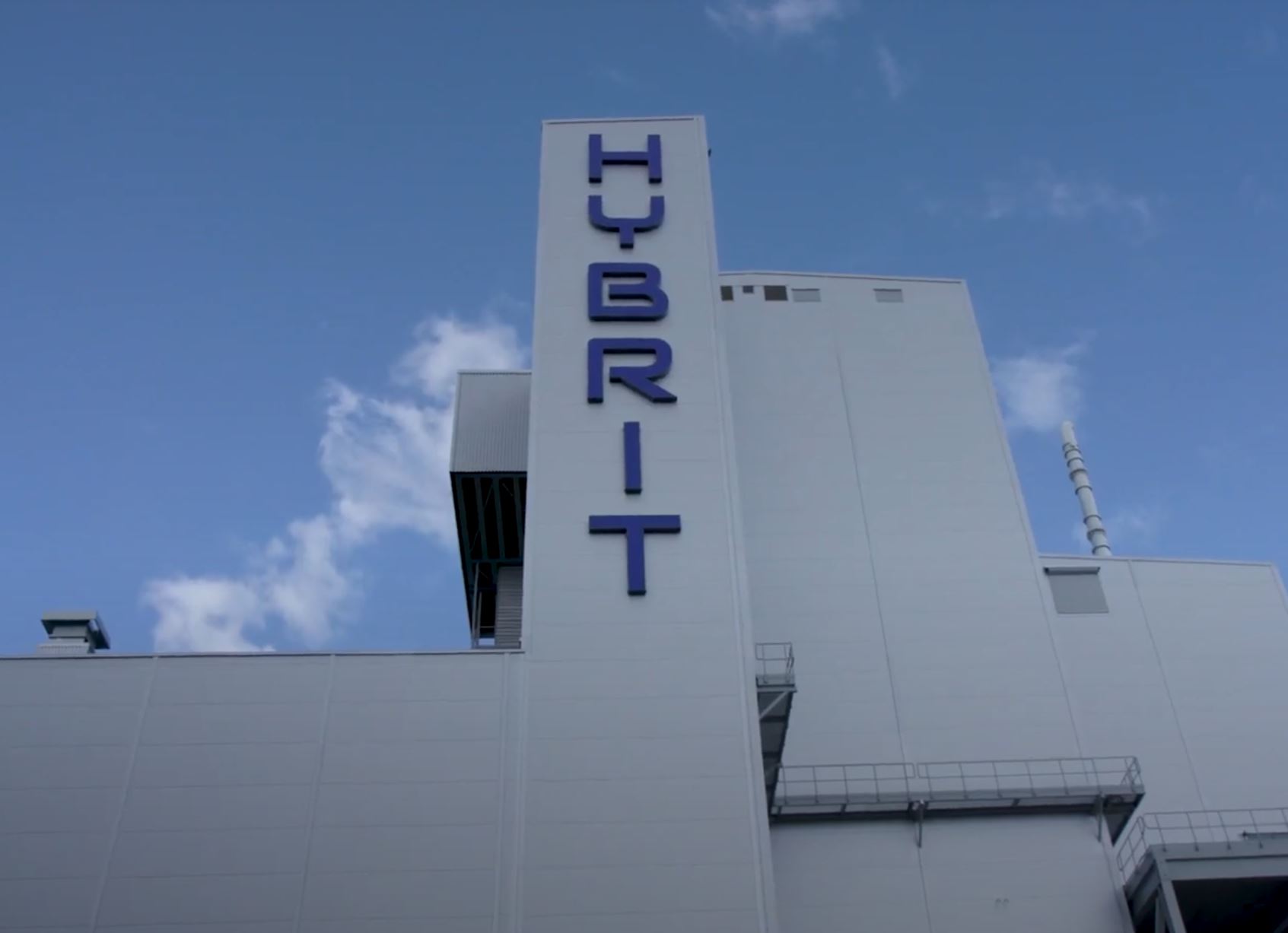
- The northern regions are transitioning through projects like HYBRIT (a collaboration between SSAB, LKAB, and Vattenfall), which aims to develop fossil-free steel using hydrogen instead of coal.
- Swedish mining companies, facing global demand for sustainably produced raw materials, are early movers in the hydrogen race.
By constructing pipelines, Sweden lays the foundation for scaling hydrogen use beyond pilot projects to full industrial operations. Without such infrastructure, hydrogen adoption risks being bottlenecked by transport costs and technical limitations.
The European Hydrogen Push
Sweden’s move fits into a much broader continental shift. The European Union’s Hydrogen Strategy calls for installing at least 40 GW of renewable hydrogen electrolysers by 2030, with an additional 40 GW potentially supplied from outside the bloc.
Infrastructure is a key part of this plan. The European Hydrogen Backbone (EHB) initiative, a coalition of multiple gas and energy infrastructure operators, envisions a 40,000 km hydrogen pipeline network across Europe by 2040. In countries like Germany, the Netherlands, and Spain, hydrogen pipeline projects are already advancing to complement renewable energy growth and replace natural gas imports.
Sweden’s proposal, though modest compared to these larger markets, represents an essential contribution to linking the Nordic countries into Europe’s hydrogen infrastructure. In fact, northern Sweden’s combination of strong renewable energy production and heavy industry makes it a natural candidate for becoming a hydrogen export hub in the future.
How Sweden Stacks Up Internationally
Globally, Sweden is not alone in laying tracks for the hydrogen age.
- Germany is moving aggressively to repurpose existing gas pipelines for hydrogen, aiming to have 1,800 km of hydrogen-ready pipelines operational by 2028.
- The Netherlands is building a national hydrogen backbone with the first segments expected as early as 2026.
- Spain and Portugal are planning the H2Med corridor, designed to supply central Europe with green hydrogen produced from Iberia’s abundant solar energy resources.
- Outside Europe, Japan and South Korea are pursuing hydrogen not just for industry but also for transport and power generation, albeit currently relying heavily on imported hydrogen.
Compared to these efforts, Sweden’s advantage lies in being able to produce green hydrogen entirely from domestic renewables—giving it more energy sovereignty and ensuring its hydrogen can be marketed as fully sustainable in global markets where carbon footprints are increasingly scrutinized.
Challenges Ahead
While the vision is clear, realization remains a challenge. Hydrogen pipelines are technically feasible but differ in material requirements, engineering, and safety measures compared to natural gas pipelines. They also demand substantial upfront investment, which can only be justified if industries commit to long-term hydrogen offtake contracts.
Moreover, regulatory frameworks are still catching up. In Sweden, as in much of Europe, questions remain over who should own and operate hydrogen pipelines—state grid operators, private companies, or consortia. Equally pressing are cost allocation debates: should early hydrogen users bear the financial burden, or should pipelines be treated as public infrastructure to accelerate decarbonization?
A Defining Decade for Sweden’s Green Industry
Despite hurdles, the timing could not be more urgent. With major projects like HYBRIT and H2 Green Steel in Boden already heralded as global showcases, access to hydrogen at scale is quickly becoming a critical factor in Sweden’s industrial competitiveness.
If pipelines are in place by the early 2030s, Sweden will be well-positioned not only to meet domestic decarbonization goals but also to export high-value, low-carbon materials to global markets hungry for sustainable supply chains.
In that sense, the two modestly sized pipelines announced by Svenska Kraftnät are not just energy projects—they are cornerstones of Sweden’s industrial future.
Conclusion
Sweden’s plans for its first hydrogen pipelines signal a historic turning point. They reflect both the urgency of industrial decarbonization and the extraordinary opportunity available to countries that can integrate hydrogen into their economies at scale.
By tapping its abundant renewable energy and ambitious industries, Sweden now has the chance to prove that green hydrogen infrastructure is not only possible but essential—building momentum toward a European hydrogen network and a fossil-free industrial base.
If these projects succeed, they will be remembered as the foundational moves that brought Sweden into the hydrogen era.