
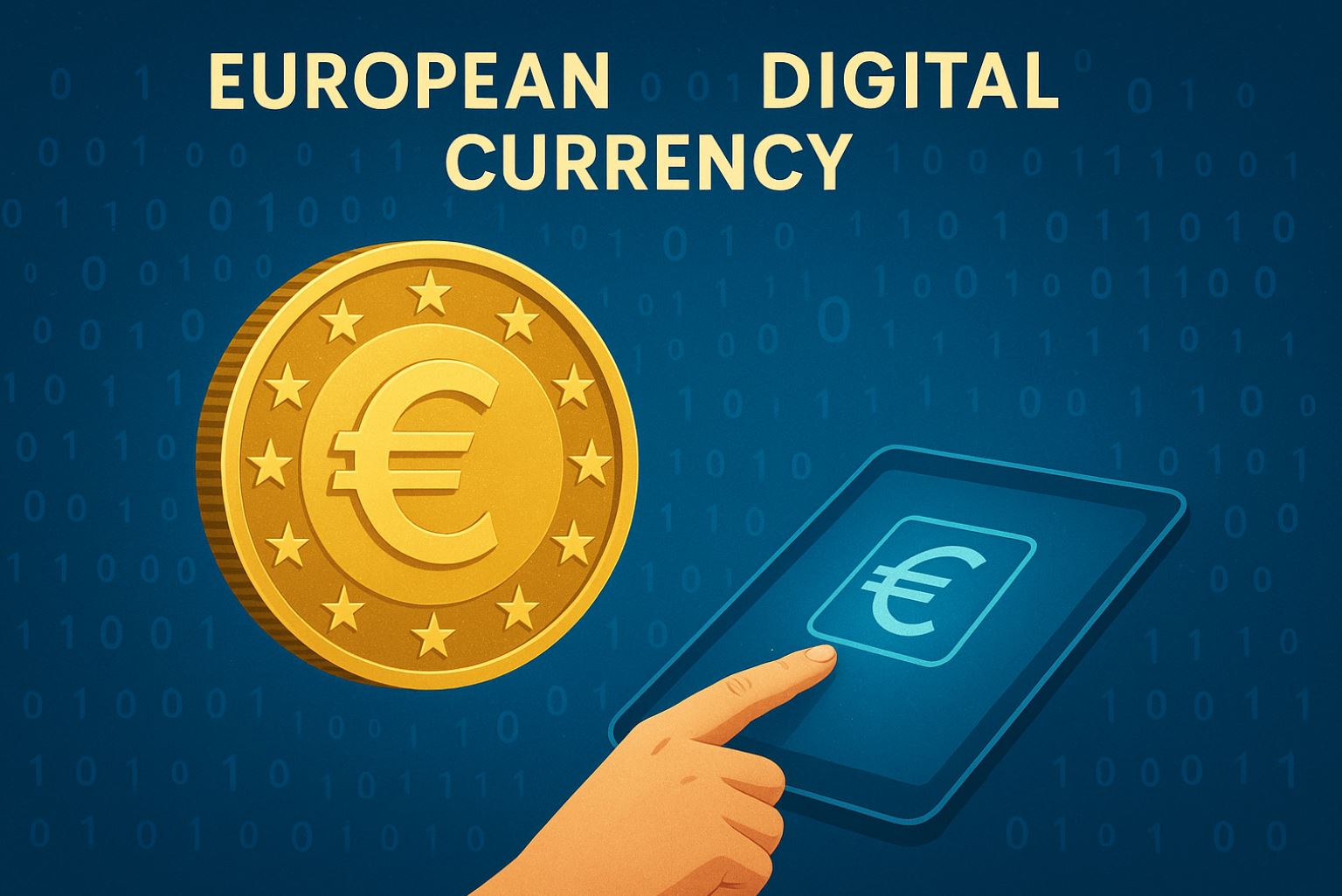
When it comes to digital currencies, Europe has long spoken the language of caution. Policymakers emphasized trust, stability, and the importance of avoiding financial disruption. But with Washington beginning to show greater openness toward cryptocurrencies and actively exploring a “digital dollar,” Brussels and Frankfurt are no longer content to watch from the sidelines. Sources familiar with internal discussions tell The Financial Times that the European Union is now accelerating its push to develop a digital euro.
“Europe cannot afford to be a digital spectator in an arena where others are already shaping the rules,” said a senior EU official involved in the talks.
A Strategic Shift
The debate around a digital euro has simmered for over half a decade, led by the European Central Bank (ECB). Early consultations produced cautious progress, with pilot projects and technical exploration rather than bold political commitments.
But the mood has shifted in 2025. Across the Atlantic, U.S. institutions have begun to craft clearer frameworks for crypto-assets and expand their central bank digital currency (CBDC) research. Major U.S. banks are trailing settlement systems using tokenized dollars, while Congress is considering legislation that would give the Federal Reserve authority to issue a digital dollar.
“America’s willingness to experiment has rattled Europe,” said Clara Meunier, a fintech researcher at the European Policy Centre. “The EU traditionally lags behind in major financial innovations. This time, policymakers are determined not to let that happen.”
Why It Matters for Europe
Behind the political urgency lies a broader strategic agenda. The digital euro is seen as vital for three reasons:
- Monetary Sovereignty – A European-controlled CBDC would guard against dominance by private stablecoins or foreign digital currencies, which could weaken the role of the euro.
- Payment Efficiency – A pan-European digital currency could reduce reliance on U.S.-dominated payment infrastructures, lowering transaction costs and speeding up cross-border payments.
- Geopolitical Influence – As digital money becomes part of global competition, the EU sees the digital euro as a way to cement the eurozone’s relevance in future financial systems.
The Road Ahead
The ECB’s pilot programs have already tested consumer wallets, merchant acceptance, and interoperable payment systems. Over the next year, officials are expected to propose a legal framework for a potential rollout. Industry insiders anticipate a gradual introduction, likely starting with wholesale financial markets before extending to retail use.
Still, challenges loom large. Europe’s fragmented financial system requires navigating across 20 different member state jurisdictions. Citizens, meanwhile, remain skeptical about state-backed digital money due to privacy and surveillance concerns. “The biggest risk is public distrust,” noted Hans Keller, a former Bundesbank official. “If Europeans feel that the digital euro is a tool of control rather than convenience, adoption will falter.”
A Global Race
The EU’s urgency reflects a broader global race. China has already launched wide-ranging trials of its digital yuan, while smaller nations such as Sweden and the Bahamas operate their own digital currencies. The U.S. — though cautious — could leap forward quickly if political alignment emerges.
For Europe, the stakes are not only financial but also geopolitical. As one senior Commission advisor put it bluntly: “If we are late again, others will set the standards — and Europe will be forced to follow.”
Looking Forward
The digital euro is unlikely to replace cash entirely, but it could fundamentally reshape how Europeans pay, save, and interact with money. Businesses may gain from faster settlement and lower costs, while consumers may see new types of digital wallets integrated into everything from online shopping to public transport.
Whether this acceleration translates into swift implementation remains to be seen. But one thing is clear: Europe no longer wants to sit quietly on the sidelines of the digital finance revolution.