
A quiet epidemic is unfolding across the Nordic countries: lung cancer is no longer confined to smokers. Roughly one in five new cases in Denmark, Finland, Norway and Sweden now occurs in people who have never smoked – and the proportion is rising fastest among women. The Nordic Cancer Registries (NORDCAN) estimate 1 300–1 800 such diagnoses every year, a figure that already exceeds the annual number of new cervical-cancer cases in the region. In global terms, “never-smoker lung cancer” has become the fifth most common cause of cancer death – and the Nordics are not immune.
Why the Nordics?
Although smoking rates here are among the lowest in Europe, several uniquely Nordic factors amplify risk for never-smokers:
Radon – the invisible Nordic hazard
- Sweden, Finland and parts of Norway sit on uranium- and radium-rich bedrock. Indoor radon levels in single-family homes frequently exceed 200 Bq/m³, the EU reference level.
- In Sweden alone, the National Board of Health and Welfare attributes 500–600 lung-cancer cases annually to radon; up to one-third occur in never-smokers.
Second-hand smoke from lingering cultural habits
- While smoking bans are strict, Nordic homes remain a major exposure source, especially in winter when ventilation is low. A 2022 Finnish cohort study found that non-smoking women living with a smoker had a 30 % higher lung-cancer risk.
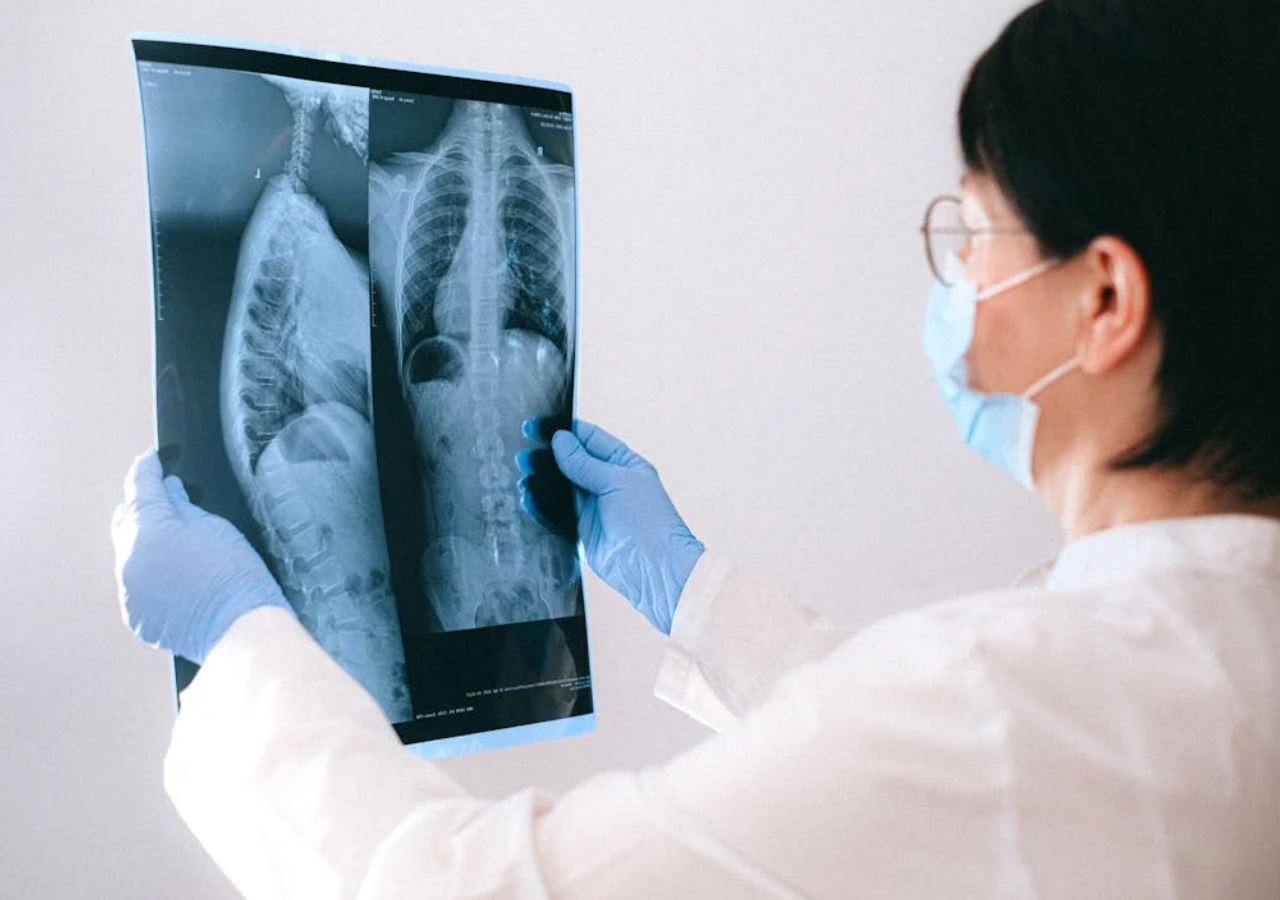
Air pollution – Arctic haze and urban hotspots
- Long-range transport of industrial and traffic emissions creates “Arctic haze” during winter inversions. Oslo, Stockholm and Helsinki all breach WHO PM₂.₅ guidelines for weeks each year.
- Wood-burning for district heating in Sweden and Finland adds ultrafine particles linked to EGFR-driven tumours common in never-smokers.
Occupational legacy
- Shipyard and construction workers in Denmark and Norway still encounter asbestos during renovation of older buildings.
- Diesel exhaust from mining in northern Sweden and heavy-metal exposure in Finnish battery plants are classified as Group-1 carcinogens for lung cancer.
Distinctive biology – the EGFR story
- EGFR mutations, almost never seen in smokers, are found in 40–50 % of Nordic never-smoker lung-cancer patients. These mutations respond to oral targeted drugs reimbursed across the region, but only if tumours are detected early.
- EGFR refers to Epidermal Growth Factor Receptor.
It is a protein that sits on the surface of many normal cells and acts like an “on/off switch” for cell growth and division. When epidermal growth factor (EGF) binds to it, the receptor is activated and sends signals inside the cell telling it to grow, multiply, or repair itself.
In cancer, EGFR can be mutated or over-expressed, which locks the switch in the “on” position. This drives uncontrolled cell growth—a hallmark of tumours.
Diagnostic delay – the Nordic paradox
Universal health-care access should catch cancers early, yet never-smokers are diagnosed at stage III/IV in 60 % of cases. Because the disease is still perceived as “a smokers’ illness”, family doctors often attribute persistent cough or fatigue to winter infections or asthma. The absence of screening criteria for never-smokers compounds the problem.
What needs to change – a Nordic action plan
1. Expand screening beyond smokers
• Denmark’s pilot study (2023) suggests low-dose CT for high-radon-exposed never-smokers finds cancers at stage I in 70 % of cases.
• Sweden’s National Cancer Strategy 2025 proposes risk-stratified screening, including radon exposure and family history.
2. Nationwide radon mitigation
• Finland’s mandatory radon measurement in new dwellings has cut average levels by 40 % since 2010. Similar legislation is being drafted in Norway and Sweden.
• Retro-fitting existing houses with sub-slab depressurisation costs €1 500–3 000 – a fraction of the €100 000 lifetime cost of treating late-stage lung cancer.
3. Cleaner air and cleaner stoves
• The Nordic Council’s 2024 “Clean Heat” programme will subsidise replacement of old wood stoves with heat-pump systems, expected to prevent an estimated 250 lung-cancer deaths per year.
4. Genetic testing and targeted therapy
• Norway and Sweden already reimburse comprehensive genomic profiling for advanced non-small-cell lung cancer. Extending testing to earlier-stage never-smokers is cost-effective, according to the Karolinska Health Economics Unit.
5. Public-health messaging
• Campaigns in Denmark and Iceland now feature never-smoker survivors to dispel the stigma and encourage early medical consultation.
Bottom line
Lung cancer is no longer a smokers-only disease in the Nordics. Radon-rich geology, winter pollution inversions and persistent second-hand-smoke exposure create a perfect storm for never-smokers—especially women. By integrating radon control, cleaner-air policies and targeted screening into national cancer plans, the Nordic countries can turn their epidemiological expertise into the world’s first regional model for preventing—and catching—lung cancer in people who have never lit a cigarette.