
By Our Staff Writer, Skanderborg, Denmark, – Business & Technology
Kamstrup, a global leader in smart metering technology based in East Jutland, boasts a presence in over 50 countries, serves hundreds of thousands of customers, and employs nearly 2,000 people worldwide. Behind its sleek water, heat, and electricity meters lies a complex digital infrastructure — one that’s increasingly dependent on skilled IT professionals to keep data secure and systems running.
Yet despite its international reach and technological sophistication, Kamstrup is struggling to fill critical IT roles. And it’s far from alone.
“We’re in a constant battle to attract and retain IT talent,” says Søren Kvorning, CEO of Kamstrup. “These specialists are in high demand across every sector. When you can’t find enough qualified people, it doesn’t just slow down innovation — it puts your entire business at risk.”
A National Crisis in the Making
Denmark is facing a growing IT talent gap that threatens not only individual companies but the nation’s broader digital resilience and economic competitiveness. According to the Confederation of Danish Industry (DI), the shortage of cybersecurity and IT specialists is now so acute that even large, well-resourced firms like Kamstrup are being forced to delay product development and scale back on digital transformation initiatives.
On average, Kamstrup takes 60% longer to hire an IT professional than for other roles. In some cases, positions remain unfilled for months — or indefinitely.
“Security is non-negotiable,” Kvorning emphasises. “We have to protect our own systems and our customers’ data. But when all hands are tied up with cybersecurity, we fall behind in innovation and development. That’s how you lose your competitive edge.”
Locked Doors, Open Windows
The consequences are even more severe for small and medium-sized enterprises (SMEs), which lack the resources and brand recognition to compete for top tech talent.
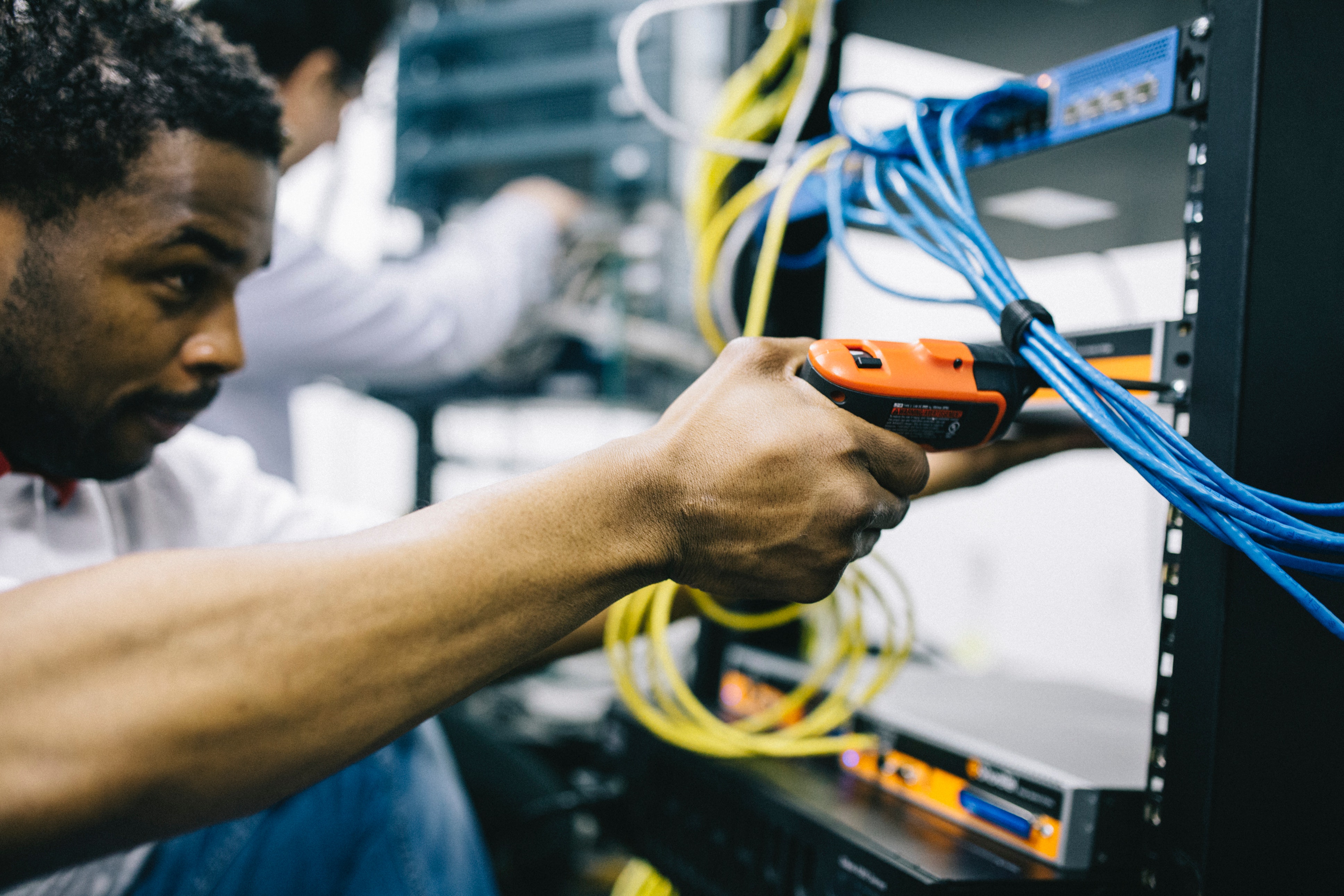
“Many SMEs have locked the front door but left the window wide open,” says Jesper Beinov, Director of SME Denmark. “Four out of ten of our members have inadequate cybersecurity measures in place. They want to do better — but they simply don’t have access to the expertise they need.”
Andreas Holbak Espersen, Industry Manager at DI Digital, warns that in today’s hyperconnected world, no company is too small to be a target.
“Cyberattacks don’t discriminate by company size,” he says. “From robotic assembly lines to smart meters, everything is now connected. That means every business needs IT specialists who can defend against increasingly sophisticated threats.”
Education Limits, Global Solutions
While demand for IT professionals soars, supply remains constrained. One major factor: Denmark’s shrinking youth population has led to structural limitations in higher education capacity.
Christina Egelund, Denmark’s Minister for Education and Research, acknowledges the urgency but stresses the need for balance.
“IT programs are absolutely vital,” she says. “But we also need nurses, engineers, and green transition specialists. We can’t funnel every student into one field — we need a diverse, resilient workforce.”
To bridge the gap, the government is turning to international talent. Foreign students and skilled workers from abroad are increasingly seen as a key part of the solution.
“We must make it easier for qualified IT professionals from other countries to study, work, and settle in Denmark,” Egelund adds. “This isn’t just about filling vacancies — it’s about securing our digital future.”
‘We’re Shooting Ourselves in the Foot’
Back in Skanderborg, Søren Kvorning sounds a note of urgency.
“If we don’t invest more in educating and attracting IT talent, we’re shooting ourselves in the foot,” he warns. “Digital expertise isn’t just support staff — it’s the engine of modern industry. For companies like ours, it’s not a luxury. It’s survival.”
As cyber threats grow and digital transformation accelerates, Denmark’s ability to compete on the global stage may depend not just on innovation — but on whether it can find the people to power it.