
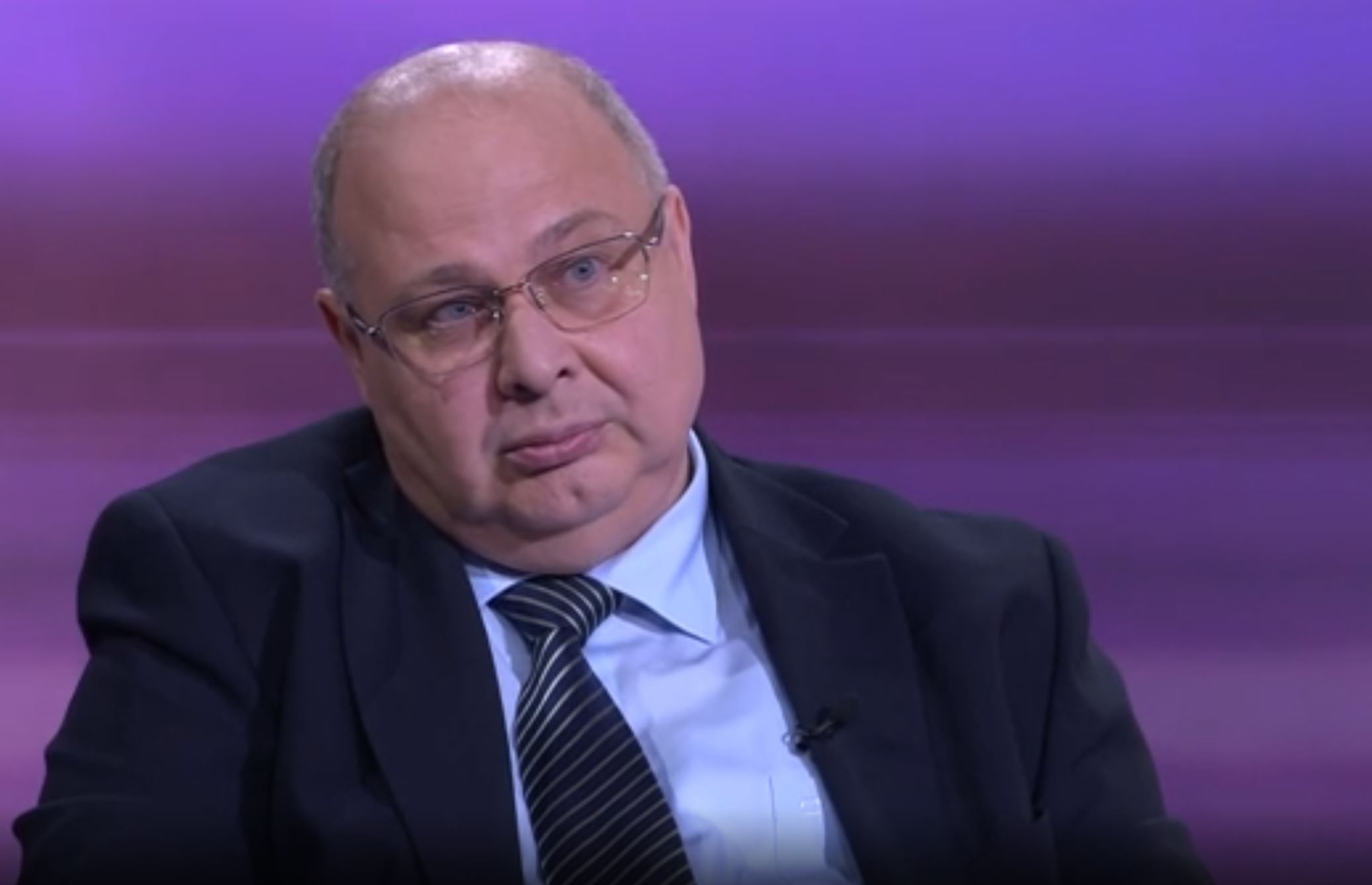
When Russia’s ambassador to Sweden, Sergei Belyaev, sat down with SVT’s 30 Minuten, the conversation turned to one of the darkest chapters of the war in Ukraine: the massacre in Butja. His response was not an admission, nor even a cautious deflection. It was outright denial. He claimed the killings were staged by Ukraine, dismissing them as “very cynical Ukrainian propaganda.”
The massacre in Butja, just outside Kyiv, is one of the most heavily documented war crimes of Russia’s invasion. UN investigators have confirmed that at least 73 civilians were executed by Russian soldiers—many of them tortured, shot in the head, and dumped in shallow graves. Survivors told harrowing stories of loved ones taken away and never returning. SVT’s own reporting team stood on the ground in 2022 and spoke to people who had lived through it. The evidence is overwhelming.
Yet Belyaev insists none of it is real. “When we asked for an investigation, none was done. The UN has not investigated this,” he said, a claim flatly contradicted by both the UN and the International Criminal Court, which is reviewing tens of thousands of suspected Russian war crimes. By April 2025, Ukrainian police alone had opened more than 130,000 cases.
Russian propaganda leans on a familiar talking point: journalists only entered Butja four days after Russian troops withdrew, supposedly giving Ukraine time to stage a massacre. Independent evidence destroys that claim. Satellite images show bodies on the streets during the occupation. The New York Times traced the killings to a specific Russian paratrooper unit using drone footage, surveillance cameras, and cellphone data. Dashcam video later confirmed the same. The crime scene was Russian, not Ukrainian.
Butja wasn’t the only distortion. During the SVT interview, Belyaev repeated other Kremlin narratives. He said Russian was banned in Ukraine. In fact, Russian is still widely spoken in homes, businesses, and media. What changed are laws ensuring Ukrainian’s place as the state language. “The Ukrainian population participated in the democratic process that led to these laws,” explains Maria Popova, a professor of politics at McGill University.
Belyaev also revived the claim that Donbas rose up spontaneously against Kyiv in 2014. Historical record says otherwise. Armed men led by Russian commander Igor Girkin seized Slovyansk that spring. The European Court of Human Rights later ruled that Russia already exercised control over Donbas at the time. Moscow also annexed Crimea through a referendum widely condemned as illegal.
Russia argues that its actions defend the right to self-determination. But as Jade McGlynn, a researcher at King’s College, points out, the UN Charter applies that right to peoples under colonial rule—not regions of sovereign states under foreign military occupation.
Meanwhile, the people Russia claims to protect live under repression. “There is extensive evidence of torture, illegal detention, and political punishment in the territories occupied since 2014,” says Popova.
Bottom line: the ambassador’s performance on Swedish television was not diplomacy, it was denial. The killings in Butja are not a Ukrainian invention. They are a documented atrocity, carried out by Russian soldiers, now under investigation by international courts. Pretending otherwise doesn’t erase the truth. It only deepens the shame.