
In a recent article that has stirred controversy across the political landscape, Dmitry Medvedev, former Russian president and current deputy chairman of the Russian Security Council, has made startling accusations against Finland. Describing the country as “preparing for war” under the guise of defensive measures, Medvedev’s statements reflect his growing radicalization in recent years.
Published by Russia’s state news agency, Tass, Medvedev’s article titled “The New Finnish Doctrine: Stupidity, Lies, Ingratitude” sharply criticizes Finland’s recent policies, especially its decision to join NATO. According to Medvedev, Finland has abandoned the neutrality it once maintained and now actively seeks confrontation with Russia.
A Nation Preparing for Conflict?
Medvedev’s article claims that Finland, in the aftermath of its NATO membership, has adopted a more aggressive stance, framing its defensive measures as preparation for an impending conflict with Russia. “Finland is not only strengthening its defences, but is creating a potential bridgehead for an attack on Russia,” he argues, positioning the country as an active participant in a broader military strategy aimed at Russian interests.
The former president’s rhetoric echoes the aggressive tone often heard from Russia’s state-controlled media, yet his words stand out due to his prominent position within the Russian government. As deputy chairman of the Security Council, Medvedev wields significant influence—though many observers note that his influence in the Kremlin has waned in recent years, with his increasingly radical rhetoric raising doubts about the weight his statements carry in official circles.
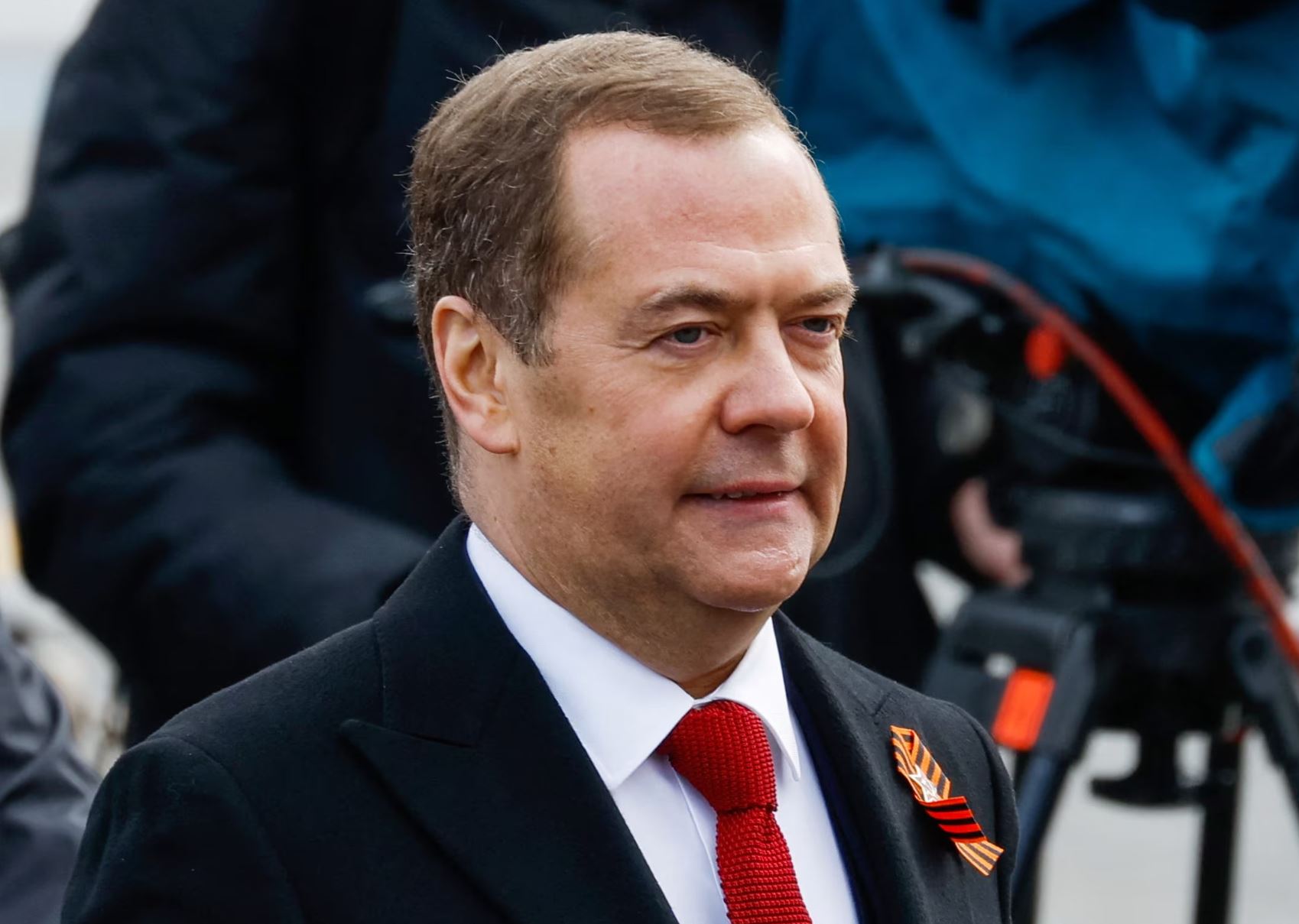
The Influence of NATO
Medvedev’s condemnation of NATO forms a core theme of his critique. He accuses Finland’s leadership of “destroying mutually beneficial relations” with Russia by aligning with the Western military alliance. In his view, NATO’s encroachment on Finnish soil represents a clear and direct threat to Russia’s security.
The article outlines what Medvedev perceives as NATO’s growing presence in Finland, asserting that the alliance’s military activities—on land, at sea, and in the air—are all aimed squarely at Russia. In particular, Medvedev expresses alarm over the presence of US troops in Finland, claiming that this violates previous agreements between the two countries and exacerbates tensions on the border.
“The involvement of NATO in Finland is no longer just a distant concern—it is now an immediate reality,” Medvedev writes, “and it is obvious who these military efforts are aimed at.”
A Bitter History
Drawing on historical context, Medvedev presents Finland’s actions as a betrayal of its past. He argues that Finland’s current leadership is engaging in a “historyless” and “ungrateful” policy towards Russia. By comparing today’s politicians with their World War II counterparts, Medvedev suggests that the aggressive stance of Finnish leaders will inevitably lead to a repeat of the tragic consequences that befell Finland during and after the war.
His rhetoric harks back to the bitter memories of the Winter War (1939-1940), where Finland fought off a Soviet invasion, and the subsequent uneasy peace between the two nations. Medvedev warns that Finland is courting disaster by choosing a path of confrontation, claiming that the country risks suffering consequences far harsher than those experienced after World War II.
A Future in Jeopardy?
Medvedev’s ominous final remarks in the article hint at the possible downfall of Finland as a state if it continues down its current course. “The policies of hostility and the falsification of history are leading Finland toward a dangerous precipice,” he concludes.
Despite Medvedev’s hard-hitting tone, his claims raise several important questions about the future of Finnish-Russian relations and the broader geopolitical landscape. While Finland has long been known for its neutrality, its recent decision to join NATO has undoubtedly shifted the balance of power in the region. For Finland, the decision to align with NATO marks a significant departure from its past, but whether it truly constitutes a “preparation for war” remains a matter of debate.
In any case, Medvedev’s remarks signal that the Kremlin remains deeply unsettled by Finland’s NATO membership, viewing it not as a defensive posture but as an affront to Russia’s security and influence in the region.
As the situation continues to evolve, one thing remains clear: Finland’s relationship with Russia is at a critical juncture. Whether Medvedev’s predictions will come to fruition, or if diplomacy can still mend the rift, remains to be seen.