
Mary E. Brunkow, Fred Ramsdell, and Shimon Sakaguchi have been awarded the 2025 Nobel Prize in Physiology or Medicine for uncovering how the body prevents its own immune system from turning against itself. Their work on peripheral immune tolerance revealed a key defence mechanism that keeps our immune cells from attacking healthy tissue.
“Their discoveries have been crucial to understanding why most of us don’t develop autoimmune diseases,” said Olle Kämpe, chair of the Nobel Committee, in announcing the award.
The trio’s research uncovered the existence and genetic control of regulatory T cells—the immune system’s internal peacekeepers. These cells act as sentinels, ensuring that the body’s defences target foreign invaders like viruses and bacteria, not its own organs and tissues.
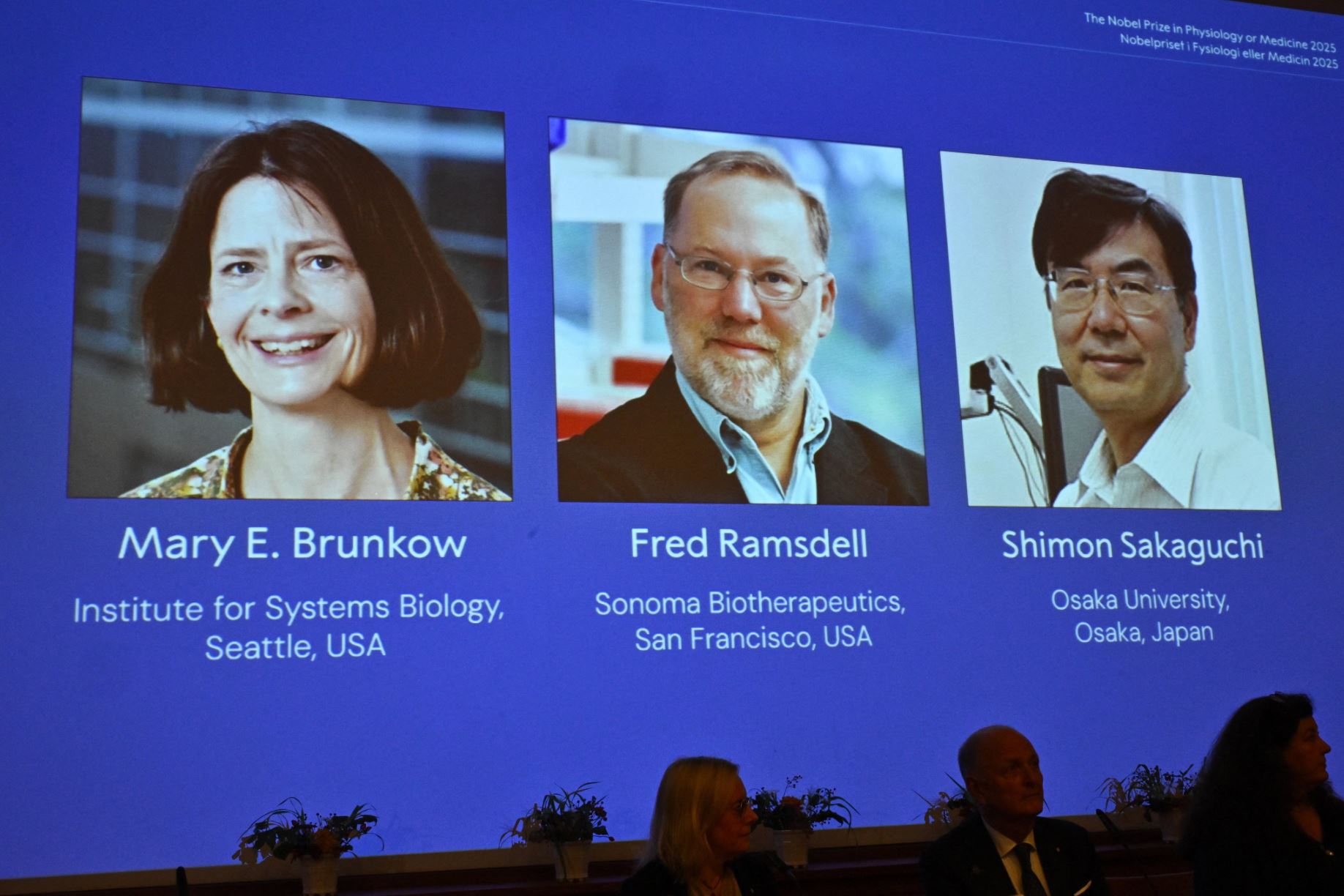
This insight, first sparked by Sakaguchi’s work in the 1990s, reshaped immunology. While studying T cells—white blood cells that coordinate immune attacks—Sakaguchi realized there must be a special subset that suppresses harmful immune responses. He was right. Those cells, now known as regulatory T cells (or Tregs), proved essential for preventing autoimmune diseases such as type 1 diabetes, multiple sclerosis, and rheumatoid arthritis.
Brunkow and Ramsdell later pinpointed the gene behind Treg function, FOXP3. When this gene malfunctions, the immune system can spiral out of control, causing severe autoimmunity.
“The discovery of regulatory T cells and FOXP3 opened a new chapter in medicine,” said Ali Mirazimi, adjunct professor of clinical virology at the Karolinska Institute. “It’s already shaping therapies for autoimmune disease, cancer, and even complications after stem cell transplants.”
Randall Johnson of the Nobel Committee described the discovery simply: “Those T cells that overreact against ourselves need to be toned down. That’s exactly what regulatory T cells do.”
The impact reaches beyond autoimmune conditions. By learning how to fine-tune immune tolerance, scientists are developing cancer treatments that unleash the immune system against tumours while still protecting healthy tissue.
When Nobel Secretary Thomas Perlmann called Shimon Sakaguchi with the news, the scientist was momentarily speechless— “incredibly happy, almost unable to talk,” Perlmann said.
Bottom line: This year’s Nobel celebrates three scientists who uncovered the immune system’s self-control mechanism—knowledge that’s already transforming how we treat disease and understand what keeps us healthy.