
A quick overview
- Sweden is fast-tracking counter-UAS (C-UAS) procurement, shortening lead times by eight years, and beefing up its Gripen fighter readiness.
- Norway is pushing its drone swarm R&D (e.g. Valkyrie) and expanding conscription numbers significantly, with plans to reach ~13,500 annually by 2036.
- Finland continues to integrate technical roles (including drone operations, production) into its conscription and reserve model, and is increasing its reserve age cap to deepen strategic depth.
This is relevant for Denmark now — the regional military-landscape is shifting fast, especially around unmanned systems, hybrids, and defence industrial capacity.
What each country does lately (up to late 2025)
Sweden
- Committed SEK 5 billion+ to anti-drone systems and Gripen readiness. The anti-drone part (~SEK 3.5 bn) includes interceptors, sensors, jammers (wearable & vehicle-mounted), etc. More than SEK 1.5 bn for Gripen support (spare parts, mission kit, road base operations).
- Lead time for anti-drone capability delivery has been moved up by eight years (from target 2036 to 2028).
- Also running innovation challenges (twice the funding recently) to accelerate anti-drone / UAV tech, partly in cooperation with Ukraine.
Norway
- Selected the Valkyrie swarm from Six Robotics for a pilot programme across multiple army units. Autonomous coordination, integrating swarms with existing systems.
- Has a long-term defence plan to raise conscripts from ~9,000/year to ~13,500 by 2036.
- The plan includes infrastructure upgrades, educational expansion, and facilities (e.g. Terningmoen) to handle increased intake and technical training.
Finland
- Joint venture (Summa Defence + Ukrainian partners) to build a drone production facility, with scale to supply not just Finland, but Europe/NATO. Uncrewed systems (aerial, ground, marine).
- Examining raising maximum reservist age (from current caps) to about 65 to strengthen national defence capacity.
- Strong existing pipeline: roles for technical specialists (maintenance, operation) included in conscription/reserve; mobilisation plan built into defence doctrine.
Denmark — where things stand & what’s changed
- Denmark will extend conscription from 4 to 11 months starting ~2026; include women in conscription, via lottery/assessment.
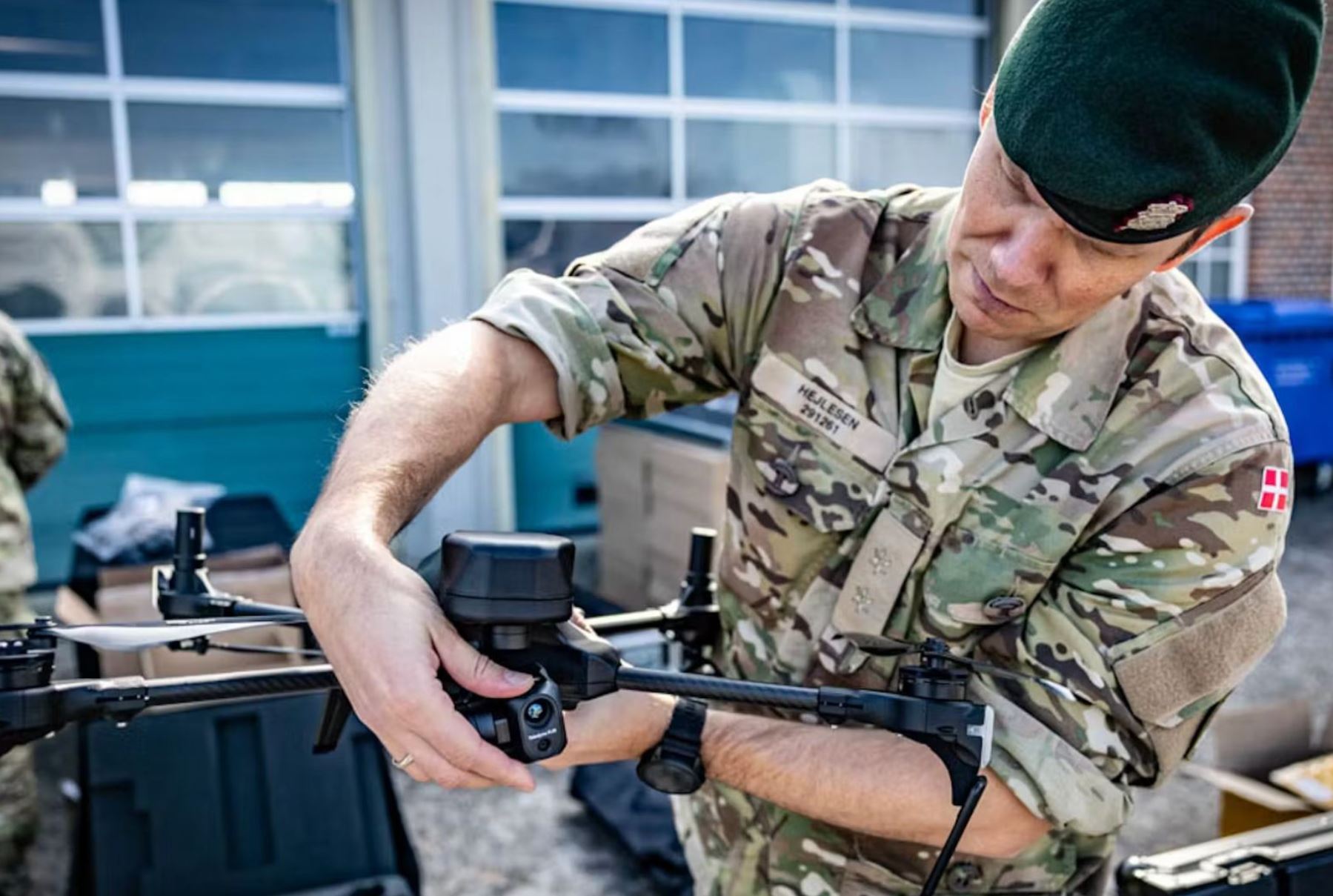
- Establishing a military drone testing centre at Odense (HCA Airport), to be operational ~2026, with ~100 personnel geared to train drone operators and run dual-use cooperation with industry and research.
Key lessons & what Denmark should focus on
Here are what I see as the immediate lessons from Sweden, Norway, Finland — and what Denmark should do to get ahead, not catch up.
| Lesson | Why it matters | What Denmark should do |
| Speed up procurement + reduce lead times | Threats are now; delays cost lives & security. Sweden shows you can move timelines sharply with the right political will. | Prioritise opportune purchases in anti-drone tech. Push procurement cycles to deliver baseline C-UAS capability (jammers, sensors, interceptors) by 2028 at latest. |
| Dual role for conscripts (offense & defence; technical) | Tech roles (drone ops, maintenance, C-UAS) are not “nice extras” — they’re central to future readiness. | Embed drone & C-UAS tracks in basic training. Ensure conscripts can both operate offensive systems (UAVs/swarm strike, ISR) and defend (detect, jam, intercept). Offer certifications that map to civilian industry. |
| Doctrine, integration, modular architectures | The hardware alone doesn’t matter if data links, C-2, rules of engagement, command structures aren’t there. Norway’s swarm work underscores that limitations are doctrinal & organizational. | Build doctrine for drone swarms, C-UAS networks, autonomous operations. Set up joint Nordic exercises (C-UAS, swarms). Invest in secure data links, sensor fusion, command & control first—not just more frames. |
| Reserves & lifelong readiness | Finland raising reserve age shows strategic depth matters. If conscripts only serve once, many of the investments dissipate. | Create clear reserve pathways; require periodic retraining / requalification. Consider extending reservist eligibility age. Ensure conscript skills stay relevant post-service. Industry link-ups help here. |
| Industrial base & international cooperation | Sweden/Finland working with domestic producers; Norway pushing R&D and licensing. Ensures supply, sovereignty, and tech spillover. | Support domestic defence industry: drone, jammer, swarm orchestration. Partner regionally (Nordics/Ukraine/EU) for tech development & production. Ensure procurement policy favours local capability where strategic. |
| Gender, scale, inclusivity | Denmark’s move to include women and lengthen service is smart — scales the manpower base, brings diverse skills. | Make sure structures (barracks, equipment, support) adapt for women. Use this broader pool to recruit technical candidates (engineering, data, electronics) as much as “boots on ground.” |
New & emerging pressures Denmark cannot ignore
- Drone incursions and hybrid threats are increasing. Denmark already banned civilian drone flight temporarily ahead of summits; neighbours are sending over C-UAS support. Interoperability is no longer optional.
- EU / NATO common frameworks are pushing for pan-European anti-drone infrastructure: e.g. the proposed “European Drone Defence Initiative” to build sensor networks, jamming, weapons in shared deterrence lines. Sweden has pushed for simplified procurement standards at the EU level.
- Industry bottlenecks — supply chains, qualified technicians, secure data links. It’s easy to buy frames, much harder to integrate, certify, sustain.
What Denmark should do now — action plan
Here’s a suggested roadmap for Denmark over 12 months (budget, training, doctrine priorities included):
- Define minimum viable C-UAS / drone operator package (6-12 months)
- Prioritise sensors + warning systems + jammers + small interceptors.
- Procure “modular kits” deployable to bases, airports, key infrastructure.
- Begin procurement for data links, secure C2, for both detection and offensive UAVs.
- Scale conscription training tracks
- Decide where conscripts will specialize: drone operators, maintenance, C-UAS, logistics.
- Set up technical training modules aligned with civilian certifications.
- Increase intake of conscripts with relevant backgrounds (STEM, electronics) via targeted recruitment.
- Doctrine & exercise development
- Draft doctrine for swarm operations, counter-UAS, anti-drone response in hybrid warfare context.
- Run bilateral / Nordic multilateral drills with Sweden/Norway/Finland focused on swarm vs C-UAS.
- Ensure testing ranges & simulation environments are available.
- Reserve / follow-up systems
- Ensure conscripts don’t lose relevance: periodic refresher training, reserve duty tied to their technical role.
- Adjust reservist eligibility age as needed (aligning with Finland’s model).
- Industrial and international collaboration
- Invest in domestic production / R&D for jammers, sensors, UAV frames and autonomy.
- Partner with Nordic firms, Ukraine, EU on innovation challenges, shared development.
- Secure supply chains, ensure spare parts, maintenance consistency.
- Budget & personnel projections
- Estimate costs for anti-drone procurement, drone training centre operations, increased conscript numbers + gender-inclusive infrastructure.
- Align procurement schedule with threat timelines — e.g. protect air bases, airports, infrastructure by 2028.
- Plan for increased lifetime support: maintenance, data/cyber security, sustainment.
Bottom line
Denmark is moving in the right direction: longer conscription, inclusion of women, drone training capacity. But it needs to sharpen the technical, doctrinal, and industrial edges. Hardware without doctrine is slow. Personnel without specialization is shallow. Regional cooperation is both a force-multiplier and a hedge.
If Denmark acts decisively now — especially on procurement lead times, specialised training, reserve integration, and industrial base — it can transition from being reactive to being ahead of the curve.