
Sweden rarely makes headlines for opportunism. Yet beneath the rhetoric of solidarity and moral duty, the Ukraine war has quietly turned Stockholm into one of Europe’s early economic and strategic winners. The same conflict that devastated Ukraine has accelerated Sweden’s rise in defence manufacturing, reconstruction partnerships, and green technology exports—while binding Swedish business deeper into Ukraine’s postwar recovery.
Scale of Sweden’s Support
Since Russia’s invasion in February 2022, Sweden has delivered more than SEK 102 billion (about €9 billion) in economic, humanitarian, and military aid—one of the largest contributions in Europe relative to GDP. Roughly SEK 80 billion of that is military, including advanced weapons systems, artillery, and surveillance boats.
To keep the momentum steady, the Swedish government created a three-year “Ukraine framework,” allocating SEK 75 billion for 2024–2026. The goal is clear: sustain long-term aid without slowing Sweden’s own rearmament. The policy has paid diplomatic dividends, cementing Stockholm’s image as a reliable ally and opening direct trade channels that now serve as scaffolding for postwar cooperation with Kyiv.
Economic Tailwinds at Home
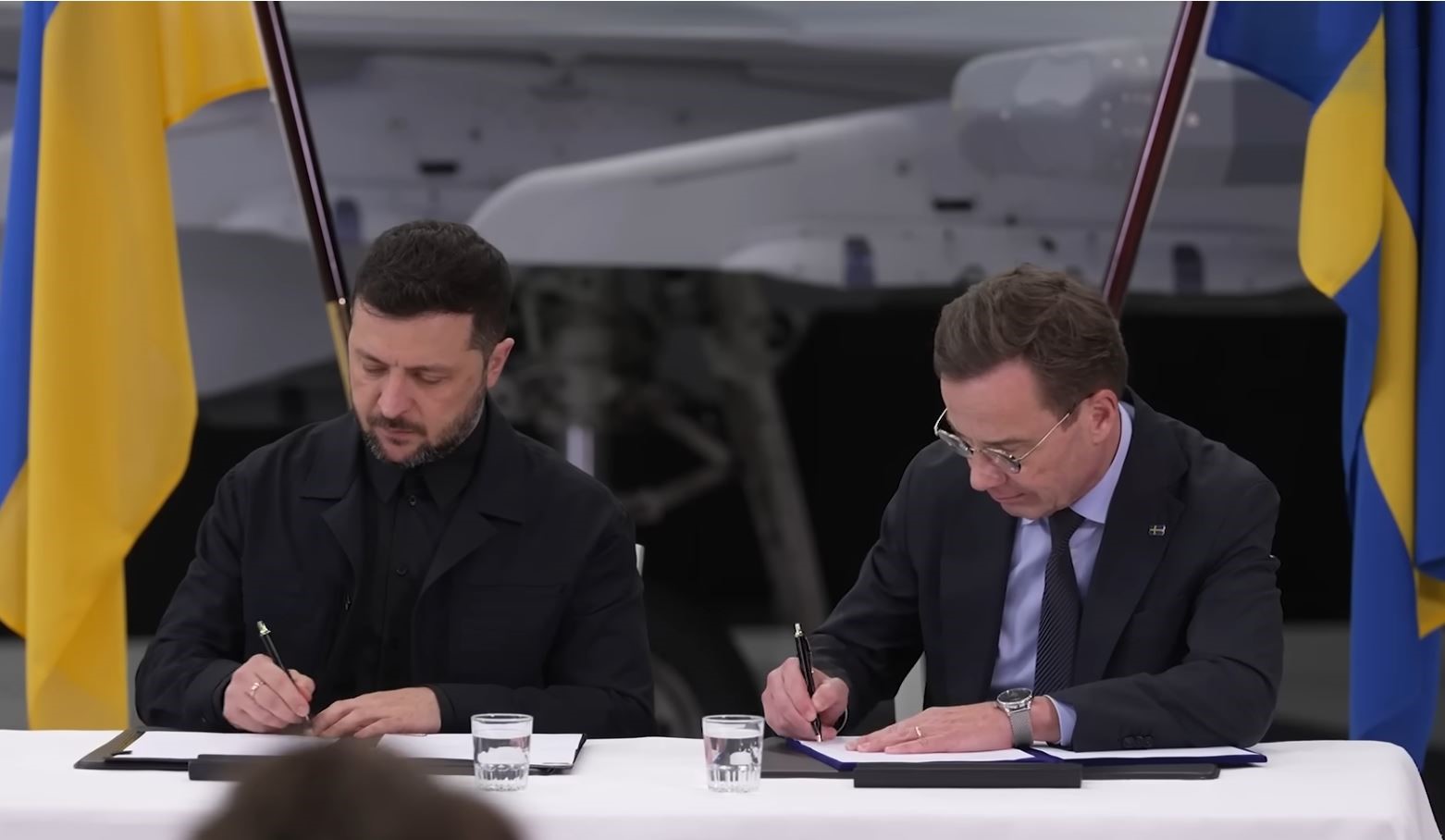
The war has indirectly strengthened Sweden’s economy. Global defence demand is rising fast, export orders are up, and industrial output has gained muscle. Saab—the maker of Gripen jets and air-defence systems—has become a symbol of this shift. In October 2025, it signed a memorandum potentially covering up to 150 Gripen aircraft for Ukraine.
The defence sector, once politically sensitive, is now a national growth engine aligned with Sweden’s full NATO integration. Government export-credit guarantees and reconstruction funds have unlocked new business for Swedish engineering, infrastructure, and renewable-energy companies. What began as wartime aid is evolving into a durable industrial revival.
Swedish Business on the Ground in Ukraine
More than 80 Swedish firms—from ABB and Ericsson to SKF, AstraZeneca, and Ikea—have restored or expanded their Ukrainian operations. In 2024, Stockholm opened the Team Sweden Ukraine trade office in Kyiv to help companies navigate reconstruction markets and link aid programs with commercial projects.
Business Sweden’s Kyiv branch focuses on sustainable housing, renewable-energy grids, telecom rebuilding, and public-sector modernization. The nonprofit Sweden Ukraine Business Action (SUBA), launched the same year, pairs Ukrainian producers with Swedish buyers and partners—turning solidarity into real contracts.
Why Kyiv Sees Sweden as More Than a Donor
Ukraine values Sweden not just for weapons or money, but for its credibility. Swedish institutions are transparent, its green-energy expertise world-class, and its digital-governance model mirrors what Kyiv hopes to build. Unlike many donors, Sweden ties aid to long-term investment: state-backed financiers like Swedfund and the Swedish Export Credit Agency are underwriting Ukrainian ventures instead of simply writing checks.
As Ukraine edges closer to EU membership, these relationships matter. The country’s recovery will hinge on trusted Western partners able to deliver both technology and integrity. Sweden fits that bill—combining military reliability with economic pragmatism.
Summing
The Ukraine war reshaped Europe’s map of influence, and Sweden has navigated it with quiet precision. By coupling aid with industrial strategy, it strengthened its defense sector, deepened its role in Europe’s security architecture, and positioned itself as a central player in Ukraine’s future rebuilding.
What began as a moral commitment has evolved into a geopolitical advantage—and a rare case where doing the right thing also turned out to be very good business.