
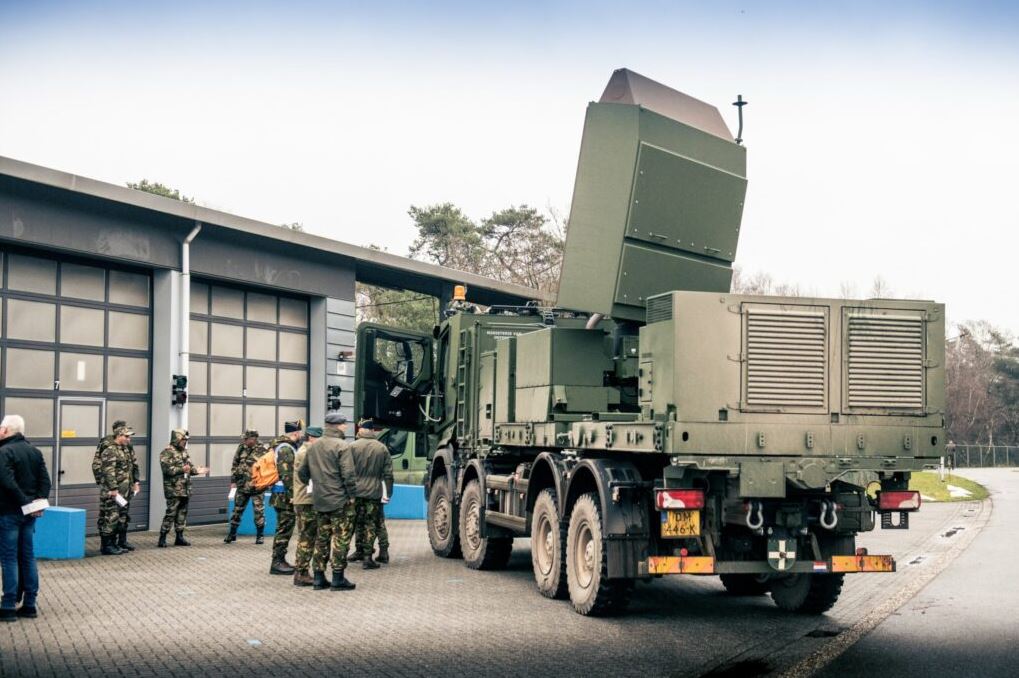
Sweden will deploy two anti-aircraft gun carriages to NATO’s multinational brigade in Latvia next year, according to Swedish Radio News. The move marks Sweden’s first foreign deployment of such air defence artillery since the UN peacekeeping mission in the Congo during the 1960s.
The deployment is part of Sweden’s growing military integration with NATO following its recent accession to the alliance. Sweden and Denmark are alternating the leadership and deployment of a battalion within the NATO brigade stationed in Latvia, which serves as one of the alliance’s key deterrent positions along its eastern border with Russia.
Defence analysts say the deployment underscores Sweden’s shift from a policy of military non-alignment to active participation in collective defence. The decision also reflects NATO’s continued efforts to strengthen its forward presence in the Baltics amid rising tensions with Moscow.
NATO Probes Suspected Russian Espionage at Estonia Wreck Site
NATO intelligence services suspect that Russia may be conducting underwater espionage around the wreck of the Estonia ferry in the Baltic Sea, according to reports by German public broadcasters and Süddeutsche Zeitung.
The Estonia, which sank in 1994, lies at a depth of about 80 meters, roughly 35 kilometres southeast of Finland’s Utö island. The site is subject to a strict diving ban, but NATO sources believe Russia has placed technical equipment on or inside the wreck to aid underwater navigation and surveillance.
According to the reports, the suspected installations may allow Russian underwater drones to operate with greater precision and could include acoustic sensors capable of tracking the movements and propeller signatures of NATO warships and submarines.
Hans Liwång, professor of defence systems at the Swedish Defence University, told Sveriges Radio that such an operation is “fully possible.” He believes Russia has likely used other wrecks or seabed structures in the Baltic for intelligence gathering, though he noted that the Estonia would be a risky choice due to the international scrutiny surrounding the site.
“It would make more sense to place sensors or drones in less monitored areas of the seabed,” Liwång said. He urged NATO to conduct an inspection of the site to verify the claims.
The wreck’s location—between Sweden, Finland, and the Baltic states—makes it an ideal surveillance point for monitoring NATO naval traffic in one of the most strategically sensitive waters in Europe.
However, Jonas Bäckstrand, who chairs the ongoing Swedish Accident Investigation Authority’s examination of the Estonia wreck, told Swedish Radio that no evidence of espionage equipment had been detected during their 2020–2023 investigation.
Still, the allegations highlight growing unease among NATO members over Russia’s expanding undersea capabilities, including suspected sabotage and surveillance operations across the Baltic region.
Analysis
Sweden’s deployment to Latvia and the espionage concerns near the Estonia wreck both underscore a new phase of Baltic security politics. The region—once treated as a quiet northern flank of Europe—is now a frontline of intelligence, deterrence, and hybrid operations.
For Sweden, integration into NATO’s defensive posture is not symbolic; it’s strategic. Its contribution of air defence artillery, though modest in scale, signals a commitment to collective deterrence and a recognition that the Baltic Sea has become a contested military space.
For NATO, the suspicion of Russian underwater espionage is part of a wider pattern. The Baltic’s seabed hosts critical infrastructure—pipelines, communication cables, and shipping lanes—that have become prime targets for covert activity. The alliance’s challenge will be to monitor and secure this undersea domain without escalating tensions further.
The Baltic is no longer just a buffer zone. It’s an active theatre of strategic competition—and Sweden is now fully part of that equation.