
Boden, Sweden — A large-scale multi-agency enforcement operation conducted on Wednesday at Stegra’s steel production facility in Boden has uncovered serious breaches of immigration, labour, and occupational safety regulations—raising urgent questions about compliance standards amid the rapid industrial expansion sweeping northern Sweden.
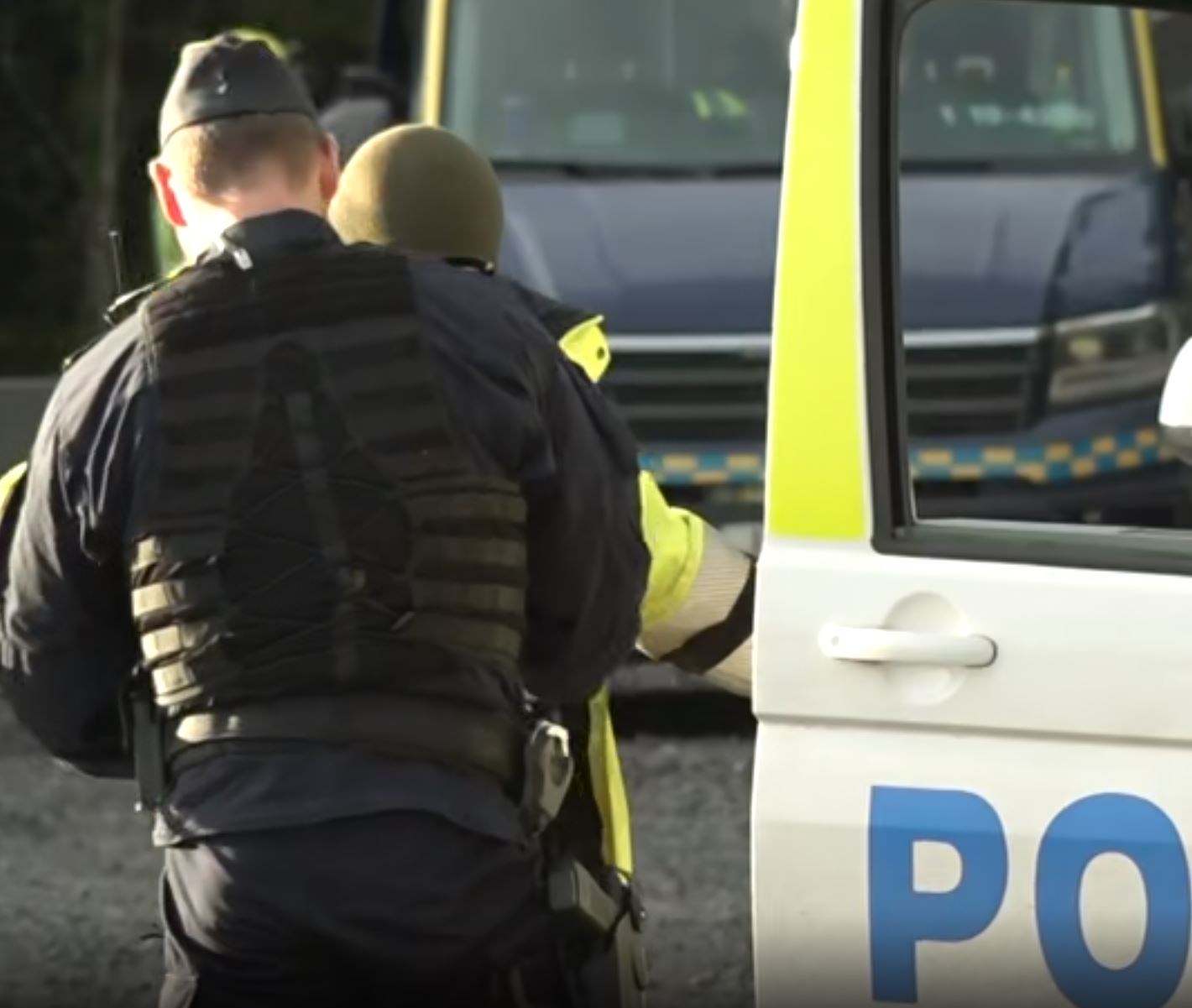
The coordinated raid, led by the Swedish Border Police with support from Europol, involved approximately 60 officers and targeted multiple construction firms operating on-site. The action was part of a broader initiative to address rising concerns over workplace crime and regulatory non-compliance linked to the influx of major industrial investments in the region.
19 Individuals Found Illegally Employed
During internal checks on over 1,700 foreign workers across 160 companies, authorities identified 19 individuals without legal residency or work rights in Sweden, all suspected of violating the Aliens Act (Utlänningslagen). These individuals are now subject to deportation proceedings.
“These findings are not isolated,” said Joakim Lundgren, Head of Border Police for the North Police Region. “We have observed patterns where unscrupulous actors exploit temporary labour demands during high-investment projects. Our priority is to uphold the rule of law and ensure that no one gains illegal entry through employment loopholes.”
All affected individuals were employed through subcontractors working under Stegra’s main contractors. While Stegra itself is not accused of direct hiring violations, the incident underscores systemic risks in supply chain oversight within large infrastructure developments.
Widespread Safety Deficiencies Prompt Immediate Shutdowns
Simultaneously, the Swedish Work Environment Authority (Arbetsmiljöverket) inspected 17 companies on site and found significant shortcomings in workplace safety protocols. In 16 out of 17 cases, corrective actions were mandated due to failures in:
– Fall protection systems
– Machine guarding and lockout/tagout procedures
– Chemical handling and risk assessments
– Verification of worker qualifications and certification
One scaffolding contractor was issued an immediate stop-work order after inspectors discovered structural instability posing a severe collapse risk—a potentially life-threatening condition had it gone undetected.
“This level of non-compliance cannot be tolerated,” emphasized Anna Bengtsson, senior inspector at Arbetsmiljöverket. “Complex industrial sites demand rigorous coordination, documented safety processes, and constant vigilance. Where those fail, lives are put at risk.”
Europol Support Highlights Transnational Crime Risks
The operation received analytical intelligence support from Europol, underscoring growing concern that fast-moving, capital-intensive projects in remote regions may attract organized economic crime—including human trafficking, wage fraud, tax evasion, and document forgery.
“Large investments concentrated in short timeframes create fertile ground for exploitation,” warned Anna Lundström, crime prevention specialist at the Swedish Economic Crime Authority (Ekobrottsmyndigheten). “Cutting corners on wages, safety gear, or proper documentation allows illicit operators to undercut legitimate businesses. This undermines fair competition and endangers workers.”
Lundström noted that similar patterns have emerged around other green transition megaprojects in Scandinavia, including battery gigafactories and hydrogen plants.
Stegra Responds: Commitment to Compliance, but Gaps Remain
In response to the findings, Nils Eklund, Stegra’s press contact in Boden, stated the company adheres strictly to ethical contracting practices and requires collective agreements for all subcontractors.
“We strive to do things correctly. If mistakes occur in our value chain—which this operation suggests they did—we take responsibility to correct them once we have full information,” Eklund said. “We are reviewing our subcontractor monitoring systems and will enhance due diligence accordingly.”
However, union leaders express scepticism. Carina Sammeli, regional representative for the Swedish Trade Union Confederation (LO), highlighted previous incidents involving foreign labour agencies abruptly withdrawing from projects when challenged on labour standards.
“When we raised concerns about working conditions earlier this year, one agency—Ankitech—simply packed up and left the country,” Sammeli said. “That kind of behaviour points to deliberate avoidance of accountability.”
Broader Implications: Can Northern Sweden Sustain Its Green Industrial Surge?
The Boden raid comes against the backdrop of unprecedented industrial growth in Norrbotten County, driven by Sweden’s ambition to become a leader in fossil-free steel, batteries, and critical minerals processing. Projects like H2 Green Steel, Northvolt, and SSAB’s HYBRIT initiative have brought tens of thousands of jobs—but also strained local governance, housing, and regulatory capacity.
Just days before the raid, plans for a proposed green ammonia fertilizer plant in Luleå were scrapped due to insufficient grid capacity—an indication of mounting infrastructural bottlenecks.
“The north is being asked to carry the weight of national decarbonization goals,” said energy analyst Malin Bergström at Umeå University. “But if regulatory frameworks don’t scale alongside investment, we risk creating zones of de facto deregulation—where speed trumps safety, legality, and fairness.”
Call for Enhanced Oversight Mechanisms
Experts urge the establishment of a joint industry-regulator task force focused on high-growth industrial zones, integrating real-time data sharing between migration authorities, tax agencies, labour inspectors, and police units.
Additionally, proposals are gaining traction for a digital compliance dashboard requiring all contractors on state-supported projects to register workers, certifications, and safety audits in a centralized, transparent system—similar to Finland’s Kojamo model.
Without such measures, officials warn, future operations like the one in Boden may become routine rather than exceptional.
Conclusion: Growth Must Not Come at the Cost of Integrity
The Stegra raid serves as a wake-up call: while northern Sweden stands at the forefront of Europe’s green industrial transformation, its success hinges not only on technological innovation but on institutional resilience.
Ensuring lawful employment, worker safety, and fair competition must remain non-negotiable—even in times of breakneck development. As public and private sectors push forward with ambitious climate goals, the events in Boden remind us that sustainable progress cannot bypass the fundamentals of justice, transparency, and accountability.