
As the United States escalates military operations against Venezuelan-flagged vessels in international waters — resulting in over 60 fatalities since September — the international community, particularly the European Union and Nordic states, remains conspicuously silent. These strikes, authorized by President Donald Trump under the banner of “self-defence” against drug cartels, constitute a clear and systematic violation of international law. Yet, no meaningful diplomatic, legal, or economic countermeasures have been taken by Europe — raising urgent questions about the erosion of multilateralism and the EU’s strategic passivity in the face of American unilateralism.
The Escalation: From Drug Interdiction to Extraterritorial Warfare
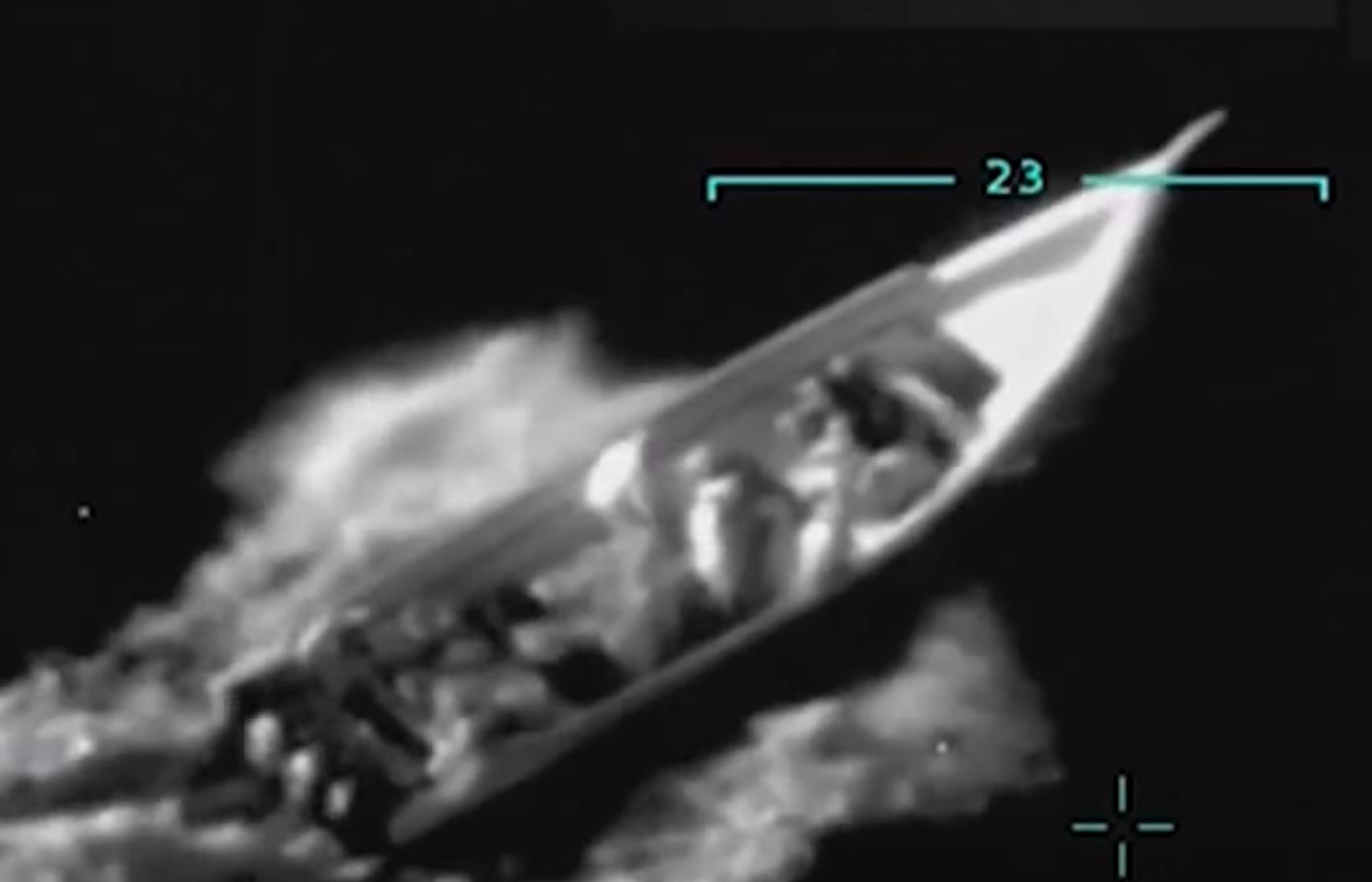
Since early September, U.S. naval and air forces have conducted multiple strikes on suspected drug-smuggling vessels operating in the Caribbean Sea and international waters. The justification: President Trump claims Venezuela has “emptied its prisons” into the U.S. and is a primary conduit for fentanyl and cocaine trafficking. Defence Secretary Pete Hegseth has openly declared these vessels as “drug terrorist” targets, asserting that the U.S. military possesses “perfect intelligence” on their origins, crews, and cargo — including the presence of “five engines and silver boxes of white powder.”
Yet, no verifiable evidence has been presented to substantiate these claims. No vessel has been boarded, inspected, or seized. Instead, U.S. forces have sunk ships at sea, killing crew members — including, according to multiple reports, non-combatants — without due process, judicial oversight, or any legal basis under the United Nations Charter or the UN Convention on the Law of the Sea (UNCLOS).
Legal Analysis: A Clear Breach of International Norms
Kenneth Øhlenschlæger Buhl, Postdoctoral Research Fellow in International Law at the University of Southern Denmark and former advisor to the Danish Ministry of Foreign Affairs, offers a definitive legal assessment:
“The U.S. is violating multiple core tenets of international law. Under UNCLOS — which the U.S. recognizes as customary law despite not ratifying it — only the flag state has jurisdiction over vessels on the high seas. The U.S. has no legal right to board, let alone sink, a Venezuelan-flagged vessel in international waters. There is no piracy here. There is no armed attack on U.S. territory to justify self-defence under Article 51 of the UN Charter. This is not interdiction. It is extrajudicial execution.”
Buhl further dismisses the administration’s invocation of “self-defence” against non-state actors as legally incoherent:
“Terrorist cartels are not states. You cannot invoke self-defence against an entity that is not a party to an armed conflict. Even if these vessels were carrying drugs — which remains unproven — that does not constitute an ‘armed attack.’ The threshold for self-defence requires imminent, grave, and attributable violence. This is lawfare disguised as counter-narcotics policy.”
Luis Moreno Ocampo, former Chief Prosecutor of the International Criminal Court (ICC), has gone further, suggesting these strikes may constitute crimes against humanity under Article 7 of the Rome Statute — if they are part of a widespread or systematic attack against a civilian population. While Buhl remains cautious on this specific classification — noting that crimes against humanity require a broader pattern targeting civilians — he confirms:
“This is not merely illegal. It is dangerous. It sets a precedent where any state can declare itself judge, jury, and executioner on the high seas. If the U.S. can do this to Venezuela, who’s next?”
Congressional Complicity: The Senate’s Abdication of Power
On November 7, 2025, the U.S. Senate voted 51–49 to reject a bipartisan proposal — introduced by Senators Chris Murphy (D-CT), Rand Paul (R-KY), and Bernie Sanders (I-VT) — that would have required presidential authorization from Congress before any further military action against Venezuela. The vote underscores the collapse of constitutional checks and balances.
The rejection of this measure effectively grants Trump unchecked war powers — a dangerous precedent that mirrors the post-9/11 Authorization for Use of Military Force (AUMF), now weaponized against a sovereign nation over drug trafficking.
The very next day, U.S. forces struck another vessel. Three crew members were killed. Hegseth, on X (formerly Twitter), labelled them “male drug terrorists,” offering no names, no evidence, no forensic data — only assertions.
The EU and Nordic Silence: Strategic Failure or Moral Cowardice?
Herein lies the most alarming dimension of this crisis: the absence of European response.
The European Union — long a champion of rules-based international order — has issued no formal statement condemning the strikes. The High Representative for Foreign Affairs, Josep Borrell, has remained silent. No emergency session of the European Council has been convened. No diplomatic protests have been lodged with Washington.
Nordic states — Sweden, Denmark, Norway, Finland, and Iceland — have similarly muted their voices. Despite their global reputations as defenders of human rights and international law, none have issued public statements, summoned U.S. ambassadors, or initiated legal consultations at the UN Security Council or International Court of Justice (ICJ).
Why?
Three factors explain this silence:
- Strategic Dependence on U.S. Security Guarantees: NATO cohesion remains paramount. Nordic states fear alienating Washington at a time of heightened Russian aggression and uncertain U.S. political stability.
- Economic Interests: The U.S. is a critical trading partner. Nordic energy, tech, and pharmaceutical firms operate in markets where U.S. regulatory pressure can be punitive.
- Political Fragmentation: The EU lacks a unified foreign policy mechanism to respond decisively to unilateral U.S. actions. Member states remain divided — some fearing escalation, others reluctant to confront a superpower.
This silence is not neutrality. It is complicity.
Venezuela’s Plea for Peace — and the Real Agenda
Venezuelan President Nicolás Maduro, while condemning the attacks as “acts of aggression,” has repeatedly called for peace — even switching to English in a televised address to declare: “Not war, not war, not war. Yes peace, yes peace, yes peace. Forever, forever, forever.”
Yet, credible reports from U.S. intelligence sources and Congressional insiders — including bipartisan members of the House Foreign Affairs Committee — suggest the true objective is regime change. The U.S. has long recognized opposition leader Juan Guaidó as “interim president” and has imposed sanctions targeting Venezuela’s oil sector since 2017. The current military campaign appears less about drugs and more about destabilizing Maduro’s government under the guise of counter-narcotics.
As former U.S. Ambassador to the OAS, James B. Story, told The New York Times:
“This is not a war on drugs. It’s a war on sovereignty. The cartels are a pretext. The goal is to create chaos — economic collapse, refugee flows, internal unrest — to force Maduro out.”
The Path Forward: What Europe Must Do
The Nordic Business Journal urges European leaders — particularly the EU, Sweden, Denmark, and Norway — to act decisively:
- Demand an Emergency UN Security Council Session — to censure the U.S. under Chapter VII for violations of UNCLOS and the UN Charter.
- Initiate Legal Action at the ICJ — file a case for “unlawful use of force” and request provisional measures to halt further strikes.
- Impose Targeted Sanctions — freeze U.S. defence contractors involved in the operations (e.g., Lockheed Martin, Raytheon) from EU procurement contracts.
- Publicly Reaffirm the Primacy of International Law — issue a joint Nordic-EU declaration: “No state is above the law. Sovereignty is not negotiable.”
- Support Multilateral Drug Policy Reform — shift focus from militarization to development, health, and regional cooperation — the only proven long-term solution to drug trafficking.
Conclusion: A Test of Europe’s Moral Authority
The United States is not just breaking international law — it is dismantling the very architecture of global order that Europe helped build after World War II. The EU and Nordic states have a choice: remain silent bystanders to American exceptionalism, or reclaim their role as guardians of the rules-based system.
The world is watching. And history will not forgive those who stood by while ships were sunk, lives were taken, and international law was erased with a press of a button.
The time for silence is over. The time for action is now.
About the Author: This analysis is informed by interviews with international law experts, diplomatic sources in Brussels and Copenhagen, and verified U.S. Congressional records. Data on casualties and military operations sourced from the U.S. Department of Defence press briefings, Venezuelan Ministry of Foreign Affairs, and the UN Office on Drugs and Crime (UNODC).
Updated: November 8, 2025 — Following the latest U.S. strike on November 7 and the Senate vote on the same day.