
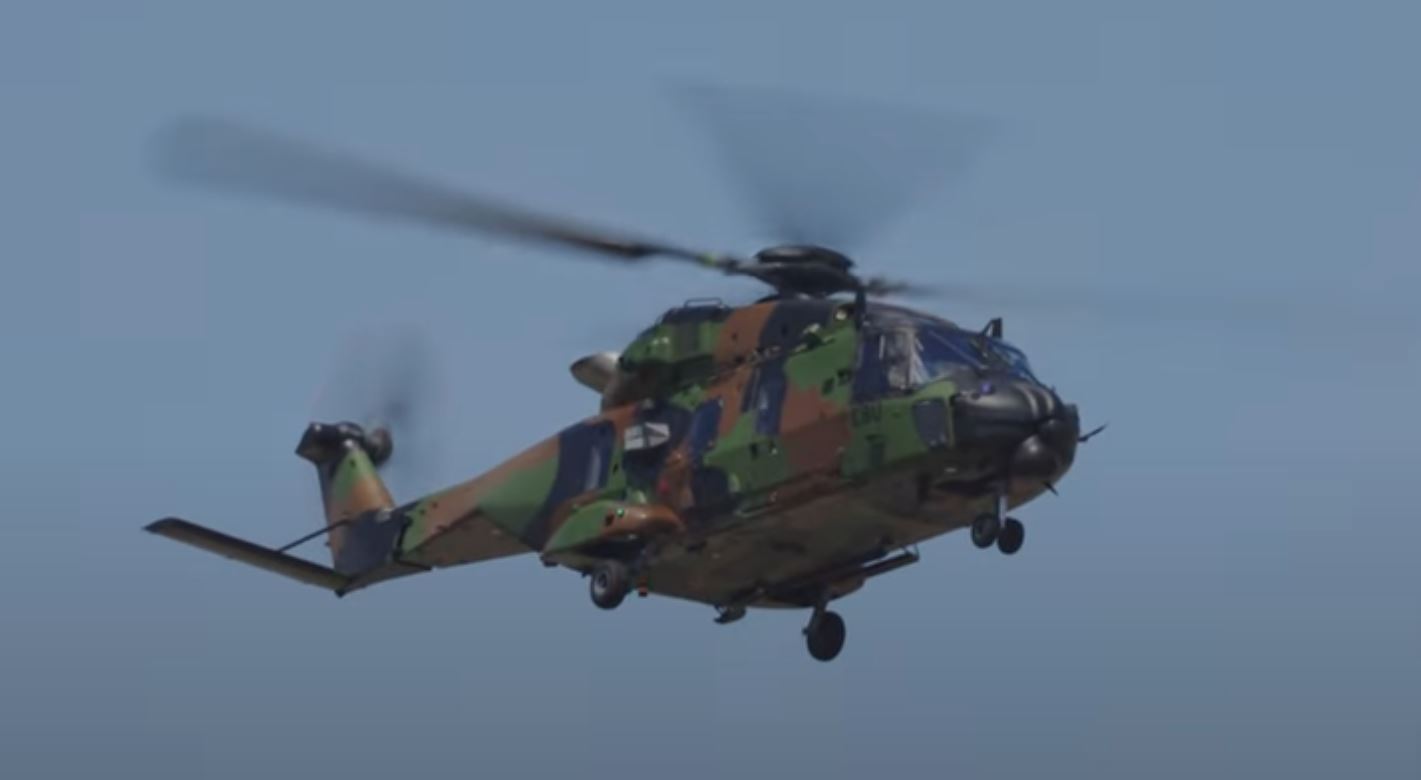
Norway’s experience with the NH90 helicopter program has become one of the clearest examples of how major defence procurement can go wrong. What was once billed as a cornerstone of Norway’s maritime defence capability collapsed under the weight of delays, technical dysfunction, and unmanageable maintenance costs—ending in cancellation, litigation, and a €375 million settlement from the manufacturer.
From Promise to Failure
When Norway ordered 14 NH90 helicopters in 2001, the goal was to strengthen anti-submarine and search-and-rescue operations for both the navy and coast guard. Deliveries were to be completed by 2008. Instead, the first aircraft arrived six years late, and a fully operational helicopter was not delivered until 2017—twelve years behind schedule.
At the program’s termination in 2022, only eight helicopters had reached operational status, and even those were available for flight just a fraction of the time required. The fleet was supposed to log about 3,900 flight hours annually; it barely achieved one-tenth of that. Maintenance demands were so high that operational availability fell to roughly 20 percent of what the armed forces needed.
Technical Collapse
The NH90’s issues were not limited to delivery delays. Spare parts were chronically unavailable, airframes often arrived incomplete, and software and system integration problems proved impossible to fix within reasonable cost or timeframes. Norway’s defence ministry described the situation bluntly: the NH90 was “unable to meet the operational requirements of the Norwegian Armed Forces.”
Technicians were forced to cannibalize some helicopters to keep others flying. Even with increased maintenance budgets and extended working hours, readiness levels never recovered. In practice, the NH90s spent far more time on the ground than in the air.
Settlement and Strategic Reset
Following the program’s cancellation, Norway sought €2.86 billion in damages, citing the need to procure replacement aircraft and recoup losses. In a 2025 settlement, NHIndustries and its parent firms—Airbus, Leonardo, and Fokker—agreed to pay €305 million, in addition to an earlier €70 million guarantee. All helicopters, spares, and support equipment will be returned to the manufacturer, ending years of legal and contractual disputes.
Norway has since moved to acquire Sikorsky HH-60W helicopters from Lockheed Martin. The shift marks a broader strategic realignment toward proven, American-built platforms, a trend increasingly visible among Nordic allies frustrated with European defence industrial reliability.
Reputational and Policy Consequences
The NH90 was marketed as a showcase of European defence cooperation and advanced technology. In Norway, it was once promoted as “the pride of the defence.” Two decades later, it is remembered as a symbol of systemic procurement failure.
The Chief of Defence summed it up succinctly: the failure was not due to lack of effort or competence within Norway’s armed forces, but to a platform that never met its fundamental specifications. The reputational damage extends beyond Norway’s borders, casting doubt on multinational defence programs that rely on complex industrial partnerships and diffuse accountability.
The Nordic and Global Context
Norway is not alone. Sweden and Australia have also decided to retire or replace their NH90 fleets for similar reasons, citing poor reliability and excessive upkeep costs. Finland, meanwhile, has managed to keep its NH90s operational but at high expense and with limited readiness rates.
For Norway, the episode underscores the risks of multinational procurement where industrial and political interests can overshadow operational realism. It also highlights the need for stricter life-cycle cost controls, clearer performance clauses, and more agile replacement strategies.
Lessons for European Defence Procurement
The NH90 case reflects broader structural challenges in Europe’s defence industry: fragmented management, overambitious design requirements, and insufficient end-user influence during development. Programs designed to promote industrial cooperation often struggle to deliver equipment that meets frontline needs.
Going forward, Norway’s experience may influence how other Nordic states approach joint procurement under NATO and EU frameworks. The preference is shifting toward interoperability, reliability, and transparent governance over industrial symbolism.
Bottom Line
What began as a flagship European defence project ended as a costly cautionary tale. Norway’s NH90 program shows that technical innovation and multinational collaboration mean little without accountability, reliability, and timely delivery. The episode has reshaped Norwegian procurement policy—and may well redefine how Europe approaches complex defence programs in the years ahead.