
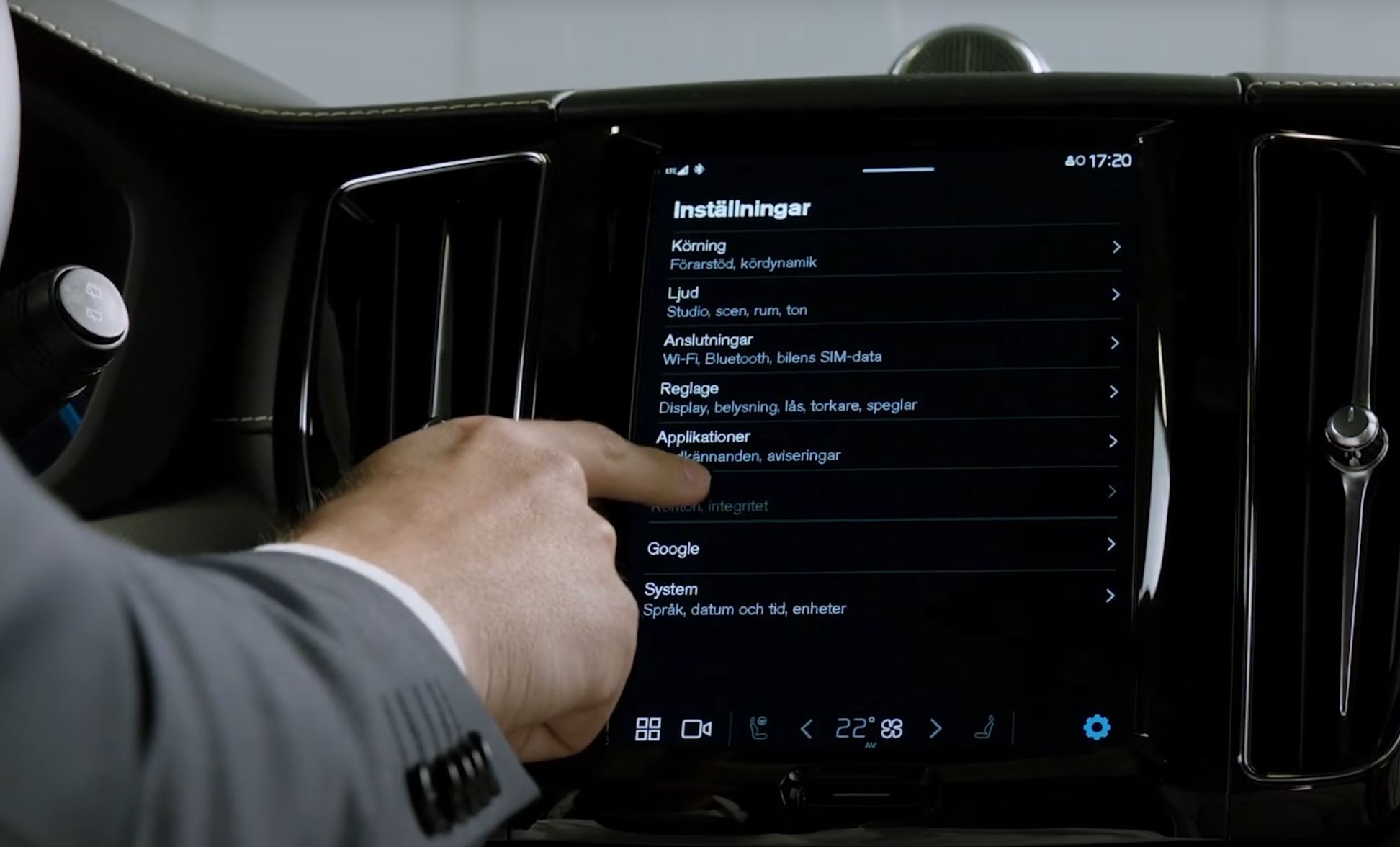
As automotive manufacturers continue to prioritize sleek, minimalist digital dashboards, a growing chorus of safety experts, regulators, and consumer advocates across the Nordic region is raising urgent alarms: touchscreen-dominated cockpits are compromising driver attention—and putting lives at risk.
The Swedish Motor Association (M Sverige), a leading voice for road safety and motorist interests, has issued a formal call for immediate regulatory intervention. “Screens are inherently distracting,” said Jacob Sidenvall, Press Secretary at M Sverige. “When drivers must visually search for, and manually interact with, multi-layered digital menus—even for basic functions like climate control or volume—they divert their eyes from the road for critical seconds. In high-speed environments, those seconds can mean the difference between avoiding a collision and being involved in a fatal crash.”
This is not an isolated concern. Police units in Jönköping, Sweden, have documented a measurable uptick in driver distraction incidents directly linked to in-car infotainment systems. Observational studies conducted in 2024 revealed that drivers using touchscreen interfaces took, on average, 2.3 seconds longer to complete routine tasks compared to those using physical buttons—time during which a vehicle traveling at 90 km/h covers more than 57 meters without driver visual feedback.
The Digital Overreach: A Trend at Odds with Human Cognition
The industry’s shift toward large, centralized touchscreens—marketed as “premium,” “futuristic,” and “minimalist”—has largely ignored decades of cognitive science. Research from the University of Stockholm’s Human-Machine Interaction Lab (2023) confirms that tactile feedback is not merely a convenience; it is a neurological necessity. Physical controls activate motor memory, allowing drivers to operate functions without visual confirmation—a critical safety feature known as “blind operation.”
Yet today, nearly 85% of new vehicles sold in Sweden, Norway, and Denmark lack physical buttons for core functions like climate control, audio volume, or defroster settings. Instead, drivers are forced to navigate complex menus buried under layers of software—often with inconsistent layouts across brands.
Regulatory Shift: Euro NCAP’s 2026 Mandate Is a Game-Changer
The tide may finally be turning. Starting January 1, 2026, Euro NCAP—the European New Car Assessment Programme—will introduce a new scoring criterion in its 2026 safety ratings: mandatory physical controls for critical driving functions. Vehicles that offer tactile, non-screen-based access to functions such as heating, ventilation, audio volume, and hazard lights will receive bonus points in the “Driver Assistance & Distraction Mitigation” category.
This is not a suggestion—it is a requirement for top safety ratings. Automakers that fail to comply risk losing their coveted five-star ratings in Europe’s most safety-conscious markets: Scandinavia, the Netherlands, and Germany.
“This is a watershed moment,” says Dr. Lena Mikkelsen, Senior Automotive Safety Analyst at the Nordic Transport Research Institute. “Euro NCAP is effectively using market incentives to force behavioural change. Car buyers in the Nordics are among the most safety-literate in the world. A car that loses a star because its climate controls are hidden behind a touchscreen will not sell. This isn’t nostalgia—it’s neuroergonomics.”
The Nordic Advantage: Leading by Example
While Euro NCAP’s rule applies across Europe, Nordic nations are poised to lead implementation. Sweden’s Transport Agency (Transportstyrelsen) is already drafting national guidelines to complement the 2026 mandate, with proposals to require physical controls for all newly registered vehicles sold in the country from 2027. Norway’s Public Roads Administration has signalled support for similar measures, and Finland’s Road Safety Council is preparing public awareness campaigns to educate consumers on the risks of “digital distraction.”
Automakers are responding. Volvo, which has long championed safety as a core brand value, has confirmed that its next-generation XC90 and EX30 models—due for release in late 2026—will reintroduce physical dials for climate and audio controls, alongside a simplified digital interface. Tesla, by contrast, remains the outlier, still relying entirely on touchscreen inputs. Analysts expect this could negatively impact its Euro NCAP score in Europe’s most safety-conscious markets.
The Business Case: Safety as a Competitive Differentiator
For Nordic automakers, this isn’t just about compliance—it’s about brand integrity and market advantage.
- Consumer trust: 72% of Nordic car buyers surveyed by Dagens Industri in Q3 2025 said they would “strongly consider” switching brands if a vehicle’s interface felt unsafe or unintuitive.
- Insurance savings: A 2024 study by Folksam Insurance found that vehicles with physical controls had 18% fewer distraction-related claims.
- Export competitiveness: As global markets increasingly adopt Nordic safety standards, companies that lead in human-cantered design will gain an edge in North America and Asia.
Conclusion: Design for Humans, Not Just Screens
The era of “screen-first” automotive design is ending—not because of nostalgia, but because evidence is undeniable. In the high-stakes environment of modern driving, every second of distraction matters. Physical controls are not retro; they are rational.
As Euro NCAP’s 2026 mandate takes effect, Nordic regulators, automakers, and consumers are setting a global benchmark: technology must serve safety—not replace it.
The future of automotive design isn’t about how many screens you can fit in a dashboard. It’s about how few distractions you can create while keeping the driver in control.
Sources: Swedish Motor Association (M Sverige), Euro NCAP 2026 Safety Protocol, University of Stockholm Human-Machine Interaction Lab, Folksam Insurance Study 2024, Dagens Industri Consumer Survey Q3 2025, Transportstyrelsen Draft Guidelines (October 2025).