
Stockholm, November 14, 2025 — In an unprecedented development for Sweden’s public administration, Director General Katrin Westling Palm of the Swedish Tax Agency (Skatteverket), along with two senior managers, are now the subject of a formal criminal investigation for alleged breaches of confidentiality under Sweden’s stringent data protection laws. The investigation, initiated by the Swedish Prosecution Authority (Åklagarmyndigheten) on November 7, 2025, stems from allegations that confidential personal tax information was unlawfully disclosed to the media in June 2025.
The probe was triggered by a police report filed on June 18, 2025, by lawyer Johan Eriksson, who represents a private individual embroiled in a high-value tax dispute with the agency. Eriksson alleges that sensitive details regarding his client’s tax liabilities — including the exact amount owed and internal correspondence — were leaked to journalists, resulting in public exposure and reputational harm.
“This is not a bureaucratic error — it is illegal activism,” Eriksson stated. “The Swedish Tax Agency, an institution entrusted with enforcing tax law, has weaponized its access to confidential data to intimidate and punish a citizen. This is a fundamental violation of the principle of secrecy enshrined in the Swedish Constitution and the General Data Protection Regulation (GDPR).”
The Legal Framework: Why This Is a Serious Offense
Under Chapter 2, Section 6 of Sweden’s Constitution (Regeringsformen), public officials are bound by an absolute duty of confidentiality regarding personal data obtained in the course of official duties. Violations are criminalized under the Swedish Penal Code (Brottsbalken), Section 4:5, which carries potential penalties of up to two years’ imprisonment. Furthermore, GDPR Article 5 and Article 32 impose strict obligations on public authorities to ensure the security and confidentiality of personal data — obligations that apply with even greater rigor to tax authorities, given the sensitivity of fiscal information.
The fact that the alleged leak originated from the agency’s highest leadership — not mid-level staff — elevates this case beyond a routine compliance failure. It suggests a systemic breakdown in governance, oversight, and ethical culture at the top of one of Sweden’s most powerful public institutions.
Timeline of Events
– June 2025: Alleged unauthorized disclosure of confidential taxpayer information occurs. A police report is filed by lawyer Johan Eriksson on June 18.
– July–October 2025: The Swedish Prosecution Authority reviews evidence, including media reports, internal communications, and digital forensic analysis.
– November 7, 2025: The Prosecution Authority formally opens a preliminary investigation (förundersökning) into Katrin Westling Palm and two other senior managers for breach of confidentiality.
– November 14, 2025: The investigation becomes public via Dagens Nyheter, triggering national media and political scrutiny.
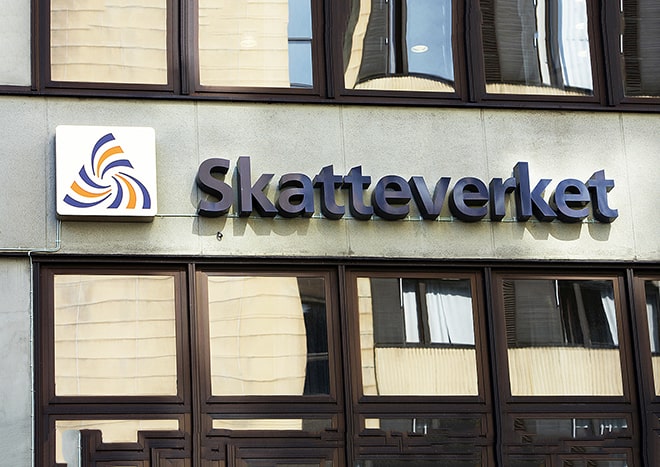
Broader Implications for Nordic Public Governance
This case is not merely an isolated incident — it is a litmus test for the integrity of Nordic public institutions. Sweden, long regarded as a global leader in transparency and data protection, now faces a crisis of trust. The Swedish Tax Agency, responsible for collecting over 90% of state revenue and managing data on nearly 10 million citizens, operates under a sacred social contract: citizens trust the state with their most sensitive financial information, and in return, the state guarantees confidentiality.
If proven, the alleged leak would represent a deliberate and calculated breach of that contract — potentially designed to exert psychological pressure on a taxpayer in dispute. Such conduct, if institutionalized, could erode public compliance and deter voluntary tax reporting, with long-term fiscal consequences.
Moreover, the timing is significant. Sweden is currently undergoing a major digital transformation of its tax administration, including the rollout of AI-driven risk-assessment tools and automated debt collection systems. This case raises urgent questions about whether internal controls have kept pace with technological expansion — and whether a culture of accountability has been sacrificed for operational expediency.
Corporate Governance and Leadership Accountability
The involvement of the Director General herself in the alleged leak is particularly alarming. Unlike routine data breaches caused by cyberattacks or human error, this appears to be an intentional act by senior leadership. It suggests either a reckless disregard for legal norms or a toxic internal culture where “results justify means.”
The Swedish Tax Agency has issued a brief public statement affirming its “commitment to the rule of law and confidentiality,” but has declined to comment on the specifics of the investigation — a typical legal stance, but one that does little to quell public concern.
Analyst Commentary: A Watershed Moment
“This is the most serious integrity case to hit a Swedish public agency in over a decade,” said Dr. Lena Andersson, Professor of Public Administration at the Stockholm School of Economics. “It’s not just about one leak. It’s about whether the guardians of public trust can be trusted. The precedent here will shape how future tax disputes are handled — and whether citizens will continue to believe in the fairness of the system.”
The investigation is now in the hands of the Prosecution Authority’s Special Unit for Public Sector Crimes. No arrests have been made, and no charges filed yet. However, the mere initiation of a criminal probe against the head of a major agency is extraordinary — and signals that authorities are treating this as a matter of national importance.
Conclusion: A Call for Systemic Reform
The investigation into Katrin Westling Palm and her colleagues must be more than a legal proceeding — it must catalyse institutional reform. Sweden must now answer three critical questions:
1. What internal controls failed to prevent senior officials from accessing and disclosing confidential taxpayer data?
2. Was there a culture of intimidation within the agency that normalized the use of confidential information as leverage?
3. How will the agency restore public trust — and will leadership changes be necessary?
As Nordic nations increasingly rely on digital governance and data-driven enforcement, this case serves as a stark warning: without robust ethical guardrails and independent oversight, even the most efficient systems can become instruments of abuse.
The Swedish Tax Agency’s reputation — and Sweden’s global standing as a model of transparent governance — now hangs in the balance.
This article was updated on November 14, 2025, to reflect the formal initiation of the preliminary investigation by the Swedish Prosecution Authority, as confirmed by official sources.
For further analysis on public sector data governance in the Nordics, see our upcoming special report: “Digital Trust in the Welfare State: Lessons from Sweden’s Tax Crisis.”