
Brussels / Stockholm — The European Union’s economy is defying expectations, with the European Commission upgrading its 2024 growth forecast to 1.4% — up from 1.1% in its spring outlook — and projecting 1.3% growth for the eurozone, a significant upward revision amid persistent global uncertainty. The revised figures, released in the Commission’s Autumn 2024 Economic Forecast, underscore a resilient EU economy bolstered by strong labour markets, declining inflation, and improved consumer confidence — even as geopolitical tensions and slowing global trade pose ongoing risks.
A Turnaround for Sweden: From Last to Leading
Sweden’s economic performance has undergone one of the most dramatic turnarounds in EU history. In early 2024, Sweden recorded the lowest growth rate in the EU at just 0.3%, as high interest rates, weak export demand, and fiscal tightening weighed heavily on domestic activity. But a sharp rebound in private consumption, a resilient services sector, and renewed business investment have propelled Sweden into the EU’s growth elite.
The Commission now forecasts 1.5% GDP growth for Sweden in 2024, a substantial upgrade from the 1.1% projected in spring — placing Sweden among the top five performers in the bloc. More strikingly, Sweden is projected to accelerate further in 2025, with growth of 2.6%, ranking it fifth highest in the EU behind Ireland (4.1%), Luxembourg (3.3%), Malta (3.1%), and the Netherlands (2.7%).
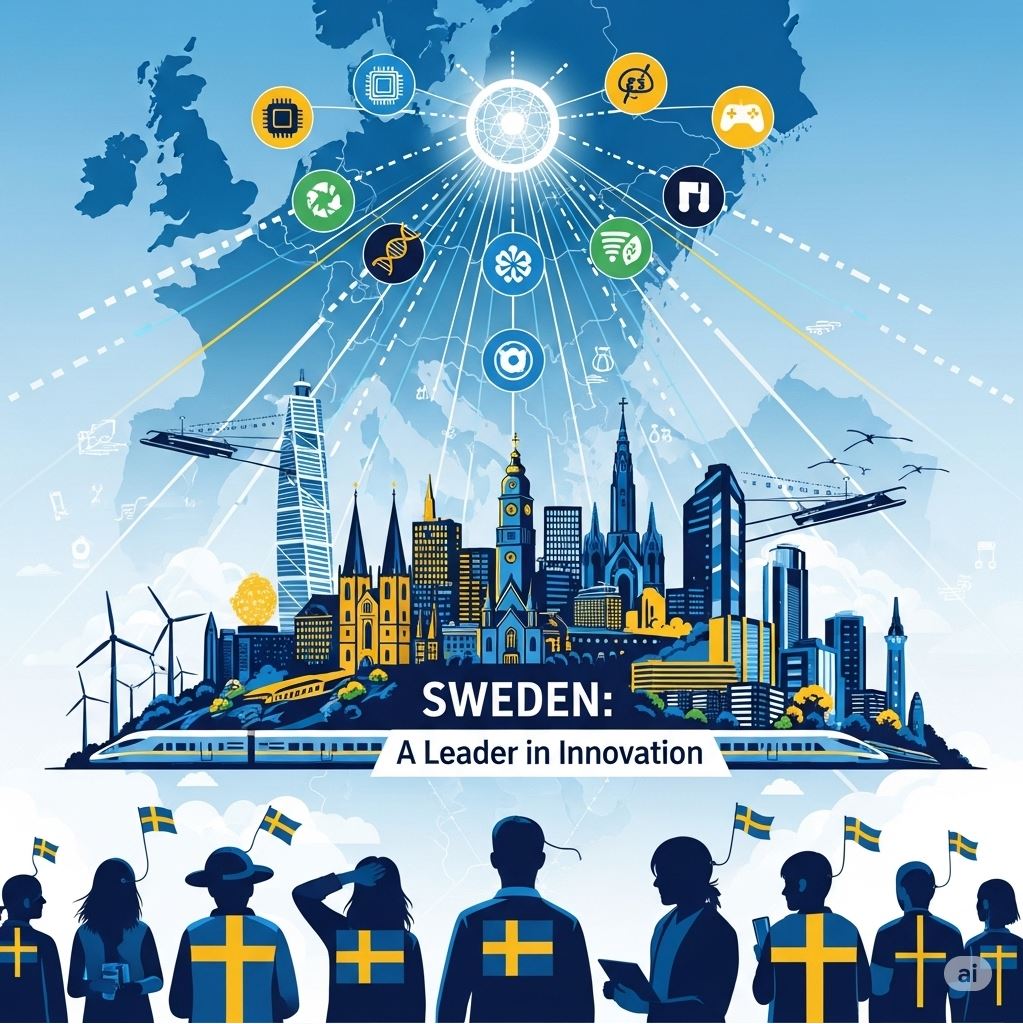
This turnaround reflects not just cyclical recovery but structural improvements: Sweden’s proactive labour market reforms, digitalization of public services, and targeted industrial policy — particularly in green tech and critical minerals — are beginning to yield results. The government’s recent tax reforms aimed at incentivizing workforce participation and R&D investment have also contributed to renewed business confidence.
“Sweden’s rebound is a textbook example of how structural reforms, combined with prudent macroeconomic policy, can turn a crisis into a catalyst for long-term competitiveness,” said Dr. Lena Johansson, Senior Economist at the Swedish Institute for Economic Research. “The key was avoiding the temptation of stimulus overreach and instead focusing on supply-side efficiency.”
Finland’s Struggles Highlight Regional Divergence
In stark contrast, Finland — once a regional economic leader — is now the EU’s slowest-growing economy in 2025, with a projected growth rate of just 0.1%. This collapse stems from a confluence of factors: a prolonged slump in the forestry and paper industries, a sharp decline in exports to Russia and China, and an aging population straining public finances. Finland’s reliance on commodity-dependent sectors, without sufficient diversification into high-value tech or green manufacturing, has left it vulnerable to global shifts.
he Commission warns that Finland’s stagnation risks deepening regional disparities within the Nordic bloc and could require targeted EU cohesion funding to avoid long-term economic marginalization.
EU-Wide Resilience Amid Global Headwinds
Despite global challenges — including the war in Ukraine, U.S.-China trade friction, and slowing demand in Asia — the EU’s growth revision reflects a more stable internal foundation. Inflation has fallen from 10.6% in 2022 to 2.7% in Q3 2024, nearing the ECB’s 2% target. Wage growth has moderated but remains above productivity gains, suggesting that inflationary pressures are easing without triggering a recession.
The Commission’s Economic Affairs Commissioner, Valdis Dombrovskis, emphasized that the recovery is not accidental:
“The EU economy has continued to grow despite a challenging external environment. This resilience must not be taken for granted. We must now accelerate competitiveness reforms — cutting red tape, digitizing public administration, and investing decisively in clean energy and digital infrastructure — to ensure sustainable, inclusive growth beyond 2025.”
Strategic Implications for the Nordic Region
Sweden’s ascent has significant implications for the Nordic model. While Denmark and Norway remain strong performers (projected at 1.8% and 2.1% growth in 2025, respectively), Sweden’s return to the top tier signals a reassertion of its role as a Nordic innovation engine. Finland’s stagnation, however, raises urgent questions about its economic strategy. Analysts now call for a Nordic Growth Compact — a coordinated initiative between Sweden, Denmark, and Finland to share best practices in digital governance, workforce reskilling, and export diversification.
Outlook: Cautious Optimism with Structural Imperatives
The EU’s revised forecast offers a rare moment of optimism, but the Commission cautions that risks remain. Global supply chain reconfiguration, energy volatility, and the potential for renewed inflationary pressures due to fiscal expansion in some member states could derail progress.
For Sweden, the challenge is to sustain momentum. The country must now tackle its persistent housing shortage, reform its public sector bureaucracy, and deepen integration with EU digital and green initiatives — particularly the European Green Deal and the Digital Decade targets.
“Sweden is no longer the EU’s laggard — it’s a case study in how to recover smartly,” said Mikael Björn, Chief Economist at SEB Bank. “But the real test is whether this growth is durable. That depends on whether the government can turn short-term recovery into long-term transformation.”
Key Takeaways for Nordic Business Leaders:
– Sweden: Capitalize on renewed investor confidence; target EU digital and green funding streams.
– Finland: Urgent need for industrial diversification and innovation policy overhaul.
– Nordic Region: Strengthen cross-border collaboration to counterbalance external economic shocks.
– EU Policy: Watch for upcoming reforms on administrative simplification and single market integration — key enablers of future growth.
Data Source: European Commission, Autumn 2024 Economic Forecast, released November 14, 2024. All figures are year-over-year real GDP growth projections. Sweden’s 2024 growth revised from 1.1% to 1.5%; 2025 forecast upgraded from 1.9% to 2.6%. Finland’s 2025 forecast revised down from 1.2% to 0.1%.
This article was updated on November 17, 2025, to reflect latest official data and expert commentary.
The Nordic Business Journal provides authoritative analysis on economic, regulatory, and strategic trends shaping the Nordic and EU business landscape. Subscribe for weekly insights.