
Analysis of West Sweden’s divergent growth patterns reveals a region in structural transition, where traditional sectors struggle while automotive innovation and household spending fuel selective optimism
Executive Summary
The Gothenburg region’s economic trajectory through late 2024 and early 2025 presents a paradox: headline indicators suggest stabilisation even as core industrial pillars face persistent headwinds. While the user characterisation of a “historically strong” third-quarter performance requires qualification, Business Region Göteborg’s data confirms a bifurcated economy where construction and manufacturing remain in recessionary territory, yet commerce and mobility-tech investments create pockets of robust activity. The key differentiator is the accelerating electrification of the automotive sector, which is transforming Gothenburg from traditional manufacturing hub to Europe’s critical battery and mobility innovation cluster.
Sectoral Deep Dive: The Three-Speed Economy
1. Manufacturing: Structural Pressure Meets Electrification Pivot
The manufacturing sector’s challenges are exemplified by Gothenburg-based SKF’s Q3 2025 performance. Despite achieving 2.0% organic growth (a significant improvement from -4.4% in Q3 2024), net sales declined to MSEK 22,482 due to weak automotive demand, particularly in North America. The company’s automotive business contracted -2% while its industrial segment grew 4%, highlighting how Gothenburg’s manufacturing base is splitting between legacy automotive suppliers and diversified industrial firms.
The broader regional picture is concerning. Manufacturing’s economic tendency indicator fell to 89.8 in Q3 2024, signalling recessionary conditions, with three-quarters of companies reporting that low demand constrained production. Export markets remain particularly weak, though policy-driven pre-buy effects in China’s wind sector and resilience in Indian markets provided some offset for firms like SKF.
Critical Insight: The sector’s future hinges on the dual gigafactory strategy. Volvo Cars’ Novo Energy joint venture in Torslanda will produce batteries for 500,000 vehicles annually, while the Volvo Group’s Mariestad facility targets 300,000 tons for heavy vehicles. These projects represent a MSEK multi-billion investment that could reverse manufacturing employment declines, which saw the region lose approximately 4,000 jobs year-over-year with unemployment rising to 6.3%.
2. Construction: Deepening Crisis Before Recovery
The construction sector remains the weakest link. In Q3 2024, 70% of companies reported decreased construction volumes, with financing difficulties and falling tender prices creating a self-reinforcing cycle of uncertainty. Employment contractions were widespread, though some firms anticipate modest tender price increases in subsequent quarters.
Real estate data confirms the pressure. Cushman & Wakefield reported that Gothenburg office completions reached 17,500 sq m in H1 2025 (up 115% year-over-year), yet CBD vacancy rose to 14.0% while prime rents increased to SEK 4,200/sq m. The logistics sector shows better balance with vacancy at just 6.5% in Q3 2025, reflecting e-commerce resilience.
3. Services & Commerce: The Household Spending Engine
The commerce sector emerged as the primary growth driver, achieving “normal-strong” economic tendency readings with retail sales climbing 3.9% year-over-year in Q3 2025, driven by durables (+7.1%). Employment stabilized with more companies hiring than reducing staff. This momentum stems directly from improved household purchasing power as lower interest rates filter through the Swedish economy.
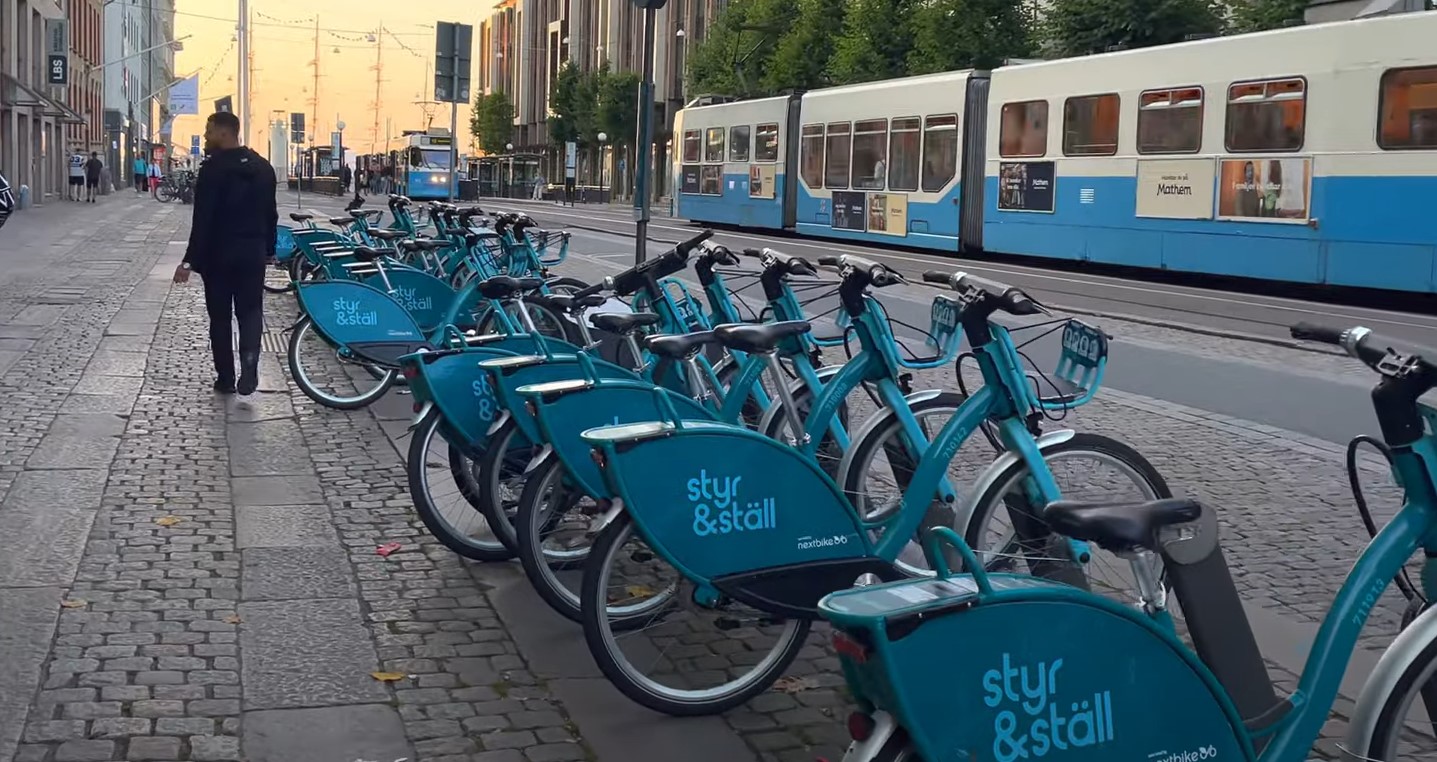
The services sector presents mixed signals. While Business Region Göteborg noted weakening in Q3 2024 with 60% of companies citing poor demand, expectations for the subsequent six months turned optimistic. This optimism is validated by the tech cluster’s expansion: micromobility companies now employ 5,600 people across 122 firms, while global players including Nvidia, Luminar, and Telia’s 5G testbed have established Gothenburg operations.
Investment Landscape: Record Capital Deployment
3 2025 transaction volumes reached SEK 33.0 billion, a 57% year-over-year surge, led by industrial (27%) and residential (26%) assets. This represents unprecedented capital commitment to the region despite sectoral challenges. Notable industrial investments include:
– SKF: MSEK 250 million in automation at its Gothenburg factory
– Preem: EUR 500 million renewable aviation fuel facility in Lysekil
– Volvo Cars: MSEK 10 billion modernization of Torslanda manufacturing complex
– GKN Aerospace: GBP 50 million additive fabrication centre in Trollhättan
The automotive sector alone employs 51,000 people regionally, and the gigafactory projects will require massive skilled labour recruitment, addressing West Sweden Chamber of Commerce CEO Johan Trouvé’s identified “biggest challenge” of talent acquisition.
Nordic Context and Forward Outlook
Compared to Nordic peers, Gothenburg’s office yield compression to 4.55% aligns with regional stabilization trends, though vacancy rates remain elevated versus Stockholm’s 8.0% CBD level. The region’s 6.5% logistics vacancy significantly outperforms Stockholm’s 11.5%, underscoring Gothenburg’s port and distribution advantages.
Labour Market Dynamics: Terminations rose 50% year-over-year in early 2025, disproportionately affecting automotive workers. However, this appears cyclical rather than structural, tied to traditional vehicle production adjustments. Job vacancies decreased 23% in H1 2025, though this beat the national average decline.
2026-2027 Inflection Point: The consensus forecast suggests the economy will reach “normal state” by mid-2025, with gigafactory production scaling through 2026-2027. The curtailed office development pipeline—only 90,000 sq m under construction with 35% pre-leased—will mitigate oversupply risks as demand recovers.
Authoritative Assessment
The characterisation of “historically strong” performance requires nuance: selective strength better describes Gothenburg’s economy. The region is simultaneously experiencing its deepest industrial transformation since the automotive industry’s establishment while managing cyclical construction and export manufacturing downturns. The SEK 33 billion Q3 2025 investment volume and resilient prime rents signal institutional confidence in the structural story, even if current employment and production metrics appear weak.
Key Risk: The automotive transformation’s success is not guaranteed. If electric vehicle adoption slows or battery oversupply emerges, Gothenburg’s concentrated bet could prolong manufacturing weakness.
Key Opportunity: The integration of software and connectivity—now 40% of vehicle costs—positions Gothenburg to capture higher-margin technology services, potentially elevating business services’ already-dominant 14.3% share of regional turnover.
For Nordic Business Journal readers, the takeaway is clear: Gothenburg’s near-term data may appear tepid, but the capital allocation and strategic positioning represent one of Europe’s most consequential industrial reinventions. Monitor gigafactory progress and tech cluster employment—not traditional manufacturing indicators—as the true barometers of regional health.