
Copenhagen, 21 November 2025 – Denmark’s economy expanded by a seasonally adjusted 2.3% quarter-on-quarter in Q3 2025, marking the strongest quarterly performance since late 2021, according to preliminary data from Statistics Denmark. However, this apparent resilience—widely attributed to pharmaceutical exports—obscures a more fragile reality: stripped of the pharma sector’s contribution, underlying growth would have been a modest 0.7%, exposing the economy’s dangerous concentration risk.
The Novo Nordisk Paradox
The third-quarter acceleration follows a turbulent period for Denmark’s economic narrative. In late August, the Frederiksen government slashed its 2025 GDP forecast from 3.0% to just 1.4%, citing inventory corrections and intensifying competition in the weight-loss drug market that has pressured Novo Nordisk’s outlook. The pharmaceutical giant subsequently announced 9,000 global job cuts, with 5,000 positions eliminated domestically—directly challenging the “booming economy” storyline.
Yet Q3 data reveals a temporary reprieve. Pharmaceutical exports rebounded sharply, contributing the lion’s share of the 2.3% headline figure. This volatility underscores a critical vulnerability: Denmark’s six million inhabitants now depend on a handful of multinational corporations for economic dynamism. As Copenhagen Business School professor Martin Jes Iversen notes, the ten largest Danish firms accounted for 20% of GDP in the 1970s-1990s; today that figure approaches 40%.
Ex-Pharma Stagnation
Chief economists at major Nordic banks caution that Denmark is experiencing “pharma-led growth atop underlying stagnation.” Private consumption, while growing for seven consecutive quarters, remains below 2021 peaks despite robust real wage gains. Households continue hoarding savings—now 15% of disposable income—dampening the expected consumption-driven recovery. Industrial production excluding pharma and housing construction have contracted, while business confidence indicators hover near neutral territory.
The tariff war and Germany’s sluggish 0.2% quarterly growth have dampened traditional export channels, making pharmaceutical exports—which face their own trade-related inventory distortions—even more critical to Denmark’s trade balance.
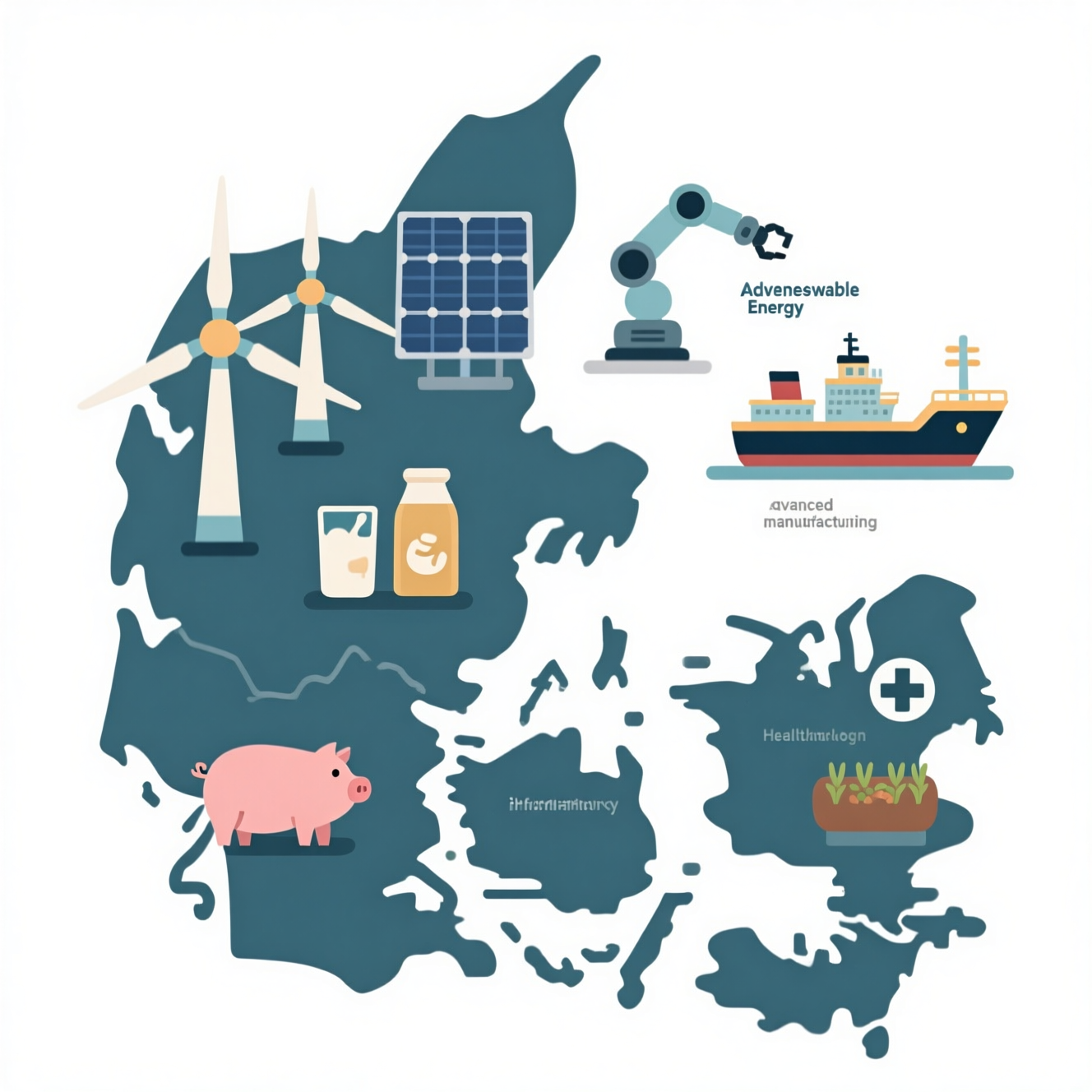
Structural Vulnerabilities Ahead
The International Monetary Fund’s July 2025 Article IV consultation flagged “strong pharmaceutical sector concentration risk” as a key concern. While Novo Nordisk’s US-based production mitigates direct trade war impacts, the company’s market share erosion—compounded by Eli Lilly’s Mounjaro launch in Denmark—raises questions about sustainability.
Compounding this, the European Central Bank’s ongoing rate cuts have yet to translate into broad-based investment recovery. Nordea’s analysis suggests household savings may unlock in 2026 when tax reforms take effect, but consumer confidence remains deeply negative, and card transaction data shows only modest real spending growth.
Policy Implications
Denmark’s projected 2.4% budget surplus for 2025—while robust—masks the challenge of economic diversification. The government’s fiscal space, bolstered by pharma-derived corporate tax revenues (Novo alone paid nearly €3 billion in 2024), provides room for productive investment. However, the risk profile mirrors Finland’s Nokia-era over-concentration and Iceland’s 2008 banking crisis.
For Nordic Business Journal readers, the key takeaway is not Denmark’s quarterly GDP beat, but the urgent need for structural rebalancing. As one chief economist privately observed: “We’re celebrating a 2.3% growth figure built on a single sector’s volatile quarter, while simultaneously forecasting a halving of annual growth and watching our national champion shed thousands of domestic jobs. That is not economic resilience—it’s a vulnerability alarm.”
Analysis: The Q3 surge represents inventory restocking and temporary market share stabilization rather than fundamental strength. Denmark’s economy remains a tale of two stories: world-leading pharma innovation coexisting with domestic stagnation. Sustainable growth requires channelling pharmaceutical windfalls into diversification, infrastructure, and productivity-enhancing reforms before the next downturn arrives.