
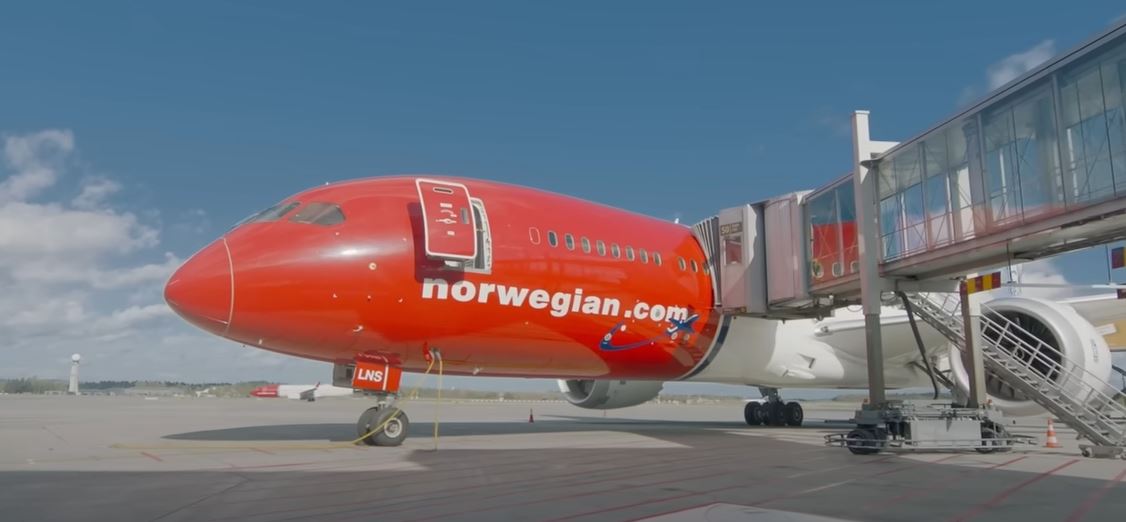
Stockholm/Göteborg — Norwegian Air Shuttle has announced the launch of four new direct routes from Sweden’s two major international airports — Stockholm Arlanda and Gothenburg Landvetter — set to commence in summer 2026. The destinations include Montpellier (France), Basel (Switzerland), Riga (Latvia), and — most controversially — Beirut, Lebanon.
The decision to launch a direct flight to Beirut comes despite an active and severe travel advisory issued by the Swedish Ministry for Foreign Affairs (MFA), which currently advises against all non-essential travel to Lebanon, including the capital city and its international airport.
Government Warning: “All Travel Discouraged”
The Swedish MFA’s advisory — updated as of November 2025 and valid until further notice — categorizes Lebanon as a high-risk destination due to ongoing regional instability. Specifically, the MFA warns:
– Against all travel to Lebanon, including Beirut.
– Against non-essential travel to specific districts: Batroun, Jbail, Kesroun, El Metn, and central Beirut.
– Extreme caution around Beirut-Rafic Hariri International Airport and Highway 51 (the primary route connecting the airport to the city center), due to frequent rocket fire, drone strikes, and unexploded ordnance.
– High risk of airspace closure if conflict escalates between Israel and Hezbollah — or, critically, if Iran becomes directly involved.
The MFA explicitly warns that Swedish citizens in Lebanon during a crisis cannot rely on state evacuation assistance. “Travelers must arrange their own return,” the advisory states. “Access to healthcare, food, water, and banking services may be severely restricted or unavailable.”
Additionally, the MFA cautions that travel insurance policies may become void for trips to Lebanon under current advisories. Travelers are urged to verify coverage with insurers before booking.
Why Beirut? A Calculated, But Dangerous, Commercial Move
Norwegian’s decision to serve Beirut — a city where commercial aviation has been suspended by most Western carriers since October 2023 — reflects a bold commercial calculus. The airline is targeting:
– Diaspora demand: An estimated 15,000–20,000 Swedes of Lebanese descent reside in Sweden, many with family ties in Beirut.
– Niche tourism: A small but growing segment of adventurous travellers and cultural tourists.
– Market differentiation: Positioning Norwegian as the only low-cost carrier offering direct access to a high-risk, high-reward destination — potentially capturing premium pricing on limited supply.
This move follows Norwegian’s broader strategy of aggressive expansion into under-served, politically sensitive markets — a tactic that has previously drawn criticism in destinations such as Ukraine and Georgia.
Industry Response: Mixed Signals
Charlotte Ljunggren, Director of Marketing and Sales at Swedavia — which operates Arlanda and Landvetter airports — welcomed Norwegian’s investment as a “sign of continued strong demand for international connectivity.”
“Norwegian’s expansion reinforces Sweden’s position as a key aviation hub in Northern Europe. These new routes strengthen access to established European markets and open doors to emerging destinations, supporting both business and personal travel.”
Yet Ljunggren’s statement sidesteps the core ethical and safety dilemma: Can an airport authority ethically endorse a route that its own government has deemed too dangerous for its citizens?
Notably, the MFA’s advisory applies to Swedish citizens — not to foreign nationals. This means Norwegian can legally operate the flight, and non-Swedish passengers (e.g., Lebanese expats from other EU countries, or international tourists) remain eligible to book. However, this legal loophole does not absolve Norwegian of reputational or operational risk.
The Geopolitical Context: A Region on Edge
The security situation in Lebanon remains volatile despite a fragile ceasefire between Israel and Hezbollah, brokered in November 2024. While direct large-scale bombardments have paused, daily incidents persist:
– Drone strikes on border villages
– Rocket fire targeting Israeli military outposts near the Litani River
– Sporadic attacks in southern Beirut and the Bekaa Valley
– Intelligence reports suggest Hezbollah is rebuilding its rocket arsenal, with Iran providing advanced systems
The MFA’s warning about potential Iranian involvement is not speculative. In recent months, Iran has escalated rhetoric against Israel and has been linked to missile transfers to Hezbollah. A full-scale Iran-Israel war — now considered a plausible scenario by NATO and EU defence analysts — would likely trigger immediate closure of Lebanese airspace, stranding thousands.
Commercial Risk vs. Ethical Responsibility
While Norwegian’s business model thrives on low fares and high volume, operating a route to a conflict zone introduces unprecedented operational and reputational risks:
– Flight cancellations: If airspace closes, Norwegian faces compensation liabilities under EU Regulation 261/2004 — and potential lawsuits from stranded passengers.
– Insurance voidance: Passengers may discover too late that their policies exclude conflict zones.
– Brand damage: Associating the Norwegian brand with a war zone could alienate safety-conscious travellers, corporate clients, and ESG investors.
– Regulatory scrutiny: The Swedish Transport Agency and EU aviation authorities may be compelled to review whether the airline has conducted adequate risk assessments.
Expert Analysis: A Short-Term Win, Long-Term Liability
Dr. Erik Sjöberg, Senior Fellow at the Swedish Institute of International Affairs, observes:
“Norwegian is betting that demand will outweigh risk — and that passengers will accept the trade-off. But this is not a market like Istanbul or Cairo. Beirut is a flashpoint. One major escalation, one downed aircraft, one stranded passenger, and the fallout could be catastrophic — not just financially, but in terms of public trust. This is not entrepreneurship; it’s gambling with human lives.”
Recommendations for Travelers and Businesses
1. For Swedish Citizens: Do not travel to Lebanon. The MFA’s advice is not a suggestion — it is a legally recognized warning with serious consequences for insurance, consular aid, and personal safety.
2. For Non-Swedish Travelers: Verify your nationality’s advisory status. Many EU countries (e.g., Germany, France, UK) also advise against all travel to Lebanon.
3. For Corporate Travel Managers: Exclude Lebanon from approved destinations. Any business travel to Beirut now carries significant liability.
4. For Investors: Monitor Norwegian’s Q1 2026 earnings report closely. This route may generate early revenue — but will likely trigger increased insurance premiums, operational disruption, and regulatory attention.
Conclusion: Profit vs. Prudence
Norwegian’s decision to fly to Beirut is a textbook case of commercial ambition outpacing geopolitical awareness. While the airline may profit from niche demand in the short term, it exposes itself — and its passengers — to extraordinary risk in a region where peace is fragile and unpredictable.
The Swedish government’s warning exists for a reason: to protect lives. Norwegian’s choice to ignore it — not legally, but ethically — raises troubling questions about the limits of corporate responsibility in an age of global instability.
As the world watches the Middle East teeter on the brink, airlines must ask: Are we connecting people — or endangering them?
Nordic Business Journal Insight:
Norwegian’s Beirut route is a bellwether for the future of low-cost aviation. In an era of climate scrutiny, ESG mandates, and geopolitical volatility, airlines can no longer operate in a vacuum. Profitability must be weighed against duty of care — and the cost of a single misstep could be measured not in euros, but in lives.
This story is being monitored by the European Commission’s Aviation Safety Unit and may trigger broader regulatory review across the EU.
Updated: November 22, 2025 | Sources: Swedish Ministry for Foreign Affairs, Swedavia, Norwegian Air Shuttle, NATO Intelligence Briefing, EU Aviation Safety Agency (EASA)