
Helsinki, Finland — One of Finland’s largest fuel retail chains, Teboil, is on the verge of complete operational collapse — a direct consequence of U.S. sanctions targeting Russian oil giants Lukoil and Rosneft. With 430 stations across Finland, Teboil has been a familiar fixture for decades. But following the termination of fuel supply by Finland’s national energy leader, Neste, and the freezing of financial transaction systems, the chain is rapidly unravelling — not by market failure, but by geopolitical force.
The Sanctions Trigger: A Global Ripple Effect
On October 28, 2025, the United States imposed sweeping secondary sanctions on Lukoil and Rosneft, targeting their global financial networks and downstream operations. The move, announced by the U.S. Treasury under President Donald Trump, was designed to cripple Russia’s primary sources of export revenue — Lukoil and Rosneft together account for nearly 50% of Russia’s crude oil exports, or approximately 3.1 million barrels per day, according to the BBC.
While the sanctions were aimed at Moscow’s war economy, their impact has ricocheted across Europe — particularly in Finland, where Lukoil owns 100% of Teboil through its subsidiary Lukoil Baltic. Unlike many European nations that have severed direct energy ties with Russia since 2022, Finland maintained a pragmatic approach: importing crude from Russia via pipelines and refining it domestically, while allowing Lukoil to operate its retail network under long-standing commercial agreements.
That equilibrium has now shattered.
Neste Halts Deliveries: The First Domino Falls
On November 10, 2025, Neste — Finland’s state-influenced oil refiner and the nation’s dominant fuel supplier — publicly announced it would cease all deliveries to Teboil stations. The decision, while not legally mandated, was driven by compliance risk and reputational pressure. Neste, which processes crude from multiple global sources including Russia, has long positioned itself as a leader in sustainable energy transition — and could not afford to be seen as indirectly supporting sanctioned entities.
“Neste’s decision was not taken lightly,” said a senior executive familiar with the matter, speaking on condition of anonymity. “But the legal and reputational exposure was simply too high. We have zero tolerance for any transaction chain that could be interpreted as facilitating sanctioned entities.”
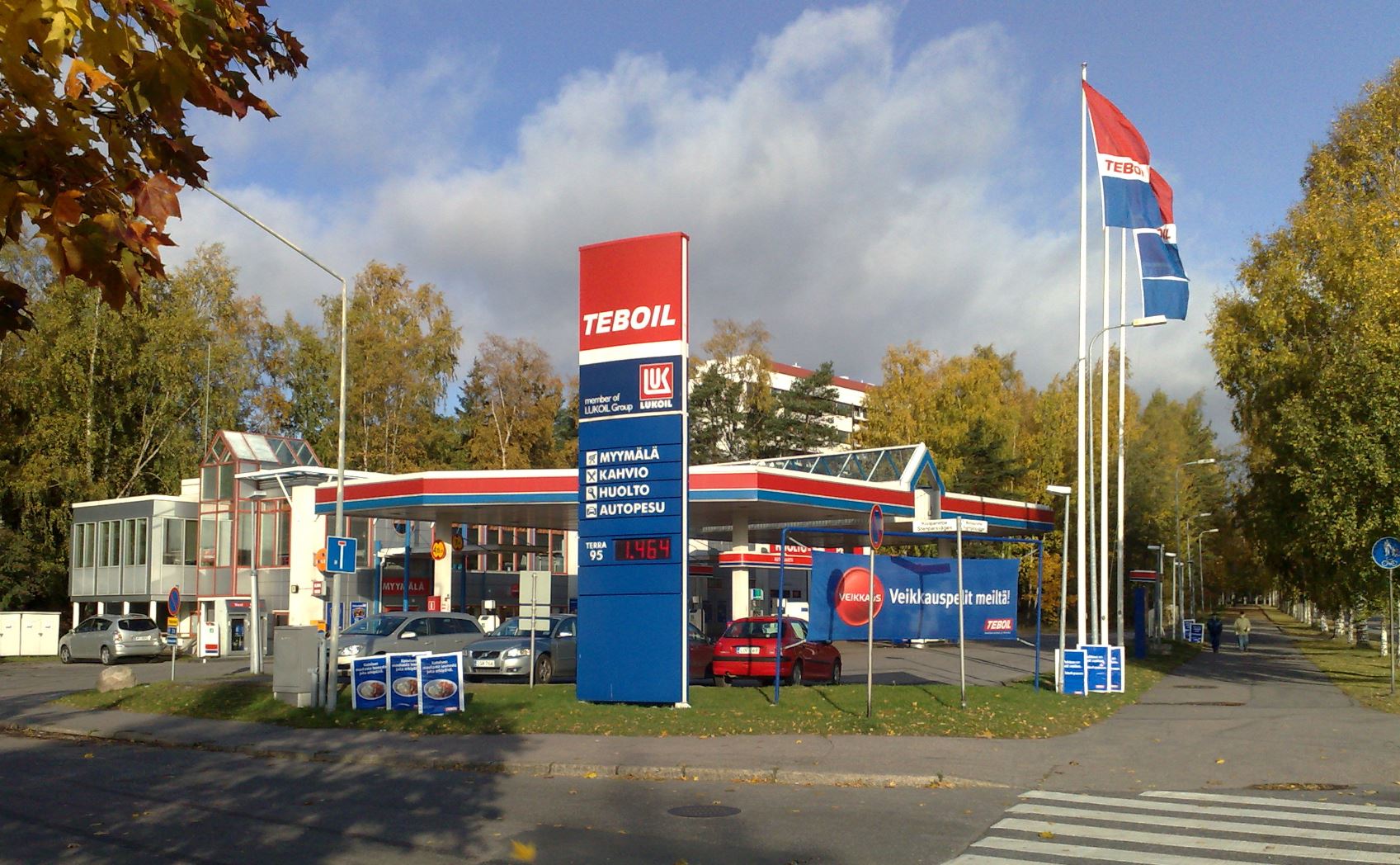
The result: Teboil’s fuel supply chain evaporated overnight.
Stations Go Dark: Fuel Runs Out, Payments Freeze: Teboil’s operational collapse is now visible on the ground.
– Fuel shortages: At dozens of stations, pumps display prices such as €3.888/liter — not as a promotional tactic, but as a placeholder indicating empty tanks. “We wanted to inform customers about how to interpret the price signs and what happens when the fuel runs out,” explained Toni Flyckt, Teboil’s Marketing and Communications Manager, in a statement to Helsingin Sanomat.
– Payment failures: Card terminals at multiple locations no longer process payments. According to Danish fintech analytics firm Boosted DK, payment processors including Visa and Mastercard have blocked transactions linked to Teboil’s merchant accounts due to sanctions compliance protocols. Even cash-only stations are being shut down as inventory depletes.
– “Cold stations” first: Teboil has begun closing its least profitable, rural locations — so-called “cold stations” — as it conserves dwindling reserves for high-traffic urban hubs. But with no new supply arriving, even those hubs are now running dry.
“The number of stations without fuel is increasing daily,” Teboil confirmed in a November 18 internal memo obtained by HS. “We are reducing stock volumes to manage the crisis — but there is no replenishment.”
The Human Cost: Finnish Franchisees Left in the Lurch
Perhaps the most tragic dimension of this collapse is its human toll. While Lukoil owns the brand and the infrastructure, nearly all 430 Teboil stations are operated by independent Finnish franchisees — local entrepreneurs who invested their life savings into these businesses. Many are small, family-run operations with no access to alternative supply chains.
“I feel terrible for the owners,” said a Helsinki resident interviewed by Swedish Yle. “They didn’t choose this. They just run a gas station. Now they’re left with empty pumps, unpaid bills, and no way to reopen.”
Teboil has not issued a formal bankruptcy filing, but industry insiders believe it is inevitable. “This isn’t a liquidity issue — it’s an existential one,” said Petri Kallio, energy analyst at the Finnish Institute of Economic Research. “Without fuel, there is no business. And without supply, there is no path forward.”
Strategic Miscalculation: Sanctions Without a Contingency Plan
The U.S. sanctions, while strategically coherent in targeting Russian oil revenues, reveal a critical flaw in their implementation: a failure to account for the embeddedness of Russian-owned retail assets in neutral or allied economies.
Finland, a non-NATO member until 2023 and still heavily integrated with Russian energy infrastructure, was never a primary target of these sanctions. Yet it is now bearing the brunt of collateral damage.
“This is a textbook case of unintended consequences,” said Dr. Lena Söderström, Senior Fellow at the Stockholm School of Economics. “The U.S. assumed that cutting off Russian oil exports at the source would be sufficient. But in Europe, downstream assets — retail networks, storage terminals, logistics partnerships — remain legally and operationally entangled. Sanctions must evolve from blunt instruments to precision tools.”
The Path Forward: What Comes Next?
For Teboil: The chain is likely to be liquidated. Lukoil has not issued any public statement since early November. Analysts expect the company will abandon its Finnish operations entirely, writing off its €400–500 million investment as a strategic loss.
For Finland: The government is scrambling to secure alternative supply. Neste has signalled willingness to temporarily supply critical infrastructure — hospitals, emergency services — but not commercial retailers. The Finnish Energy Authority is now evaluating emergency measures to allow temporary fuel imports from non-sanctioned sources, including Norway, the Netherlands, and potentially even Saudi Arabia via Baltic ports.
For the EU: The incident has reignited debate over the need for a unified EU sanctions compliance framework. Unlike the U.S., the EU has not yet mandated secondary sanctions on Russian oil retailers. But Teboil’s collapse may force a rethink — particularly as similar risks loom in Sweden, Estonia, and Latvia, where Russian-linked fuel retailers still operate.
For global markets: This episode underscores a new reality: energy geopolitics no longer respects national borders or corporate separations. A U.S. decision on Russian crude now determines whether a Finnish family can pay their mortgage on a gas station they’ve operated for 20 years.
Conclusion: A Warning for the New Energy Order
Teboil’s collapse is not merely the failure of a gas station chain. It is a stark demonstration of how modern sanctions, however morally justified, can inflict devastating collateral damage on innocent actors — local businesses, employees, and consumers — when implemented without granularity, foresight, or transition planning.
As Europe accelerates its energy decoupling from Russia, the Teboil case must serve as a cautionary blueprint: sanctions must be surgical, not scattershot. The next crisis may not be in Finland — but it will be somewhere else, and the human cost will be just as real.
This article was updated on November 22, 2025, to reflect the latest developments from Teboil, Neste, and Finnish authorities. Data sources include Helsingin Sanomat, Yle, BBC, Boosted DK, and interviews with energy analysts and industry insiders.
About the Nordic Business Journal
The Nordic Business Journal delivers authoritative analysis of economic, regulatory, and geopolitical trends shaping the Nordic and Baltic markets. Founded in 2025, we provide decision-makers with context, foresight, and actionable insight beyond the headlines.