
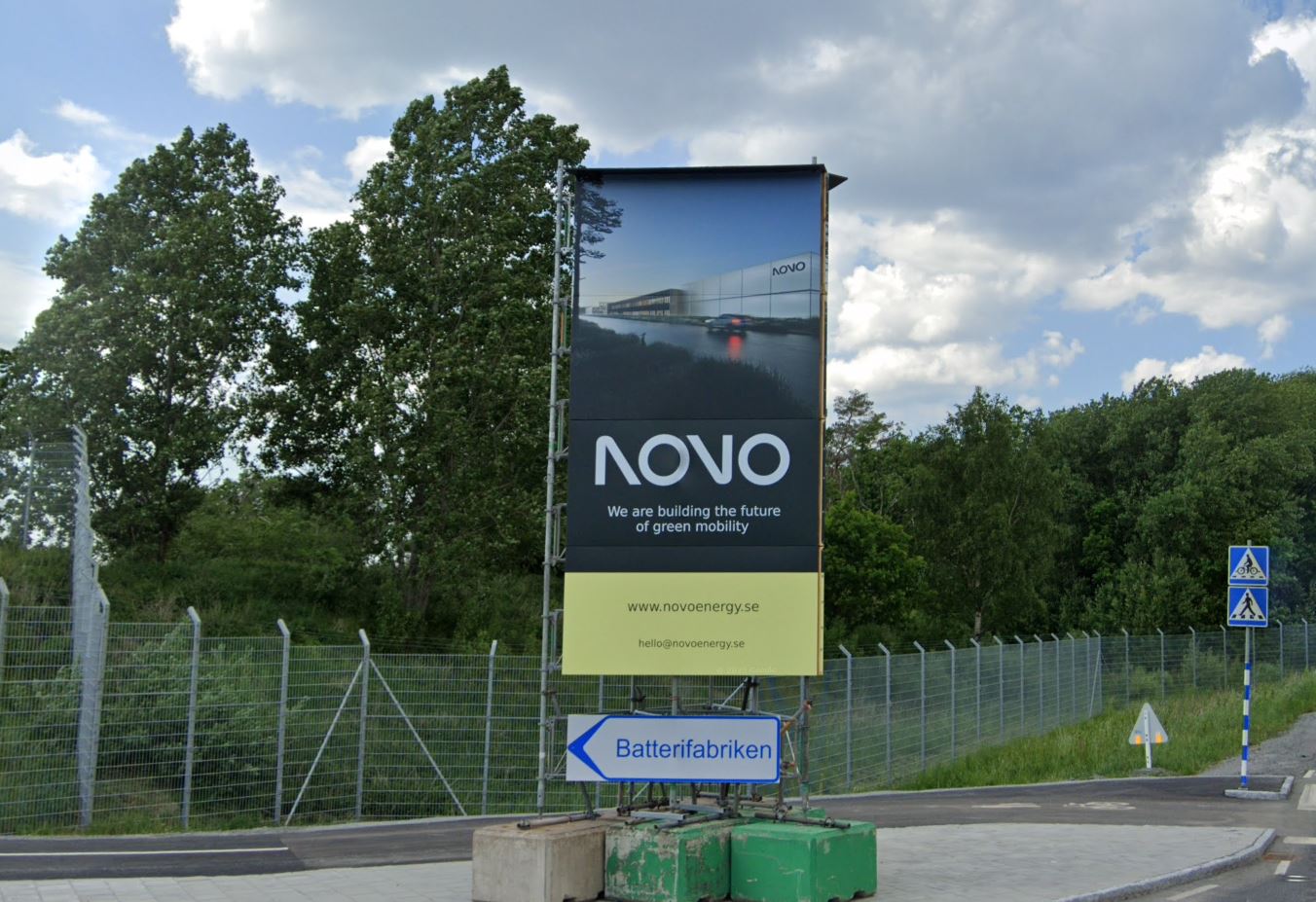
Gothenburg, November 26, 2025 — The European Commission has approved a €201.5 million (approximately SEK 2.2 billion) grant to Novo Energy, the Volvo Cars–owned battery manufacturing venture based in Gothenburg, Sweden. The funding is part of a broader EU initiative allocating €643 million (SEK 7 billion) to five strategically significant battery production projects across Europe, aimed at accelerating the continent’s transition to sustainable mobility and reducing strategic dependence on non-EU battery supply chains.
A Strategic Investment in Sweden’s Electrification Future
The Novo One facility—the flagship project of Novo Energy—has been recognized by EU authorities for its “significant contribution to reducing CO₂ emissions in the European transport sector” and its role in advancing large-scale electrified mobility. According to official EU documentation, the factory is projected to create 1,000 direct jobs in the Gothenburg region and achieve an annual production capacity of 13.35 gigawatt-hours (GWh).
This represents a substantial downscaling from the original 2021 vision, when Novo Energy was launched as a 50-50 joint venture between Volvo Cars and Northvolt, the once high-flying Swedish battery startup. At the time, the partners envisioned a 50 GWh plant employing up to 2,500 people and producing bespoke lithium-ion battery cells exclusively for Volvo’s next-generation electric vehicles (EVs).
Turbulence and Transition: From Northvolt Partnership to Volvo’s Solo Play
The trajectory of Novo Energy shifted dramatically in early 2025, when Northvolt filed for bankruptcy amid a severe liquidity crisis and inability to meet its financial commitments to the joint venture. Volvo Cars swiftly moved to assume full ownership of Novo Energy—an indication of its commitment to vertical integration in its EV supply chain. However, the automaker has since acknowledged the need for a strategic industrial or financial partner to realize the plant’s full potential.
Despite the absence of such a partner as of late November 2025, the EU’s decision to include Novo One in its latest round of Important Projects of Common European Interest (IPCEI) on Batteries underscores confidence in Volvo’s ability to execute the scaled-down version of the project. Industry analysts interpret the move as both a vote of confidence in Volvo’s industrial credibility and a strategic imperative to maintain momentum in Europe’s domestic battery ecosystem amid intensifying global competition—particularly from China and the United States.
Geopolitical Context and Industrial Policy Implications
The EU’s backing of Novo One aligns with its wider Net-Zero Industry Act and the European Battery Alliance, which aim to secure at least 90% of the EU’s battery demand domestically by 2030. With the other four IPCEI-funded battery projects located in France, Germany, and Poland, the Gothenburg facility remains the only Nordic recipient in this funding cycle—a critical nod to Sweden’s ambitions as a hub for green industrial innovation.
Experts caution, however, that without a deep-pocketed battery technology partner, Novo Energy may struggle to scale beyond its initial 13.35 GWh phase. “Volvo has engineering and market reach, but battery cell manufacturing at scale requires specialised expertise and capital intensity that few OEMs can shoulder alone,” notes Lena Bergström, senior analyst at the Stockholm-based Institute for Industrial Policy.
Still, the EU grant significantly de-risks the initial investment, potentially making Novo One a more attractive proposition for potential partners—ranging from Asian battery giants like CATL or LG Energy Solution to European players seeking entry into the Nordic market.
Looking Ahead
Volvo Cars has reaffirmed its 2030 target of becoming a fully electric carmaker and has staked its transformation on controlling key elements of its EV value chain. The Novo One plant, even at reduced capacity, is central to that strategy—ensuring supply security, cost control, and alignment with Sweden’s stringent environmental standards.
As the EU continues to prioritize industrial sovereignty and climate goals in tandem, the Gothenburg battery factory stands as both a symbol of ambition and a test case for how legacy automakers can navigate the complex, capital-intensive transition to electrification—especially in the wake of disrupted partnerships and volatile markets.
For the Nordic region, the EU’s support sends a clear signal: despite setbacks, Europe remains committed to anchoring advanced green manufacturing in the North. The next chapter for Novo Energy—and Sweden’s role in the European battery ecosystem—will likely hinge on who steps forward as Volvo’s next ally in this high-stakes industrial race.