
Recent investments in submarine capabilities across the Nordic region are driven by a combination of factors: NATO’s operational requirements, a deteriorating security environment in the High North and Baltic, and a growing desire for greater regional autonomy in key areas like undersea warfare and seabed protection. These investments are not merely about fulfilling NATO obligations; they are strategic moves aimed at securing critical sea routes, denying adversary access to vital infrastructure, and ensuring Nordic control over sensitive naval capabilities in their proximity.
Norway’s Strategic Response: A Stronger Submarine Fleet
Norway’s decision to add two Type 212CD submarines to its fleet—bringing its total to six—signals a clear response to rising Russian submarine activity, particularly from the Kola Peninsula into the Barents and North Atlantic. Norway’s investment includes co-financing a second production line in Germany, a move that strengthens its industrial ties with Germany while bolstering NATO’s northern flank.
Key points in Norway’s strategy:
- A six-boat fleet enables continuous monitoring and presence in the Barents and North Atlantic, a task difficult for a four-boat fleet.
- The mission focuses on tracking and countering Russian nuclear-capable submarines emerging from the Kola bastion, as well as protecting undersea cables and energy infrastructure across the Norwegian Sea and GIUK Gap.
- Co-financing the German production line deepens industrial interdependence with Germany, cementing the Type 212CD as a key asset within NATO’s northern submarine fleet.
Norway’s approach reflects both NATO burden-sharing and a desire to retain control over its offshore security. It underscores a broader role within NATO, ensuring the protection of critical undersea infrastructure while strengthening deterrence capabilities against Russian maritime threats.
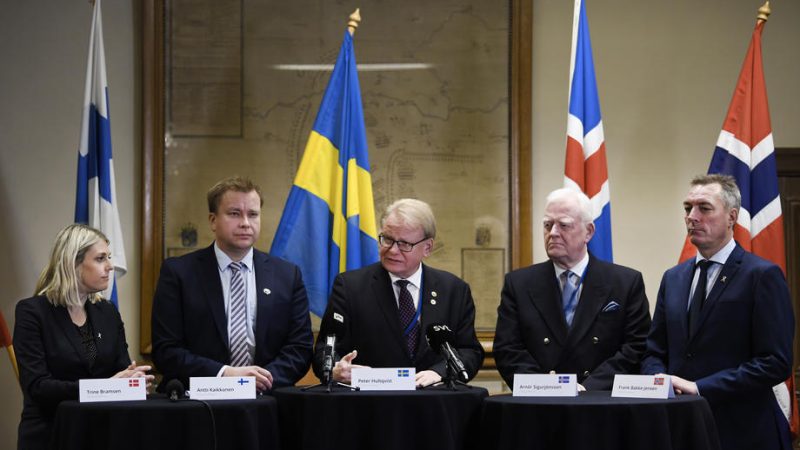
The Broader Nordic Trend: A Shift Towards Submarine Dominance
Across the Nordic region, submarines are becoming a cornerstone of national defence strategies and NATO contributions:
- Sweden is investing heavily in the A26 Blekinge-class submarines, with costs renegotiated upward and delivery timelines pushed into the 2030s. The focus is on securing Baltic Sea access, seabed warfare, and discreet intelligence collection.
- Poland has chosen the Swedish A26 for its own submarine fleet, embedding Swedish design as the Baltic standard and reinforcing a Swedish-Polish-Nordic submarine cluster on NATO’s eastern flank.
- Denmark and Norway are expanding their surface fleets and surveillance capabilities, with an emphasis on anti-submarine warfare (ASW), seabed monitoring, and new ASW partnerships with the UK. These investments assume that Russian submarine operations pose the most significant high-end threat in the North Atlantic-Baltic region.
This growing focus on submarines gives the Nordic states significant leverage within NATO. They contribute niche undersea and Arctic-Baltic capabilities that are unmatched by other members, moving beyond generic military contributions to provide specialized expertise in key areas.
NATO Requirements vs. Nordic Autonomy
NATO’s capability targets emphasize credible anti-submarine warfare, long-range precision strikes, and the protection of sea lanes and undersea infrastructure, particularly along the northern flank. The Nordic investments—Norway’s additional submarines, Sweden’s A26s, and linked surface/air ASW projects—align closely with NATO’s strategic goals. However, the Nordic states are going beyond mere compliance to assert their own interests and capabilities.
Several factors drive this broader autonomy:
- Geography places the Nordics in charge of critical maritime zones like the GIUK Gap, the Barents Sea, and the Baltic. Without control over these areas, they risk becoming overly dependent on U.S. or UK forces in a crisis.
- Sovereignty: Submarines are inherently sovereign tools. They can operate covertly, collect intelligence, and disrupt adversary forces without relying on constant political negotiations with NATO allies.
- Industrial Policy: Both Norway’s partnership with Germany for the Type 212CD and Sweden’s A26 exports to Poland aim to strengthen domestic shipbuilding and systems integration, fostering long-term defence autonomy.
In essence, the Nordics are using NATO’s rearmament drive to finance capabilities they would have pursued regardless—enhancing their autonomy and shaping NATO’s standards in areas like undersea warfare and Arctic defence.
The Integration of Long-Range Strike and Submarine Power
One of the most significant aspects of the Nordic submarine investments is their integration with long-range strike capabilities. Norway’s plan to introduce 500 km-range land-based missiles, alongside its expanded submarine fleet, signals a shift towards a more integrated and flexible deterrence strategy.
This combination could enable coordinated strikes across undersea, surface, and land-based domains against Russian military infrastructure in the High North. Such a strategy fits with NATO’s broader goal of denying Russia freedom of manoeuvre from the Kola Peninsula into the wider Atlantic.
The Nordics are moving towards a “Nordic bastion” defence concept:
- Undersea Forces: A26, Type 212CD, and future Nordic submarines complicate Russian fleet breakout while posing a threat to high-value units.
- Surface Fleets and ASW: Optimized for anti-submarine warfare, these fleets, integrated with UK and U.S. forces, will patrol critical chokepoints like the GIUK Gap and Baltic approaches.
- Long-Range Strike: The introduction of long-range missiles adds a conventional deterrence layer, threatening Russian bases, ports, and logistical hubs.
This growing synergy between submarines and long-range strike capabilities strengthens NATO’s northern defence posture while simultaneously empowering the Nordics to assert a more self-reliant role in regional security.
Conclusion
The surge in Nordic submarine investments is more than just a response to NATO’s operational needs—it reflects a broader strategic vision for regional autonomy, security, and technological leadership in undersea warfare. As the Nordics continue to enhance their naval capabilities, they are not just meeting NATO’s demands but also reshaping the defence landscape in the High North and Baltic. The result is a more self-assured Nordic defence posture, capable of contributing significantly to NATO’s deterrence strategy while securing national interests in one of the world’s most strategically important regions.
The Nordic Business Journal strives for accuracy and fairness. If we learn that our reporting is flawed or misleading, we take prompt action to correct or clarify it. If you see a mistake, please email us at info@Nordicbusinessjournal.com