
In a striking testament to her geopolitical clout, Danish Prime Minister Mette Frederiksen has been named the second most powerful person in Europe by Politico in its annual “Power Ranking” for 2025. Only U.S. President Donald Trump—whose foreign policy continues to reverberate across the Atlantic—ranks higher in influence over European affairs.
“We all live in Mette Frederiksen’s Europe. We just don’t know it yet,” Politico asserts, capturing the quiet but profound impact the Danish leader has had on shaping the continent’s political compass in recent years.
A New Nordic Model Gains Traction
Frederiksen’s rise is rooted in her distinctive brand of pragmatic social democracy—one that blends traditional left-wing commitments to welfare and labour rights with hardline stances on migration and robust defence policy. This hybrid approach, once dismissed as politically contradictory, has now become a blueprint adopted by centrist and even right-leaning governments across the EU.
Politico singles out her role in transforming European migration policy as particularly influential. Once criticised for policies deemed “inhumane”—including Denmark’s controversial 2021 law allowing the offshoring of asylum processing—Frederiksen has now successfully pushed the EU-wide adoption of third-country reception and repatriation centres, a proposal formally endorsed by EU member states on December 8, 2025. The model, drawing inspiration from Australia’s offshore processing system, has found advocates in Italy and the UK, both of which are exploring similar frameworks amid rising irregular migration flows.
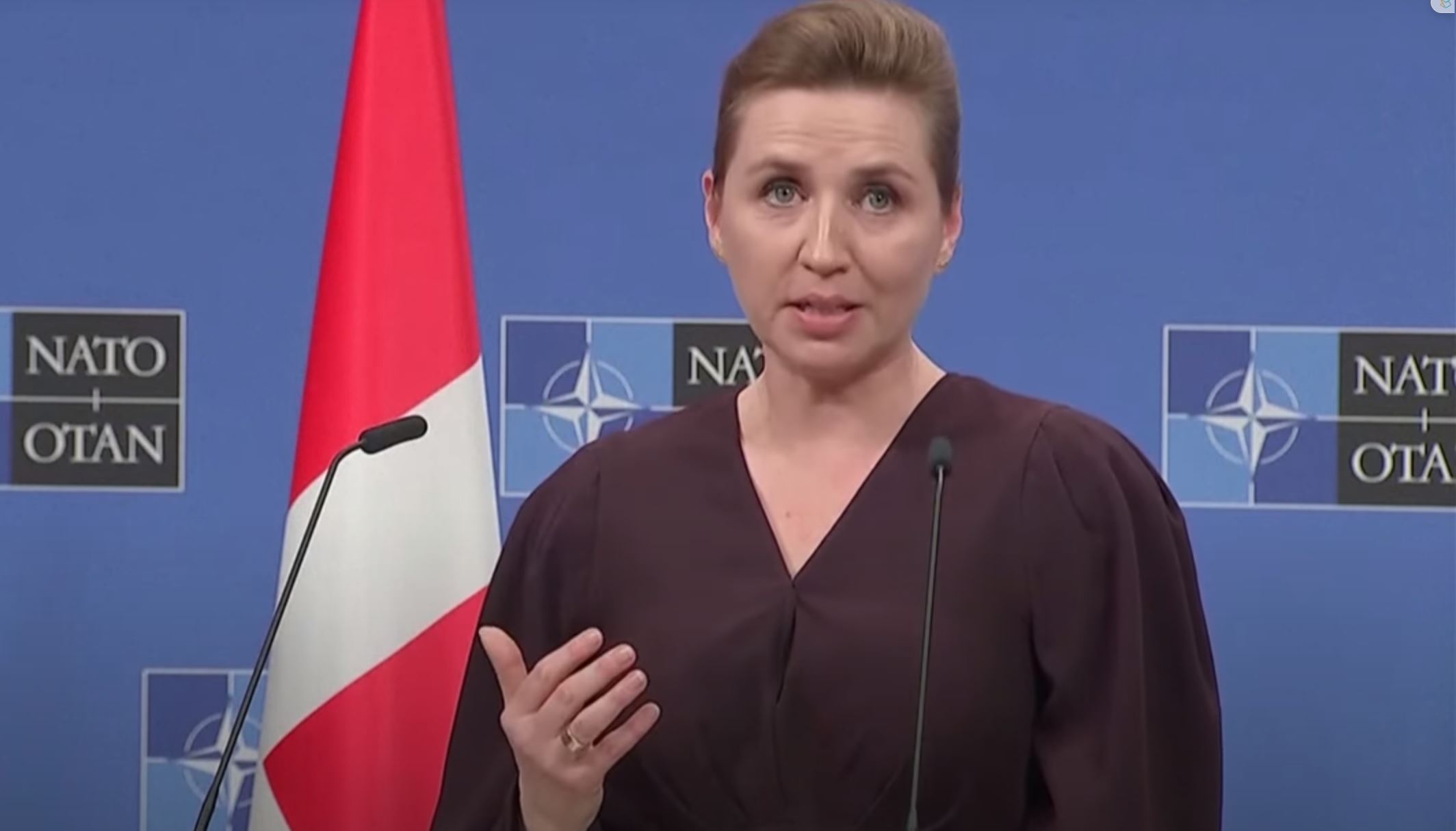
Defence Hawk and Ukraine Champion
On defence, Frederiksen has emerged as one of Europe’s most vocal advocates for military readiness and transatlantic solidarity. Under her leadership, Denmark has:
– Donated over 20% of its artillery stockpile to Ukraine—among the highest per capita contributions in NATO;
– Championed the European Defence Industrial Strategy, accelerating joint procurement and production;
– Led calls for a European “security compact” to reduce reliance on U.S. guarantees post-2024.
Her assertive posture has earned her praise in Washington and Kyiv alike, and contrasts sharply with more cautious approaches from Berlin and Paris.
The Greenland Factor
Frederiksen’s global stature was further cemented during the 2024–2025 Greenland sovereignty crisis, when former U.S. President Donald Trump—now back in office—renewed his 2019 proposal to “purchase” the autonomous Danish territory. Frederiksen’s firm, diplomatic rebuke—emphasizing Greenlandic self-determination and Denmark’s constitutional responsibilities—resonated across Europe as a defining moment of strategic sovereignty. Politico suggests this episode elevated her as a rare European leader capable of standing up to Washington without alienating it—a credibility some argue even Emmanuel Macron lacks.
Domestic Headwinds Amid International Acclaim
Ironically, Frederiksen’s international momentum coincides with plummeting domestic support. A Voxmeter poll released December 9 shows the Social Democrats at just 18% voter intention—their lowest level since 2013. The November 2025 municipal elections delivered further setbacks, with the party losing ground in key urban centres like Copenhagen and Aarhus.
Critics accuse her of prioritising global influence over domestic concerns, labelling her “power-mad” and out of touch with everyday Danes grappling with housing shortages, healthcare delays, and inflation. Her coalition government, reliant on support from both left- and right-wing parties, faces growing internal friction over economic policy and climate targets.
Strategic Implications for the Nordics
Frederiksen’s prominence offers both opportunities and risks for the Nordic region:
– Opportunity: Denmark is increasingly seen as a bridge between EU federalists and pragmatic realists, giving the Nordics a louder voice in Brussels.
– Risk: Overreliance on Frederiksen’s personal diplomacy may leave Denmark exposed if her domestic position weakens further—potentially destabilising Nordic-EU coordination on defence, green transition, and migration.
Looking Ahead
As the EU navigates a turbulent 2026—with European Parliament elections, U.S. election fallout, and escalating security threats on NATO’s eastern flank—Frederiksen’s hybrid model may prove either prescient or precarious. Her ability to balance global leadership with domestic renewal will determine whether “Frederiksen’s Europe” becomes a lasting paradigm—or a fleeting moment of Nordic ascendancy.
— Reporting by Nordic Business Journal, Copenhagen. Additional research by EU Affairs Desk.
Update as of December 10, 2025:
Following Politico’s ranking, Frederiksen announced plans to host a Nordic-Baltic Defence Summit in Copenhagen in February 2026, aimed at deepening regional military integration and coordinating arms procurement. The move is widely seen as an effort to consolidate her defence legacy while addressing voter concerns about national security.