
In the era of geopolitical realignment and rising global instability, understanding the mechanics of international human rights advocacy—and its interplay with state fragility—is no longer just a matter for diplomats or academics. It’s essential reading for business leaders, investors, and policymakers across the Nordics, whose economic interests increasingly intersect with regions marked by governance deficits and conflict. Two critical questions lie at the heart of this nexus: What is the real-world utility of reports by organisations like Amnesty International? And, more fundamentally, what drives the emergence of armed groups in fragile states?
The answers challenge conventional assumptions—and reveal powerful connections between human rights, governance, and security.
Amnesty International: From Documentation to Strategic Pressure
Amnesty International’s reports are often dismissed as “just another NGO publication”—a neutral compilation of facts meant to inform the public. In reality, they are far more consequential. These documents are meticulously crafted strategic instruments, designed not only to expose abuses but to trigger concrete political, legal, and economic consequences.
Consider their tangible impacts:
– International Accountability: Amnesty’s findings are routinely cited by UN human rights bodies, the International Criminal Court (ICC), and regional mechanisms like the African Commission on Human and Peoples’ Rights. In several cases—including Syria, Myanmar, and Sudan—Amnesty evidence has contributed to the launch of formal investigations or the imposition of targeted sanctions.
– Diplomatic Leverage: Donor governments, including Nordic countries, use Amnesty reports to condition development aid or arms exports on measurable human rights improvements. For instance, Sweden’s 2024 suspension of certain defence exports to a North African ally followed directly from Amnesty documentation of unlawful surveillance and repression.
– Domestic Mobilisation: Within repressive contexts, local civil society groups treat Amnesty reports as vital counter-narratives to state propaganda. In countries like Nicaragua or Belarus, such reports embolden domestic activists by validating their claims on a global stage—sometimes at great personal risk.
– Market and Reputational Risk: Multinational corporations increasingly integrate human rights due diligence into their operations. Amnesty’s supply chain investigations—such as those exposing forced labour in cobalt mining—have prompted divestments, legal scrutiny, and shifts in sourcing strategies among European firms.
In short, Amnesty’s reports are not neutral. They are deliberate interventions in global governance—designed to name, shame, and ultimately shift power.
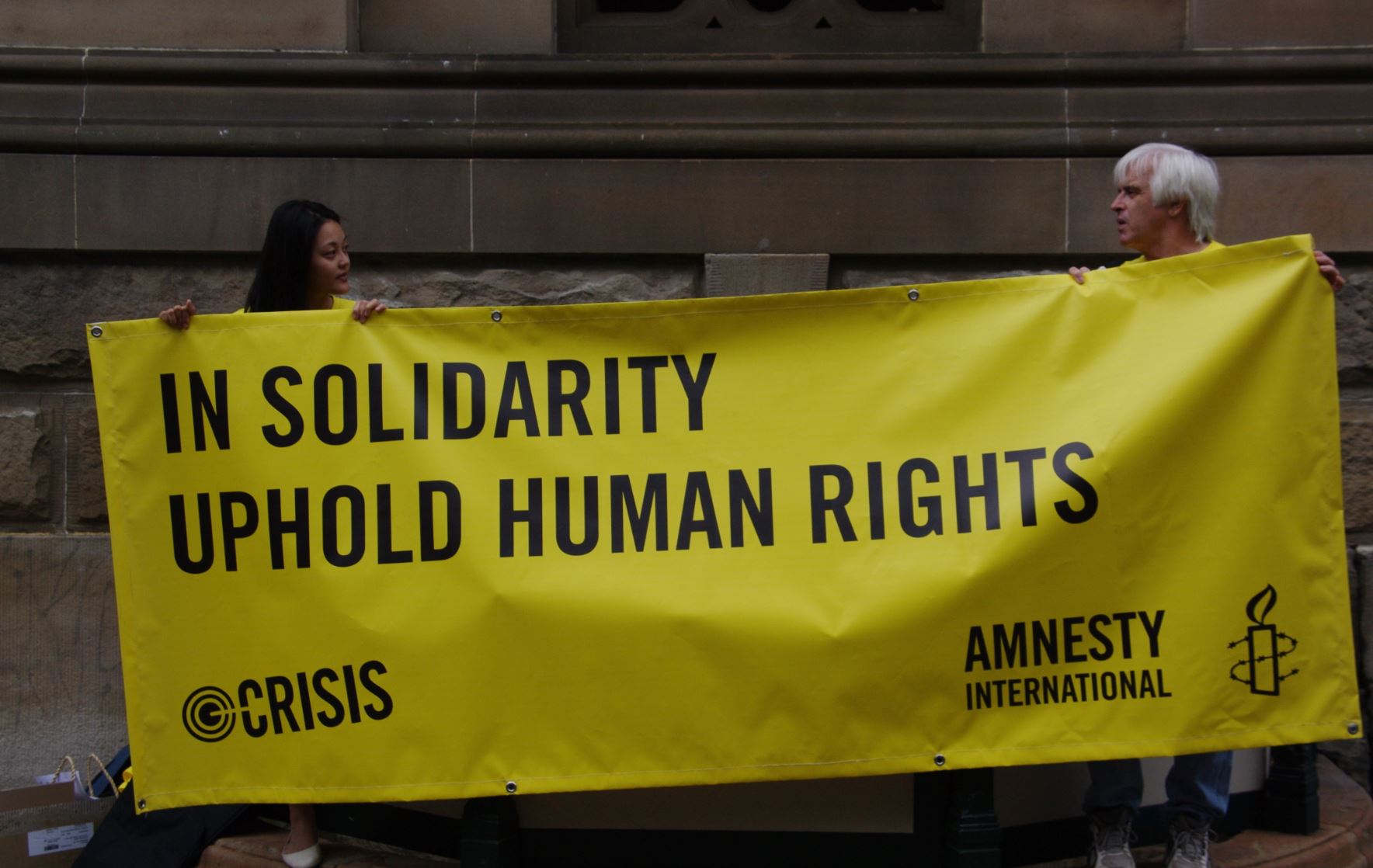
The Governance-Violence Nexus: Why Armed Groups Rise
A second, equally urgent insight concerns the origins of armed conflict. While popular discourse often attributes violence to “ancient ethnic hatreds” or religious extremism, empirical evidence tells a different story: armed groups thrive where governance fails.
This isn’t merely correlation—it’s causation. When states are unable or unwilling to provide basic services, enforce rule of law, or include marginalized populations in political processes, they create a vacuum that non-state actors rush to fill.
Take three key dimensions of state failure:
1. Institutional Absence: In Somalia, the Democratic Republic of Congo, Cameroon and parts of the Sahel, the state’s absence in rural areas has allowed armed groups—whether jihadist, separatist, or criminal—to establish parallel administrations, collect “taxes,” and even deliver rudimentary justice or healthcare. Their legitimacy stems not from ideology alone, but from functionality.
2. Corruption and Exclusion: When elites monopolise resources and political power—while excluding entire regions or communities—grievances accumulate. In contexts like Ethiopia’s Tigray region (pre-2022), Cameroon the southern Cameroon (Ambazonia) or southern Yemen, peaceful avenues for redress were systematically blocked, making armed resistance appear as the only viable path.
3. The “Repression Gap”: Paradoxically, the most fertile ground for insurgency is not outright totalitarianism, but semi-repressive regimes—those that suppress dissent without fully eliminating opposition. In such environments, mobilisation is possible but dangerous, pushing groups toward clandestine or violent tactics.
This dynamic has profound implications for Nordic foreign policy and business strategy. Investing in mineral-rich but governance-weak regions—say, the DRC or Mali—without understanding these political undercurrents exposes companies to operational disruption, reputational damage, and complicity in human rights abuses.
Connecting the Dots: Human Rights, Governance, and Global Order
What makes these insights especially relevant today is how rarely they’re treated as interconnected. Human rights advocacy is siloed as “moral work.” Conflict is framed as a security issue. Governance is seen as a domestic concern. But in practice, they are facets of the same systemic challenge.
Amnesty’s reports gain power not just from their factual rigor, but from their ability to re-frame governance failures as international concerns. When a government fails to protect its citizens—or actively targets them—it forfeits the presumption of sovereignty. This is the logic underpinning the “Responsibility to Protect” doctrine and justifies multilateral action.
For Nordic stakeholders, this means:
– Due diligence must go beyond compliance to include political risk analysis rooted in governance indicators.
– Public-private partnerships should prioritise strengthening local institutions—not just corporate social responsibility gestures.
– Diplomatic engagement must link trade, security, and human rights coherently, as the EU’s new Human Rights and Democracy Strategy attempts to do.
Conclusion: Asking the Right Questions
Are Amnesty reports merely informational? No—they are levers of global accountability.
Do armed groups emerge in a vacuum? No—they are symptoms of deeper governance pathologies.
The questions posed here are not academic exercises. They cut to the core of how power, legitimacy, and accountability operate in the 21st century. And they are precisely the kind of integrated thinking that Nordic leaders—whether in Oslo boardrooms, Stockholm ministries, or Copenhagen export councils—must embrace to navigate an increasingly fragmented world.
So yes: keep asking these questions. The answers will shape not just policy—but prosperity and peace.