
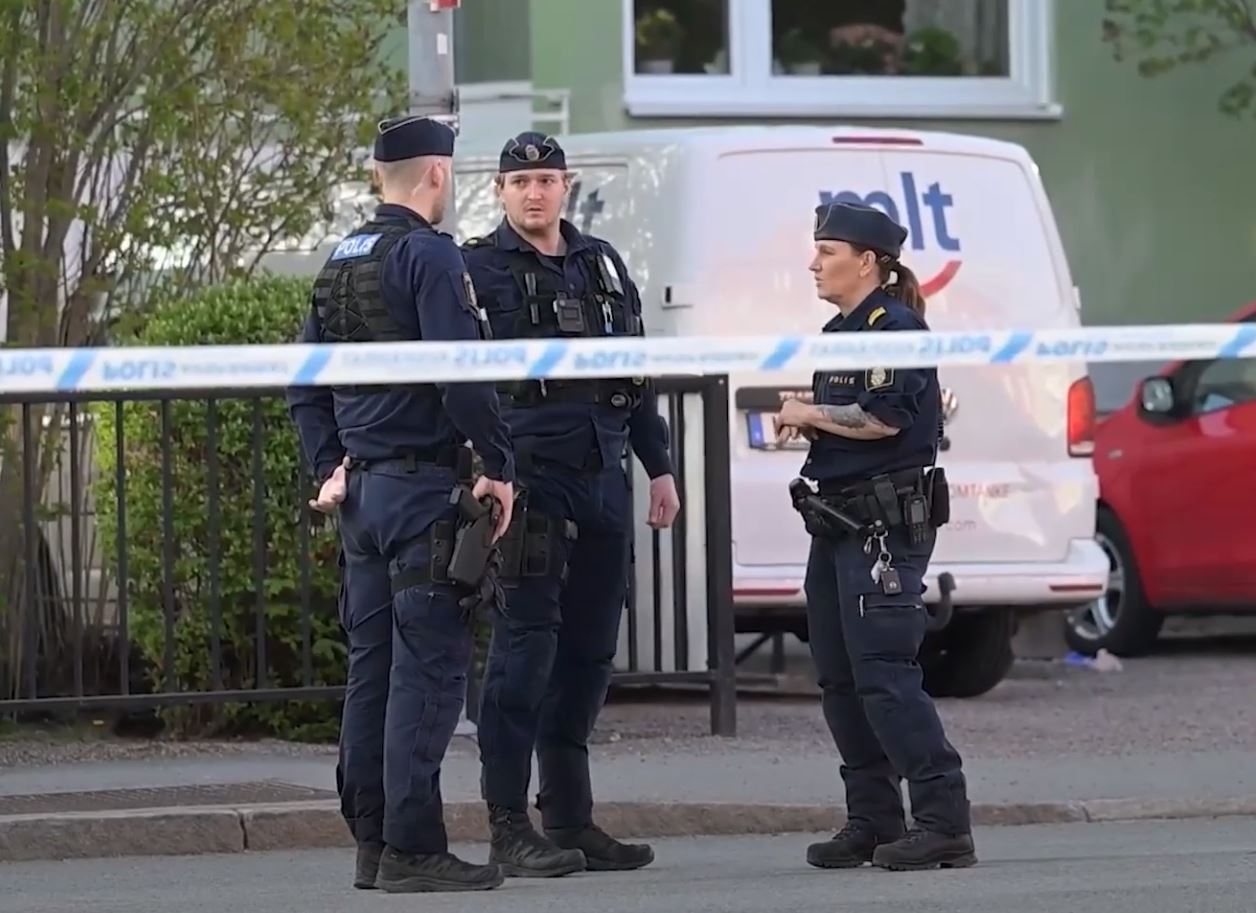
Sweden’s struggle with organised crime entered new territory last week when police confirmed that a twelve-year-old boy is suspected of involvement in a fatal shooting in Malmö. A man in his early twenties was shot dead late on Friday night while sitting in a car with several others. The alarm was raised just before 11 pm. The victim later died in hospital.
For senior police leadership, the case marks a disturbing first. National Police Commissioner Petra Lundh has said she has never before encountered a suspect this young in a deadly shooting. While children of similar age have previously been linked to bombings, grenade attacks, weapons transport, and other support roles for criminal networks, this case suggests a further escalation in how gangs deploy minors.
From couriers to killers
According to police information reported by public broadcaster P4, the boy has alleged connections to the Foxtrot network, one of Sweden’s most violent criminal groups. Investigators believe he had previously accepted assignments he failed to complete, placing him under threat from the same network that allegedly recruited him.
This detail matters. Criminal groups increasingly rely on children not only because they are easier to manipulate, but because Sweden’s legal framework sharply limits criminal liability for those under 15. What began as the use of minors for logistics and surveillance now appears to include frontline violence, suggesting gangs are deliberately arbitraging the justice system.
A system designed for care, not coercion
The boy has not been arrested in the conventional sense. Instead, he has been taken into care by social services, reflecting Sweden’s long-standing emphasis on welfare rather than punishment for children. After the shooting, he reportedly jumped from a train and was placed into care in Helsingborg before being transferred elsewhere. He is from Örebro County, not Helsingborg, a correction authority later clarified.
This response highlights a structural tension. Social services are now expected to manage cases involving extreme violence and credible gang threats, roles for which they were never designed. Justice Minister Gunnar Strömmer acknowledged this strain, arguing for a clearer division of responsibilities between the correctional system and social authorities.
Political alarm, limited tools
Strömmer described the shooting as confirmation of the scale and seriousness of Sweden’s organised crime problem. His language was blunt: gangs retain substantial “violent capital” and are prepared to use it ruthlessly.
Yet the policy toolbox remains constrained. Children under 15 cannot be sentenced to prison, and long-term secure care facilities are limited. While the government has tightened laws around gang crime and surveillance, cases like this expose a gap between legal reform and operational reality.
Early intervention or systemic failure
Psychologist Anna Norlén has called the trend alarming, stressing that prevention must begin far earlier, potentially before school age. Her point reflects a growing consensus among researchers: once a child is embedded in gang structures, exit becomes exponentially harder.
From an economic and institutional perspective, this is no longer only a policing issue. The long-term costs include increased pressure on healthcare, education, and welfare systems, reduced investor confidence in affected regions, and reputational damage to Sweden’s image as a high-trust society. Malmö, already under scrutiny for gang violence, risks further entrenchment of social and economic divides.
What this means for Sweden
For business leaders and policymakers, the case signals a deeper problem than a single crime. It suggests that organised crime is successfully recruiting from an ever-younger pool, exploiting both social vulnerability and legal protections. That combination threatens the credibility of the rule of law, a cornerstone of Sweden’s economic model.
The immediate question is how to protect society from serious violence committed by children. The harder question is how Sweden allowed criminal networks to reach twelve-year-olds in the first place. Without credible answers to both, this case is unlikely to remain an outlier.
Sweden is confronting not just a crime wave, but a stress test of its institutions. How it responds will shape public safety, social cohesion, and economic confidence for years to come.