
In 2024, the European Union imposed a significant tariff package aimed at curbing the influx of Chinese battery-electric vehicles (BEVs). The strategy was intended to act as a protective barrier, raising prices to deter imports and shield the European market from excessive competition. However, Chinese manufacturers have found creative ways to bypass these tariffs, rendering the policy largely ineffective. Here’s a breakdown of the four key strategies Chinese companies has used to continue expanding their presence in the European market, alongside an analysis of the outcomes so far.
1. PHEV Loophole: Switching Powertrains to Keep Market Share
The EU’s tariff package targets fully-electric cars with duties of up to 35%, but it leaves plug-in hybrid electric vehicles (PHEVs) and combustion engine models largely unaffected, imposing only a 10% tariff. This discrepancy has allowed Chinese manufacturers to pivot towards PHEVs, where they face far less resistance. As a result, Chinese brands significantly increased their PHEV shipments to Europe, with volumes growing by four times in 2024-25.
- Impact: Chinese-brand sales in Europe surged by 93% over the twelve months following the tariff decision, despite a slowdown in pure BEV sales. PHEVs have now become the dominant category for Chinese electric vehicle exports to the EU.
- Expert Commentary: Philippe Houchois, Managing Director at Jefferies, stressed that the EU’s decision to target BEVs specifically was a strategic mistake. It failed to account for hybrid alternatives, which have now become the focus of Chinese carmakers.
2. ICE & Mild-Hybrid Pivot: Lower-Cost Alternatives with No Tariffs
In addition to PHEVs, Chinese manufacturers like BYD, Chery, and SAIC rapidly introduced petrol, mild-hybrid, and full-hybrid vehicles to the European market. These models, which share showrooms with their BEV counterparts, are priced significantly lower—by €3,000-€5,000—than European equivalents, giving them a competitive edge.
- Impact: By October 2025, Chinese BEVs accounted for only 34% of total Chinese-brand sales in the EU, down from 44% the previous year, as more customers opted for the more affordable hybrid models.
- Analysis: This strategy capitalizes on the tariff loophole for non-electric powertrains, allowing Chinese manufacturers to continue growing their market share without facing significant price increases.
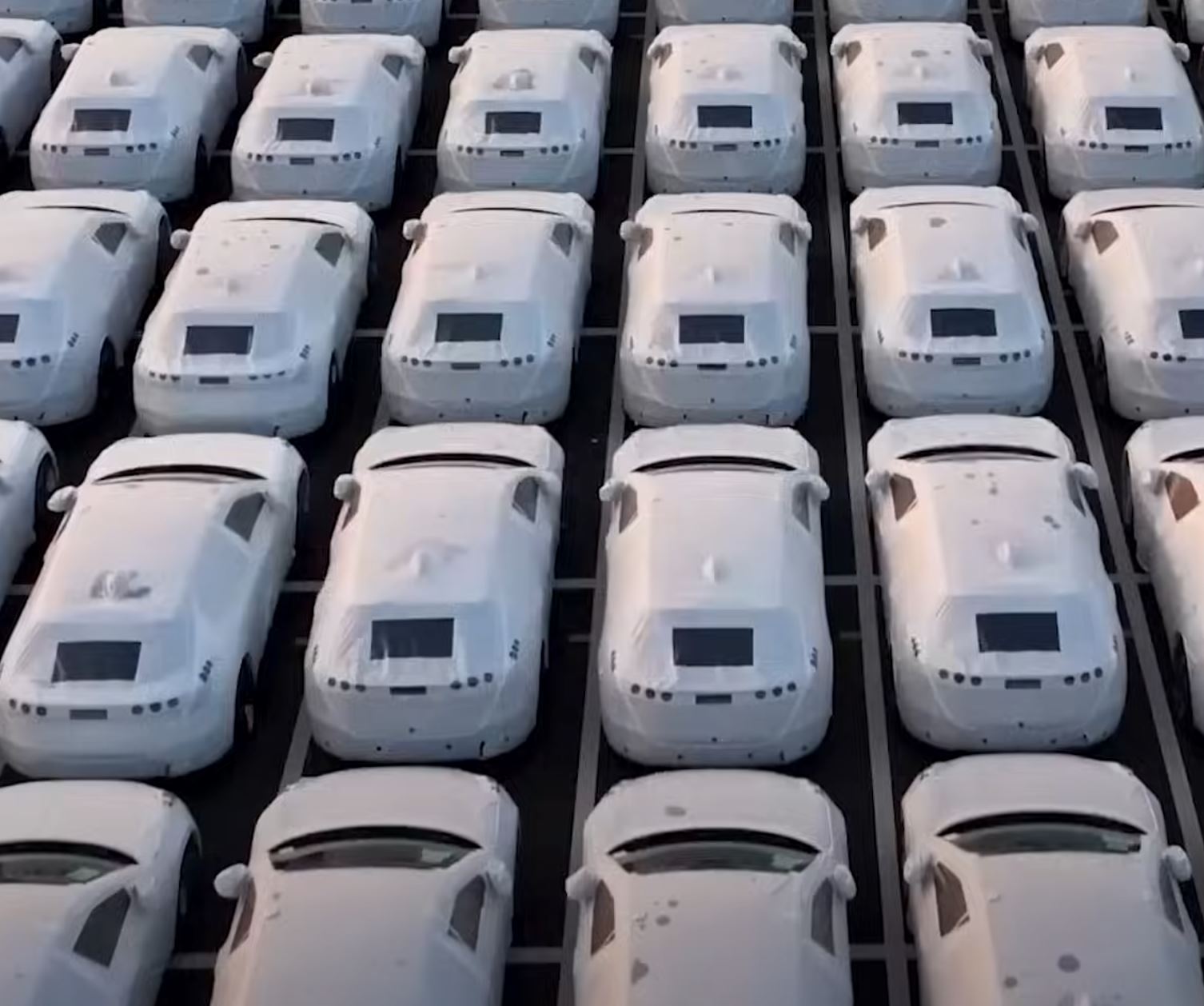
3. Razor-Thin Margins + Chinese Price War = Absorbing the Tariff
Even with the 35% tariff, Chinese-made BEVs remain highly competitive in Europe due to significantly lower production costs in China—estimated to be 20-30% cheaper than in Europe. Additionally, Chinese manufacturers are willing to operate on razor-thin profit margins and accept micro-margins in foreign markets, making it feasible for them to absorb the tariff cost without raising the price of their vehicles significantly.
- Impact: While the tariff added 35% to the price of Chinese BEVs in Europe, the overall landed price of these vehicles still undercut European competition. The result has been an increase in Chinese car exports to Europe, rather than a decrease.
- Inventory Buffer: Chinese manufacturers had also stockpiled inventory ahead of the tariff implementation, helping to buffer the immediate impact and maintain competitive prices despite the new duties.
4. “Tariff-Jumping” Investments: Expanding Production Inside Europe
Several Chinese automakers have announced plans to establish assembly or completely knocked-down (CKD) production projects within Europe. Notable examples include BYD’s bus plant in Hungary, XPeng’s licensing deal in Austria, and Chery’s R&D hub in Spain. However, many of these investments have been small or symbolic in scale.
- Impact: Despite these moves, a Chinese government pause order in late 2024 instructed firms to hold off on large-scale investments in countries that supported the EU tariff decision. This has slowed the potential for a large-scale shift of production to Europe, although the groundwork for future manufacturing expansion remains in place.
- Analysis: This delay is a tactical move by China to avoid triggering further EU retaliation and to assess the long-term impacts of European protectionist policies. It also reflects Beijing’s strategy of managing production shifts on its own timetable rather than responding to Brussels’ regulatory moves.
Scoreboard After 14 Months: A Clear Reversal of Expectations
The EU’s 2024 tariff package was expected to drastically reduce Chinese car exports to Europe. Instead, the reality has been quite different, with Chinese carmakers outpacing EU expectations in several key metrics:
| Metric (12 months to Nov 2025) | Outcome vs. Pre-Tariff Expectation |
| Chinese car exports to EU | ↑ 26% (≈ 1.2 million units) instead of ↓ 25% forecast |
| Chinese share of EU BEV market | ↑ 7% (H1 2025), up from 2% in 2022 |
| Chinese share of total Chinese-brand sales in EU | ↑ 11% forecast for full-2025 |
| EU car imports from China (value) | ↑ 1591% from 2019-2024, the fastest-growing import source |
A Protectionist Policy That Backfires
The EU’s focus on taxing electric vehicles while leaving hybrids and petrol models untaxed has proven ineffective in curbing Chinese competition. By pivoting to PHEVs and hybrid models, leveraging low-cost production advantages, absorbing tariff costs, and investing in small-scale European manufacturing, Chinese carmakers have successfully sidestepped the tariff wall.
To counter this, the EU faces two possible paths:
- Broadening Tariffs: Expanding the tariff structure to include all Chinese-made vehicles, regardless of powertrain, could provide a more comprehensive approach.
- Building a Competitive EV Supply Chain: Accelerating Europe’s own transition to cost-competitive electric vehicles, including strengthening its supply chain and manufacturing capabilities, would reduce reliance on foreign imports and mitigate the impact of Chinese competition.
If the EU continues its current course, Chinese carmakers are on track to export over 1 million vehicles to the European market in 2026—tariffs or no tariffs. The European Commission will need to reassess its strategy to ensure that protectionism does not inadvertently fuel further dependence on low-cost Chinese imports.