
Danish capital in the United States has once again become collateral damage in Washington’s political power play.
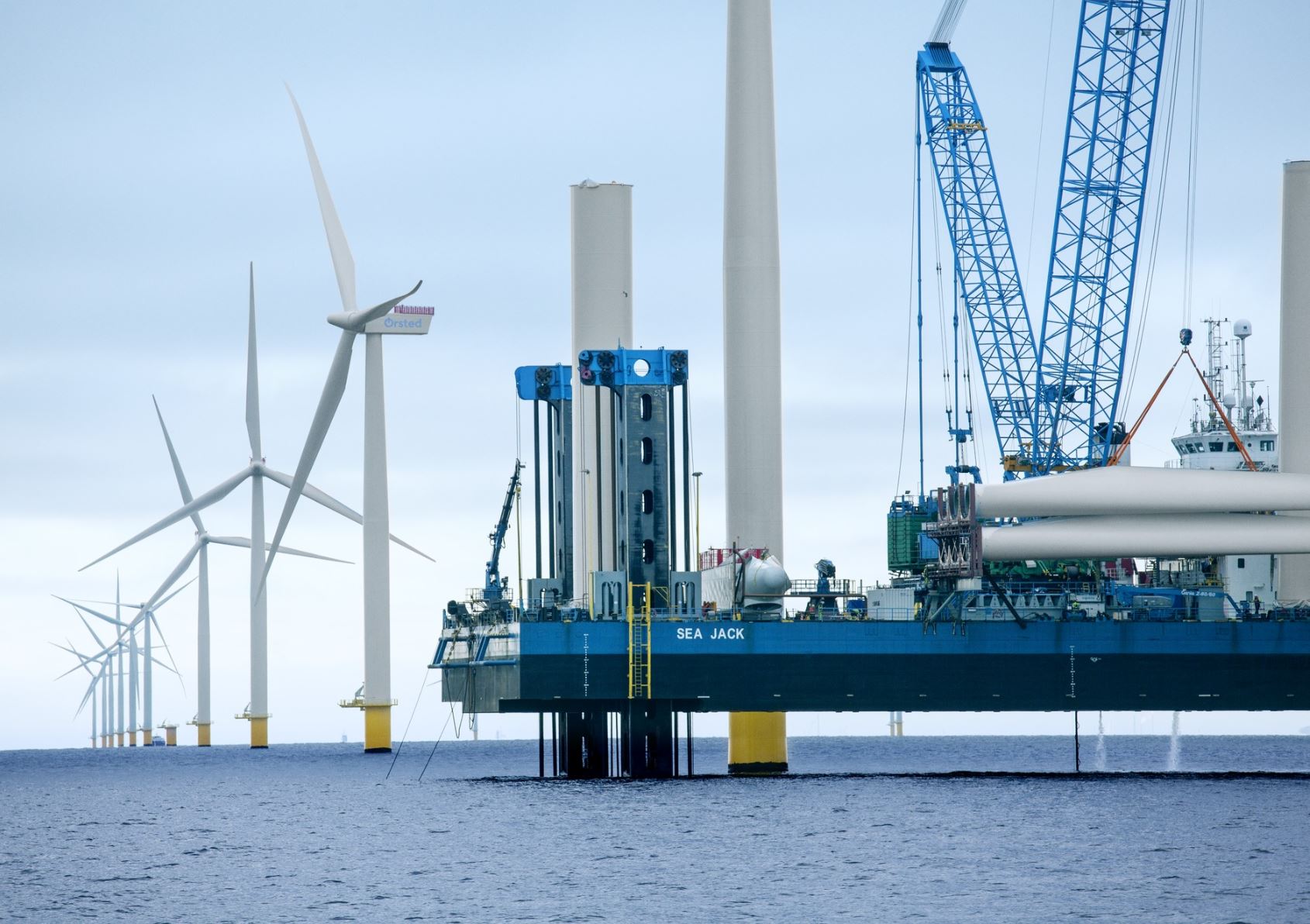
President Donald Trump’s administration has moved to halt or re-examine several offshore wind projects along the US East Coast, throwing at least five developments into renewed uncertainty. Among the hardest hit are Danish-led investments involving Ørsted, Vestas, and Copenhagen Infrastructure Partners (CIP)—projects worth billions of kroner that until recently were positioned as cornerstones of America’s green transition.
The decision lands at a sensitive geopolitical moment. It coincides with a renewed escalation in US–Danish tensions over Greenland, where Washington has increased its political pressure and visibility. While no formal link has been established between the offshore wind intervention and the Greenland dispute, the timing has reignited speculation that commercial decisions are being used as foreign-policy leverage.
As DR’s economics correspondent Casper Schrøder, who has followed Ørsted’s US challenges closely, notes: the pattern feels familiar.
Business as a bargaining chip?
Speculation that Danish companies are being caught in the crossfire is not new. When Ørsted’s Revolution Wind project faced regulatory delays last year, it followed shortly after Danish Foreign Minister Lars Løkke Rasmussen met with California Governor Gavin Newsom—a prominent Trump critic and leading Democrat.
Now, with a new US intervention arriving amid controversy over Washington’s appointment of a special envoy to Greenland, the narrative has resurfaced.
“We cannot say there is a direct connection,” Schrøder has cautioned. “But many will see this as confirmation of earlier suspicions—that Trump is willing to use business interventions to signal displeasure with Denmark.”
Whether intentional or not, the effect is unmistakable: uncertainty. And in capital-intensive infrastructure projects, uncertainty is costly.
The financial fallout: even a pause is expensive
Danish companies are deeply embedded in the affected projects. Ørsted is owner or co-owner of two offshore wind farms, CIP is a co-investor in another, and Vestas supplies turbines to a fourth. These are not speculative ventures; they are long-term assets backed by extensive supply chains, financing agreements, and contractual obligations.
If the current pause were to become permanent, write-downs could run into the billions. But even a “temporary” freeze is financially painful. Idle vessels, delayed installations, penalty clauses, and financing costs can generate daily losses measured in millions of kroner.
“This is Trump pulling the rug out from under green Danish companies in the US,” Schrøder has said. “And the uncertainty doesn’t stop with the energy sector. Investors in other industries will inevitably ask: who could be next?”
The stock market has already delivered its verdict. Ørsted’s share price dropped sharply—wiping tens of billions of kroner off its market value in a single day—while Vestas also suffered significant losses. Beyond the immediate numbers, the signal to international investors is arguably more damaging than the short-term decline.
A broader shift in US energy policy
What makes this episode particularly significant is that it reflects a broader recalibration of US energy policy under Trump’s renewed leadership. The administration has signalled a stronger preference for fossil fuels, domestic energy dominance, and regulatory rollback—placing offshore wind, especially projects backed by foreign capital, under political scrutiny.
For Nordic companies, long accustomed to viewing the US as a stable and predictable market, this represents a structural change. Political risk—once discounted—must now be priced in. Diversification across markets, stronger contractual safeguards, and deeper engagement with US state-level authorities may become essential defensive strategies.
At the same time, it raises uncomfortable questions for European policymakers. If flagship green investments can be stalled overnight by executive action, how resilient are transatlantic climate ambitions in an era of geopolitical competition?
Danish billions, global lessons
The billions already invested by Danish companies are now, quite literally, trapped. Whether they are eventually released depends less on engineering or economics than on political calculations in Washington.
For Nordic business leaders, the lesson is sobering: even the most future-oriented industries are not immune to old-fashioned power politics.
NBJ Insight – What Comes Next?
In our next article, “Pricing Political Risk: How Nordic Companies Should Rethink US Exposure,” we will examine concrete strategies for managing geopolitical uncertainty—from contract design and insurance structures to market diversification and diplomatic engagement.
We invite readers to share their perspectives and experiences. Connect with Nordic Business Journal for ongoing analysis, interviews, and data-driven insights at the intersection of business, geopolitics, and sustainability.