
In an increasingly multipolar world, military procurement is no longer just about hardware—it’s about sovereignty, supply chains, and strategic alignment. Nowhere is this more evident than in Canada’s protracted, high-stakes decision over its next-generation fighter jet fleet. What began as a routine replacement program has evolved into a geopolitical flashpoint, pitting U.S. strategic dominance against Nordic innovation—and forcing Ottawa to choose between compliance and true autonomy.
At the heart of the debate: the American F-35 Lightning II versus Sweden’s Gripen E. On paper, both are advanced, NATO-compatible platforms. But beneath the surface, they embody two starkly different defence philosophies—one rooted in centralized control, the other in sovereign resilience.
The U.S. Leverage Play: Trade, Tech, and Coercion
Canada’s initial commitment to purchase 88 F-35s—confirmed in 2022 under Prime Minister Justin Trudeau—appeared settled. Yet by late 2024, under mounting domestic pressure and shifting geopolitical winds, newly elected Prime Minister Mark Carney signalled a reassessment. His government questioned whether the F-35’s high lifecycle costs, technological restrictions, and strategic dependencies truly served Canadian interests.
Washington responded swiftly—and bluntly. At the 2025 Munich Security Conference, U.S. Ambassador to Canada Pete Huxra warned that “walking away from the F-35 would have serious consequences for Canada’s access to future U.S. trade frameworks.” To many in Ottawa and beyond, this sounded less like alliance solidarity and more like economic blackmail.
This pressure reflects a broader U.S. strategy: consolidating allied air forces around a single, U.S.-controlled platform to ensure interoperability—yes—but also to lock partners into a decades-long ecosystem of American software, logistics, and intelligence-sharing. The catch? Full operational control remains in Pentagon and Lockheed Martin hands.
Sweden’s Sovereign Alternative: The Gripen E Proposition
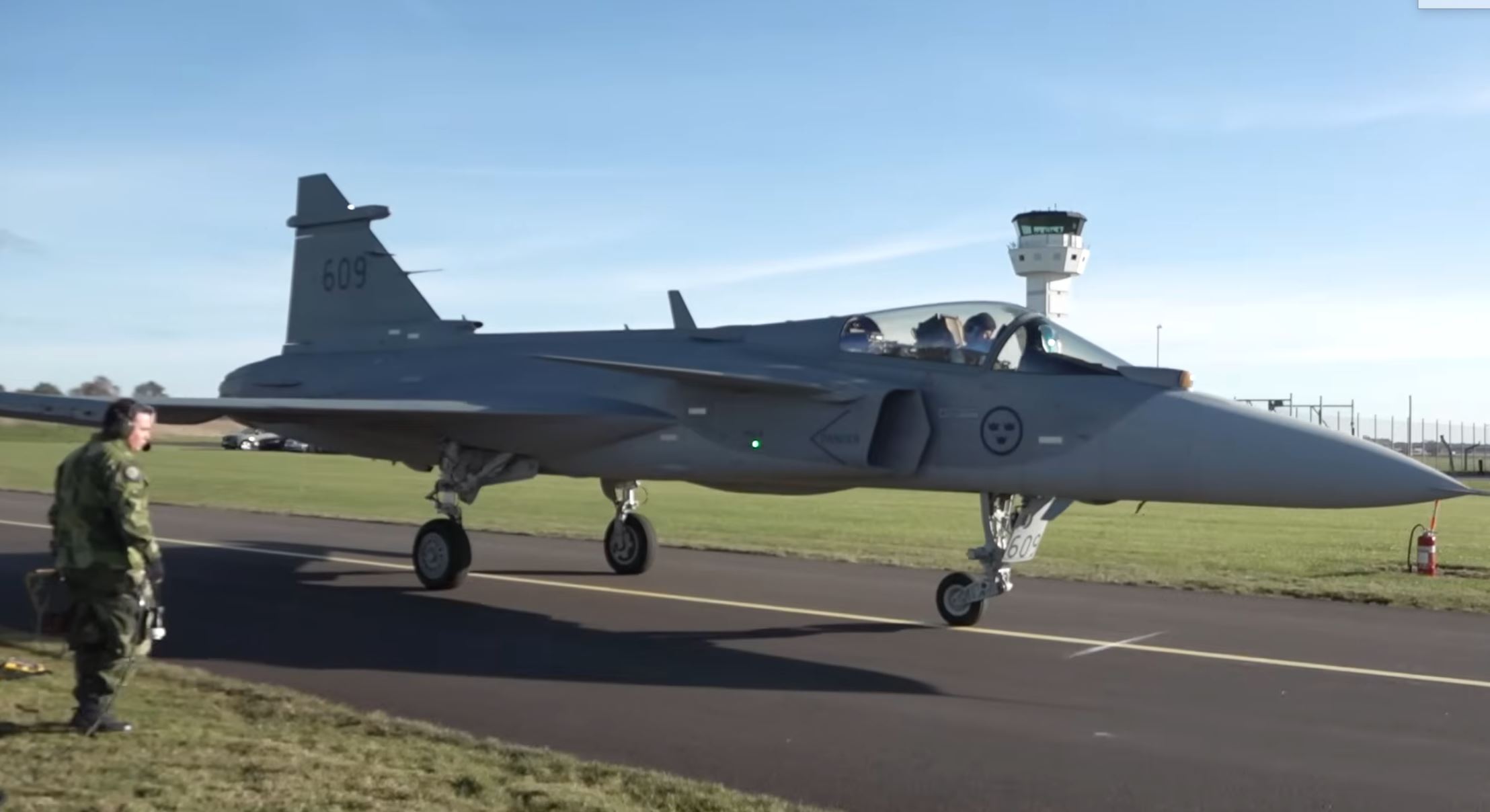
Enter Sweden: a non-NATO (until its 2024 accession) but deeply Western-aligned nation with a legacy of neutrality, technological self-reliance, and Arctic-capable defence design. Saab’s Gripen E isn’t just a fighter—it’s a sovereign sustainment model.
In a bold 2025 diplomatic push, Sweden’s Crown Princess Victoria and Saab CEO Micael Johansson presented Canada with a comprehensive industrial offer: full technology transfer, co-production in Canada, and the establishment of a North American Gripen hub. The package promises up to 10,000 high-value jobs, domestic maintenance sovereignty, and even export rights to allied nations.
Critically, unlike the F-35, the Gripen E grants Canada unrestricted access to source code, mission systems, and upgrade pathways. There’s no “Alyss”-style U.S. logistics gatekeeper. If a software patch is needed in Iqaluit during a polar vortex, Canadian engineers can implement it—no Washington approval required.
The F-35’s Hidden Costs: Beyond the Sticker Price
While the F-35 touts stealth and sensor fusion, its real-world performance tells a more complicated story. As of 2025, the U.S. Department of Defence reports mission-capable rates below 50% across much of the F-35 fleet. The Government Accountability Office (GAO) estimates the program’s total lifecycle cost at $1.7 trillion—a figure that dwarfs initial projections.
For Canada, the financial burden is staggering:
– $85 million per jet (flyaway cost)
– $35,000–$47,000 per flight hour
– Projected $50+ billion over 30 years for 88 aircraft
– Hidden infrastructure costs: reinforced hangars, secure data links, specialized training
Meanwhile, the Gripen E operates at roughly $8,000 per flight hour, with far lower infrastructure demands. Its modular design allows operations from dispersed locations—including highways—making it ideal for Canada’s vast, remote Arctic territories.
Arctic Realities: Why Environment Matters
Canada and Sweden share more than democratic values—they face similar operational challenges: extreme cold, limited infrastructure, and vast surveillance zones. The Gripen E was designed for Nordic conditions: quick-start engines, cold-weather resilience, and short-field performance.
The F-35, by contrast, was optimized for carrier decks and large airbases in temperate zones. Its complex stealth coatings degrade faster in icy, salty Arctic air, and its maintenance footprint is immense. In a region where rapid response is critical, the Gripen’s agility offers a strategic edge.
Lessons from Europe: Denmark’s Wake-Up Call
Denmark’s F-35 experience serves as a cautionary tale. In early 2024, the U.S. quietly removed critical components from Danish jets to supply Israel during a regional crisis—without prior consultation. Danish parliamentarians were left stunned: they owned the airframes but not the operational autonomy.
This incident crystallised a growing European concern: physical ownership ≠ strategic control. With F-35 data routed through U.S. servers and mission systems under Pentagon oversight, allies risk becoming “tenants” in their own defence.
The Sovereignty Equation: Data, Dignity, and Defence
Modern fighter jets are flying data platforms. The F-35 transmits terabytes of operational data to U.S.-based servers, raising concerns about who controls Canada’s airspace intelligence. Could Washington, in a future dispute, throttle data flows or limit functionality? Technically—yes.
Sweden’s model flips this script. The Gripen’s “sovereign cloud” allows nations to retain full data ownership. For a country like Canada—balancing relations between the U.S., EU, and Indo-Pacific partners—this neutrality is not just practical, it’s strategically prudent.
The Geopolitical Stakes: Beyond Ottawa
This decision reverberates across the transatlantic alliance. If Canada chooses the Gripen, it signals that even close U.S. partners are rethinking unconditional defence integration. It could embolden other nations—Germany, Switzerland, even Australia—to demand greater autonomy in future procurements.
Conversely, choosing the F-35 reinforces a unipolar defence ecosystem where technological dependency equals political alignment. In an era of U.S.-China decoupling and European strategic awakening, Canada’s choice is a bellwether for allied sovereignty in the 21st century.
Conclusion: A Defining Moment for Canadian Statecraft
Prime Minister Carney has framed this as a question of national interest over foreign influence. “Our responsibility,” he stated in November 2025, “is to secure Canada—not Lockheed Martin’s balance sheet.”
The funding exists. The strategic rationale is clear. The real question is whether Canada is prepared to redefine its defence posture—not as a junior partner, but as a sovereign actor with control over its own skies, data, and industrial future.
In choosing between the F-35 and the Gripen E, Canada isn’t just picking a jet. It’s choosing a vision of its place in the world.
Next in Our Series: “Nordic Defence Independence: Can Europe Break the U.S. Monopoly?”
In our upcoming deep dive, we’ll examine how Sweden, Finland, and Norway are leveraging defence industrial cooperation to reduce reliance on American platforms—while maintaining NATO interoperability. Can a “Nordic Defence Ecosystem” emerge as a third way in global security?
Stay informed. Stay sovereign.
Follow Nordic Business Journal for ongoing analysis on defence autonomy, Arctic strategy, and the business of security.
Connect with us: editor@nordicbusinessjournal.com | @NordicBizJrnl
© 2025 Nordic Business Journal – Where Business Meets Geopolitics