
In 2025, record-breaking stock markets and jubilant financial forecasts created an atmosphere of optimism, yet for many Swedish savers with their money in global funds, the year was a letdown. Despite impressive gains in global equity markets, those investing in foreign stocks, particularly U.S. shares, experienced little to no returns. This stark contrast highlights a critical factor in the financial landscape: the strengthened Swedish krona.
For those unfamiliar with the nuances of currency fluctuations, the impact can be significant, especially for investors with funds invested outside Sweden. According to Maria Landeborn, senior strategist at Danske Bank, the outcome was “a real disappointment” for many savers. And this trend continues into 2026.
A Shift in Currency Dynamics
The Swedish Fund Management Association’s latest data reveals that global equity funds make up the majority of Swedish fund investments, with a large portion dedicated to U.S. stocks. Despite record-breaking performances in international markets, Swedish investors were largely left disappointed by currency fluctuations. In particular, the U.S. stock market saw a robust rise of 18% in 2025, while the Stockholm Stock Exchange posted a more modest increase of 9.5%.
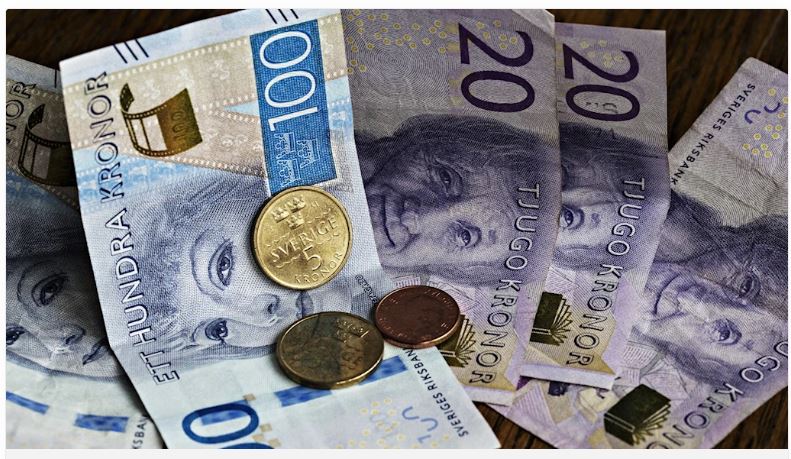
On the surface, these results might suggest that Swedish investors in U.S. equities should have been celebrating significant gains. However, when converted into Swedish kronor, the situation took a sharp turn. The krona appreciated by 20% against the U.S. dollar over the year. As a result, a Swedish investor who placed 1,000 SEK into the U.S. market at the beginning of 2025 would have received only 800 SEK at the year’s end, assuming no change in the local value of the stock.
In other words, the strong performance of the U.S. stock market was largely negated by the currency’s appreciation, leaving Swedish investors with negative returns in SEK terms. This scenario marked a stark contrast to the Stockholm Stock Exchange’s performance, where Swedish investors saw positive returns when measured in local currency.
A Temporary Phenomenon or a Long-Term Trend?
The remarkable strength of the Swedish krona last year has been a key factor in this reversal. As the strongest of the major global currencies, the krona appreciated significantly, making foreign stock investments far less profitable for Swedish investors. This trend is seen as particularly frustrating because, in the years prior to 2025, a weaker krona had provided an additional boost to foreign investments, enhancing returns on assets denominated in other currencies.
For many Swedes, the results are clear: it was better to keep investments local rather than venture into global markets in 2025. European stocks also performed better than U.S. equities for Swedish investors, who net-sold U.S. stocks while continuing to pour money into global funds. The net effect was a significant reallocation of assets, with investors seeking refuge in markets that weren’t as impacted by currency fluctuations.
However, despite these short-term challenges, Landeborn still advocates for maintaining a diversified portfolio with a significant portion invested in global equity funds. Over the long run, she believes it is essential not to miss out on the growth potential of global companies. Timing currency movements, as many investors attempt, is not a strategy she recommends, as the forex market is notoriously difficult to predict.
What’s Next for 2026?
Looking ahead, analysts are divided on whether the trend of a stronger krona will continue into 2026. Many predict that the currency will continue to appreciate, which may result in continued challenges for those invested in foreign markets. However, considering that the Stockholm Stock Exchange has underperformed relative to many other global markets in recent years, there is a growing belief that Swedish equities could outperform this year, as the krona stabilises or strengthens further.
“There is a strong possibility that we could see a ‘revenge’ of sorts for the Stockholm Stock Exchange in 2026,” says Landeborn, suggesting that Swedish stocks could become more attractive as global currencies fluctuate. If this trend materializes, it could bring much-needed relief to Swedish investors who have been facing the brunt of currency volatility in recent years.
Looking Ahead: A Balanced Approach
For investors, the key takeaway remains the same: diversification is essential for long-term growth, but currency fluctuations must be monitored closely. As 2026 unfolds, the interplay between global currencies and stock market performance will continue to shape investment outcomes. Savers should consider reviewing their portfolios regularly and staying informed about broader economic trends.
Follow-Up and Next Steps
In our next issue, we will explore how Swedish investors can adapt to ongoing currency fluctuations and leverage the opportunities in both global and local markets. Stay connected with us for expert advice on adjusting your investment strategy for 2026 and beyond.
For further insights and updates, feel free to connect with us on our digital platforms and stay informed as the financial landscape evolves.