
While headlines trumpet 150,000 job losses across Europe’s automotive supply chain since 2024, a more nuanced reality is unfolding in Norrbotten’s frozen landscapes. Here, where one-third of the world’s cold-weather vehicle testing occurs across Arjeplog, Arvidsjaur, Älvsbyn and Jokkmokk, industry leaders are reframing crisis as strategic inflection point.
“The turbulence isn’t just about contraction—it’s about recalibration,” explains Josef Rönnholm, CEO of Icemakers in Arjeplog. “Manufacturers aren’t abandoning testing; they’re fundamentally changing what they test and why.” This distinction matters profoundly for Nordic economies positioned at the convergence of climate extremes and technological transition.
The Numbers Behind the Headlines
European automotive production has indeed contracted—from 13.6 million vehicles in 2017 to 11.4 million in 2024, a 6.2% year-on-year decline. Bosch’s September 2025 announcement of 13,000 additional mobility-sector job cuts through 2030 exemplifies the structural pressure. Yet these figures mask a critical divergence: while combustion-engine development budgets shrink, cold-climate validation for electric powertrains and autonomous systems is accelerating.
Consider the paradox: Chinese EV exports to Europe grew 20% annually in 2025 despite EU tariffs of 7.8–35.3%. In January 2026, Brussels and Beijing reached a breakthrough agreement allowing Chinese manufacturers to replace tariffs with minimum price commitments. This doesn’t diminish competitive pressure—it redirects it toward quality differentiation. And in extreme conditions, Nordic testing grounds offer irreplaceable validation.
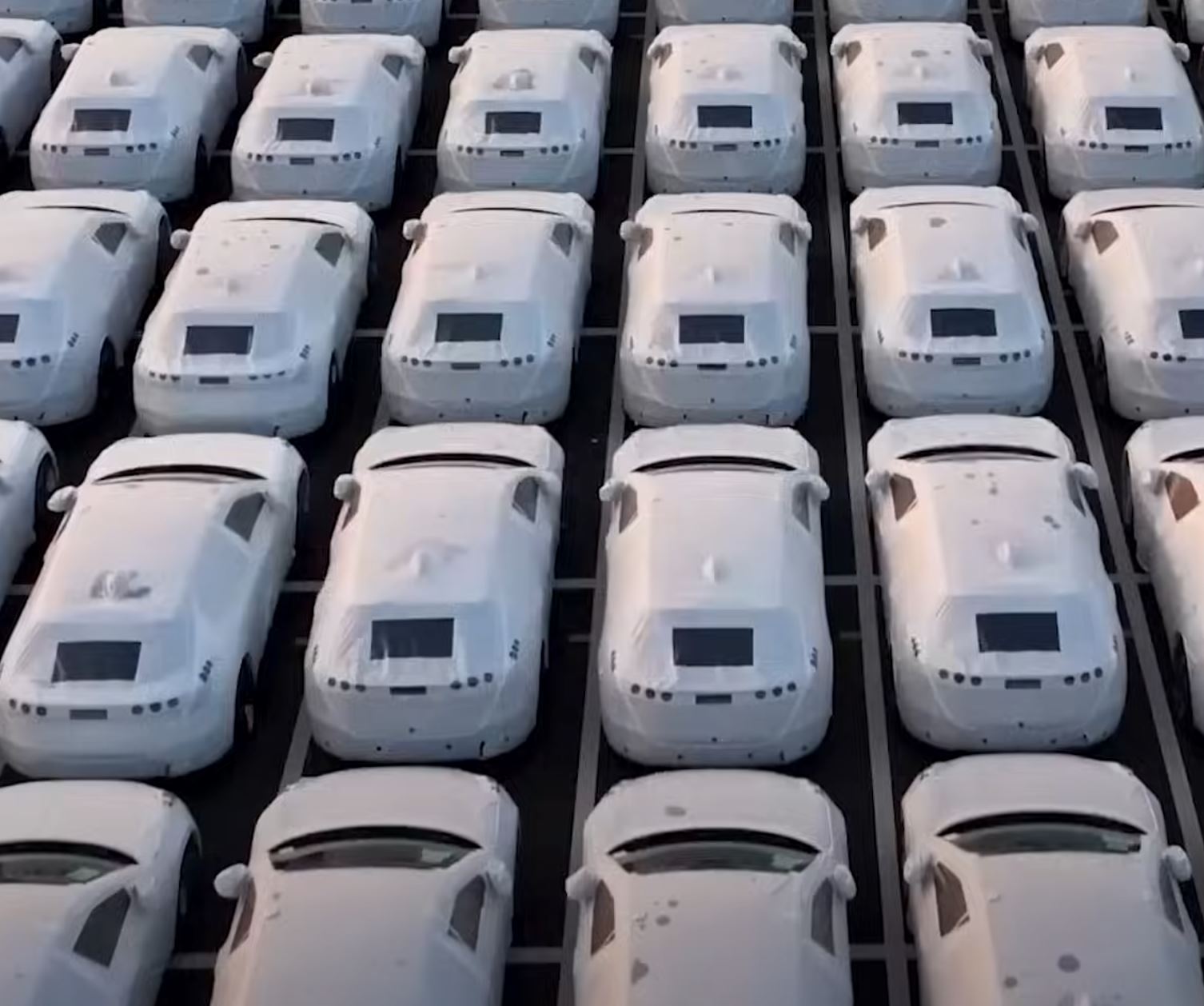
Why the Arctic Circle Remains Indispensable
Three converging trends amplify Norrbotten’s strategic value:
- Battery Performance Under Duress
EV range anxiety intensifies below freezing. Recent studies confirm lithium-ion batteries lose 30–40% capacity at -20°C without thermal management. Mercedes-Benz’s 2025 Arctic testing of its all-electric GLC in Arjeplog focused explicitly on battery preconditioning protocols and regenerative braking efficiency in sub-zero conditions. As European EV registrations grew 31% in 2025, manufacturers face regulatory pressure to certify real-world winter performance—not laboratory ideals.
- Autonomous Systems in Adverse Conditions
Sensor fusion fails when LiDAR reflects off snow crystals and cameras struggle with low-contrast whiteout conditions. Norway’s recent autonomous bus trials in Tromsø and Sweden’s ROADVIEW project demonstrate Nordic leadership in validating self-driving systems where 80% of global autonomous testing occurs in benign climates. With EU regulations mandating winter validation for Level 3+ autonomy by 2027, testing infrastructure becomes compliance infrastructure.
- Geopolitical Hedging
As European OEMs diversify supply chains away from single-region dependencies, Nordic testing centres offer politically neutral validation grounds. When Stellantis and Volkswagen announced Polish plant cutbacks in late 2025, their Arjeplog operations expanded winter validation cycles for next-generation platforms—proof that geographic diversification extends beyond manufacturing.
The Nordic Opportunity: From Testing Grounds to Innovation Ecosystems
Forward-looking operators recognise that survival requires evolution beyond seasonal testing contracts. Icemakers’ Rönnholm notes his firm now offers year-round accelerated durability testing using controlled climate chambers—a response to manufacturers compressing development cycles. Similarly, SPGA (the vehicle testing collaboration organisation) is advocating for EU funding to transform Norrbotten into a “winter mobility innovation corridor” integrating:
– Battery cold-start validation protocols aligned with upcoming Euro 7 standards
– V2X communication testing in low-visibility conditions
– Hydrogen fuel cell performance validation (critical for heavy transport decarbonization)
– Data sovereignty frameworks allowing manufacturers to test sensitive autonomous algorithms under GDPR-compliant conditions
“The question isn’t whether testing will continue here,” says SPGA Chairman Robert Granström. “It’s whether we’ll remain a seasonal service provider or become embedded in the R&D value chain year-round.”
Strategic Imperatives for Nordic Stakeholders
For regional policymakers and business leaders, three actions merit immediate attention:
1. Accelerate grid modernization in testing municipalities to support simultaneous charging of 50+ EVs during peak validation periods—a current bottleneck limiting testing throughput.
2. Develop specialized talent pipelines through Luleå University of Technology partnerships focused on cold-climate battery engineering and sensor validation—addressing the 40% projected shortage of testing engineers by 2028.
3. Leverage Nordic cooperation to create a unified “Arctic Validation Standard” recognized by EU type-approval authorities, transforming fragmented municipal offerings into a cohesive regional brand.
This analysis reflects market conditions as of January 2026. Production data sourced from ACEA; employment figures from Clepa and national automotive associations; geopolitical developments from European Commission communications.
Looking Ahead: Your Next Read
In our next issue, we examine how Finnish and Swedish battery recyclers are positioning Norrbotten as Europe’s circular-economy hub for EV batteries—turning end-of-life challenges into a €2.3 billion regional opportunity by 2030. We’ll analyze Northvolt’s new hydrometallurgical facility in Skellefteå and its implications for testing centers seeking year-round relevance.
Connect with Nordic Business Journal
Share your insights on automotive transformation: editors@nordicbusinessjournal.com
Join our executive roundtable on Nordic mobility innovation—register at nordicbusinessjournal.com/events
Follow our real-time coverage of EU automotive policy shifts @NordicBizJournal
— Reporting by Nordic Business Journal’s Mobility Intelligence Unit