
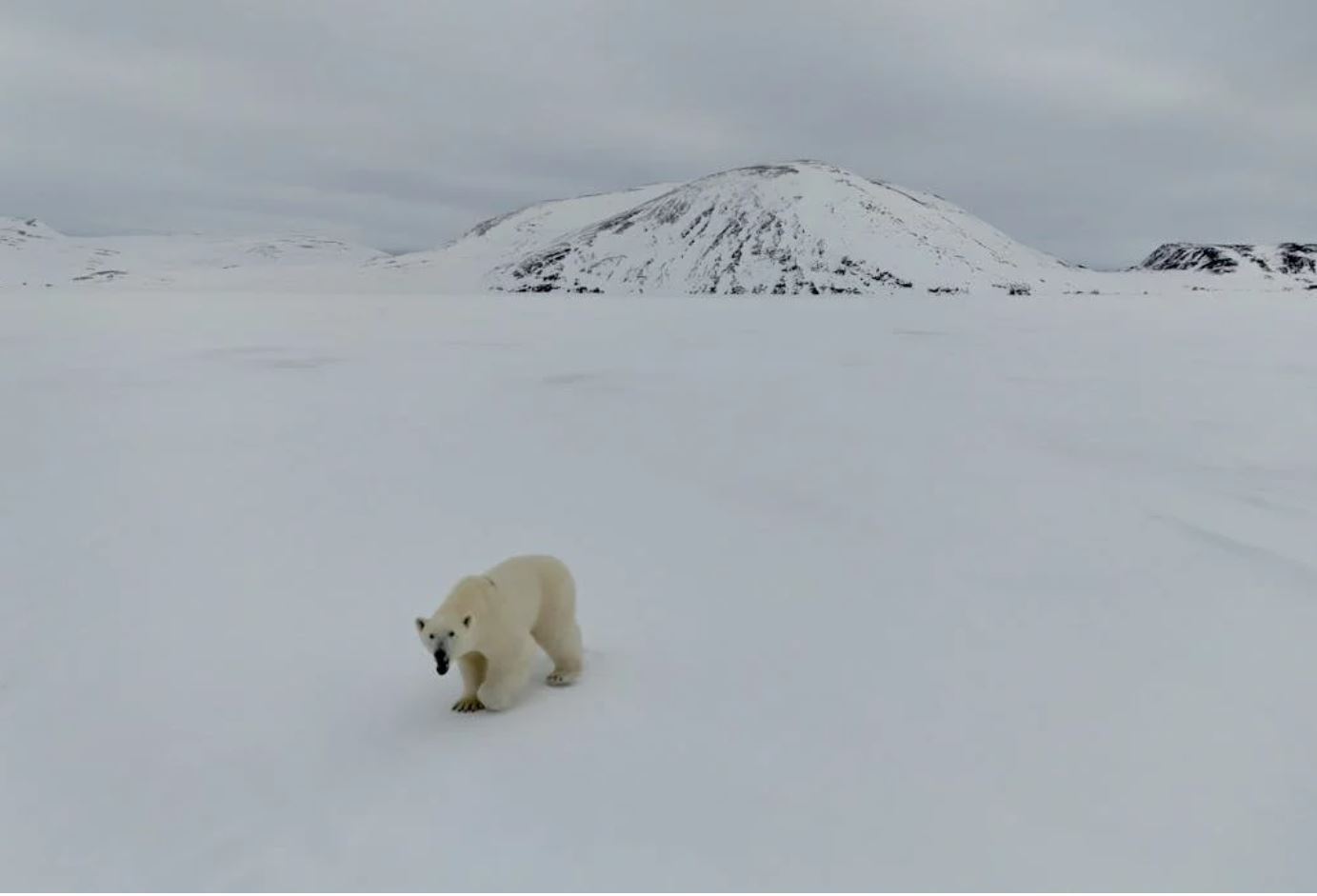
For nearly three decades, researchers at the Norwegian Polar Institute have tracked an ecological anomaly that defies conventional climate narratives: as sea ice vanishes around Svalbard at record pace, the archipelago’s polar bears have grown fatter, not thinner. The latest 2024 field measurements confirm this counterintuitive trend persists—male bears now carry greater fat reserves than in 1993, despite the Barents Sea losing ice faster than any other polar bear habitat on Earth.
This paradox offers Nordic business leaders more than a scientific curiosity. It delivers a critical lesson in adaptive resilience—one with profound implications for Arctic-facing enterprises navigating climate disruption.
Beyond the Headlines: The Mechanics of Adaptation
Between 1992 and 2019, researchers captured over 770 bears, documenting a 27-year period when spring hunting windows on sea ice contracted dramatically. Yet body condition improved. Why? Behavioural plasticity. Polar bears increasingly exploit terrestrial opportunities: hunting Svalbard’s expanding reindeer population and scavenging walrus carcasses—prey sources previously marginal to their diet. This dietary pivot demonstrates what business strategists recognise as resource substitution: when primary revenue streams erode, successful entities pivot to adjacent opportunities before crisis forces their hand.
But Jon Aars, the Norwegian Polar Institute senior researcher leading this work, issues a sobering caveat: “We believe there will be a threshold… in the future, at some point, we will see polar bears start to get slimmer. The good news is that we are not there yet. The bad news is that we believe we will get there”.
That threshold looms closer. Svalbard endured its warmest summer on record in 2024 (8.5°C average), while sea ice extent northeast of the archipelago remained near historic lows through late 2025. Glaciers across Arctic Scandinavia and Svalbard experienced their largest annual ice loss ever recorded between 2023–2024. The bears’ current resilience masks an accelerating trajectory toward systemic stress.
The Nordic Business Imperative: From Observation to Strategy
For Nordic enterprises with Arctic exposure—from tourism operators to shipping firms and resource developers—this research illuminates three strategic imperatives:
1. Invest in Adaptive Capacity, Not Just Mitigation
The bears’ success stems not from reversing ice loss (impossible) but from exploiting new niches. Similarly, Arctic-facing businesses must allocate capital to adaptive infrastructure: flexible logistics networks, diversified seasonal offerings, and real-time environmental monitoring systems. Companies treating climate change solely as a risk to mitigate—rather than a driver of operational transformation—will hit their own “threshold” unprepared.
2. Monetise Ecological Intelligence
Norway’s sustained polar bear monitoring program—spanning governments, research institutes, and international partners—generates intelligence with commercial value. Tourism operators use bear movement data to optimise viewing opportunities while minimising human-wildlife conflict. Shipping companies integrate ice-condition forecasts into routing algorithms. Nordic firms leading in environmental sensing, AI-driven predictive analytics, and satellite monitoring stand to export these capabilities globally as Arctic accessibility increases.
3. Navigate the Tourism Tightrope
Tourism injects approximately 935 million NOK annually into Svalbard’s economy and has grown at 7.5% yearly in pre-pandemic periods. Yet this sector faces a dual challenge: climate change simultaneously enables access (longer ice-free seasons) and erodes the product (diminishing “authentic Arctic” experiences). Forward-thinking operators are pivoting toward low-impact, high-value experiences—such as citizen science expeditions where tourists contribute to bear monitoring—aligning revenue models with conservation outcomes. This mirrors broader Nordic leadership in sustainable tourism development across Arctic communities.
The Threshold Ahead: A Warning for Long-Term Capital Allocation
The bears’ temporary prosperity should not breed complacency. Their current fat reserves reflect a lag effect: they’re capitalizing on transitional ecological opportunities that won’t persist as ice vanishes completely. When bears must swim 100+ kilometres to reach stable hunting platforms—as projected within 15–20 years—the energy expenditure will overwhelm terrestrial food sources.
For investors, this lag effect presents both opportunity and peril. Short-term Arctic ventures may appear robust while underlying systems degrade. Long-term capital allocation requires scenario planning that accounts for non-linear tipping points—not gradual decline. Nordic pension funds and sovereign wealth vehicles, with their multi-decade horizons, are uniquely positioned to model these thresholds and adjust Arctic exposure accordingly.
Looking Ahead: Our Next Investigation
In our next edition, Nordic Business Journal will examine how Nordic maritime insurers are pricing climate volatility into Arctic shipping premiums—and whether current models adequately account for non-linear ecological thresholds. We’ll analyse emerging financial instruments designed to hedge against “tipping point” risks in resource-dependent Arctic economies.
Connect With Us
How is your organization building adaptive capacity for climate-driven operational shifts? Share your resilience strategies with our editorial team at insights@nordicbusinessjournal.com. Selected responses will inform our upcoming special report on Nordic leadership in climate adaptation finance—positioning your insights before 45,000+ Nordic business decision-makers.
— Reporting supported by field data from the Norwegian Polar Institute’s 2024 monitoring season and analysis from the Arctic Council’s Sustainable Development Working Group under Norway’s 2023–2025 Chairship.