
As European Energy energises Northern Europe’s largest solar-battery hybrid park, a deeper transformation is underway—one that redefines grid economics, supply chain sovereignty, and the business models powering the energy transition.
When European Energy brought its 200 MWh battery system online at Kvosted in late December 2025—paired with an existing 101 MW solar park—the milestone represented more than Denmark’s largest storage facility. It signalled a strategic pivot by one of Scandinavia’s most aggressive renewable developers: from pure generation to intelligent energy arbitrage. For Knud Erik Andersen, European Energy’s founder and Denmark’s third-wealthiest individual (net worth €3.2B, per Økonomisk Ugebrev 2025), the investment reflects a cold-eyed recalibration of renewable economics in an era of price volatility.
“This isn’t about storing electrons,” Andersen tells Nordic Business Journal. “It’s about transforming intermittent assets into dispatchable capacity—turning weather-dependent generation into a predictable revenue stream.”
The Arbitrage Imperative: When Solar Pays You to Shut Down
European Energy’s shift responds to a painful market reality. With Denmark now generating over 60% of its electricity from wind and solar—and targeting 100% renewables by 2030—the economics of pure generation have fractured. During midday solar peaks in summer 2025, Nord Pool prices in the DK1 bidding zone plunged to negative €15/MWh for 47 hours—forcing producers to pay grid operators to accept their power. For European Energy, which now operates 2.1 GW of grid-connected renewables in Denmark alone, these episodes eroded project IRRs by 3–5 percentage points.
Batteries restore economics through three revenue streams:
1. Energy arbitrage: Buy at negative/low prices (<€10/MWh), sell during evening peaks (6–9 PM “cooking peak” averaging €85/MWh in Q4 2025)
2. Frequency regulation: Nordic TSOs now procure sub-second response services worth €120,000–€180,000/MW/year
3. Grid-forming capabilities: New inverters provide synthetic inertia—a critical service as hydropower’s traditional stabilising role diminishes with electrification of transport and heating
The Kvosted facility’s 50 MW discharge capacity remains modest against Denmark’s 5–6 GW peak demand. Yet European Energy’s pipeline—600–700 MW targeted for 2026–2027 deployment—could supply 10% of evening peak demand within three years, materially dampening price spikes.
Nordic Context: Batteries as the New Hydropower
This scale matters profoundly for the Nordic grid. Historically, Norway and Sweden’s hydropower reservoirs provided continental Europe’s “battery,” absorbing surplus wind power and dispatching during shortages. But three converging pressures are straining this model:
– Electrification surge: Nordic electricity demand grew 4.2% in 2025—the fastest in a decade—driven by data centres, EVs, and industrial decarbonisation
– Export constraints: Germany’s grid bottlenecks limit north-south power flows during surplus periods
– Climate volatility: Reduced snowpack in Scandinavian mountains diminishes hydro’s seasonal flexibility
Batteries now fill the gap. Finland commissioned the Nordics’ first grid-forming BESS in Valkeakoski (October 2025), providing inertia without spinning mass—a technological leap essential as inverter-based resources exceed 50% of generation. Denmark’s flat terrain lacks hydro potential, making batteries not optional but existential for grid stability.
The Supply Chain Dilemma: LFP Today, Sodium Tomorrow?
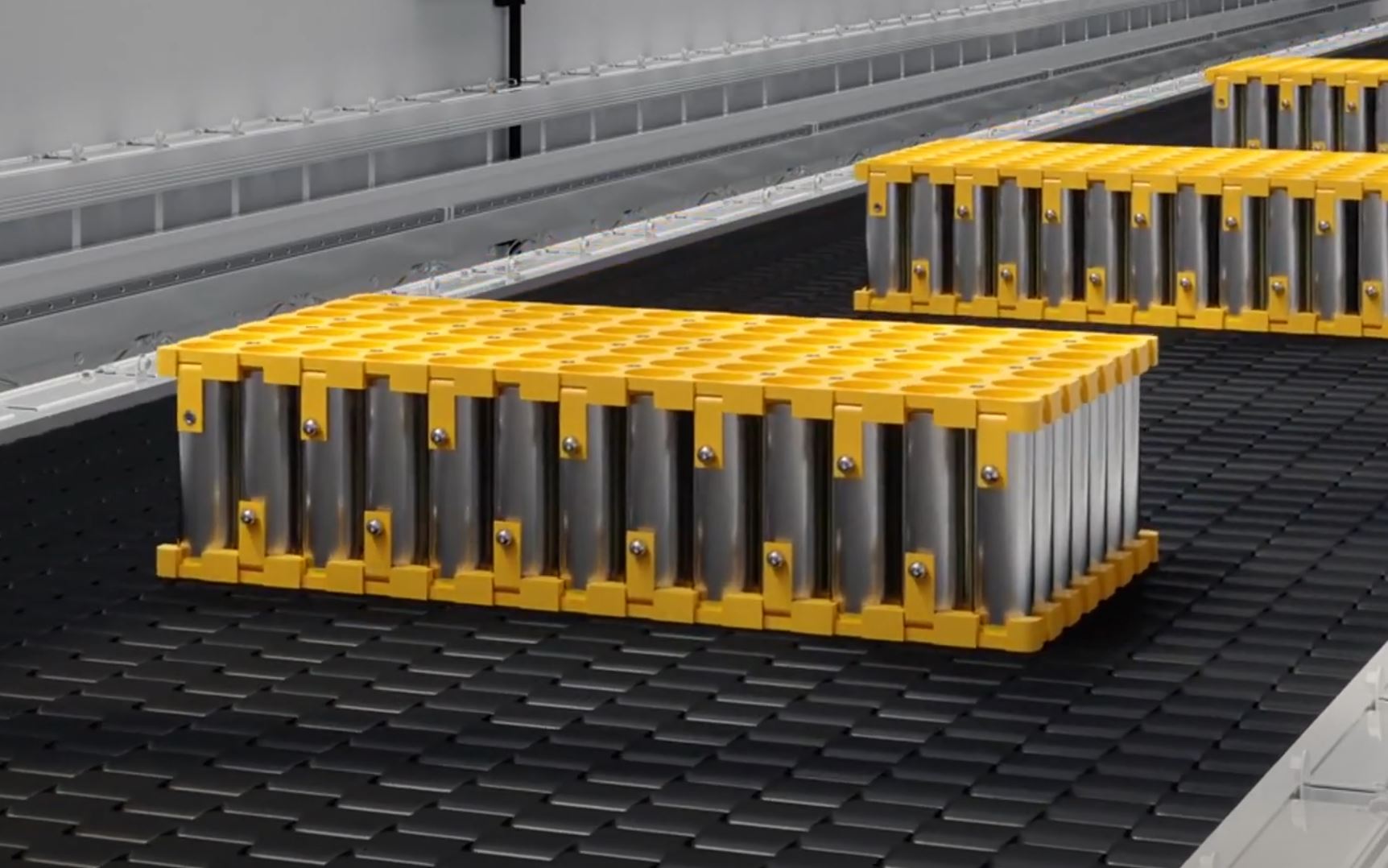
European Energy’s Kvosted installation uses lithium iron phosphate (LFP) cells—a pragmatic choice given 70% cost declines since 2020. Yet LFP exposes Europe’s strategic vulnerability: Chinese firms control 99% of global LFP production, with CATL and BYD capturing 69% of the broader EV battery market in 2025.
Andersen acknowledges the tension: “Our cells are Chinese-sourced but air-gapped from internet connectivity. Control systems are European—Danish and German software manages dispatch.” This hybrid model mitigates “kill switch” fears but doesn’t resolve raw material dependence. Lithium imports from Chile and Australia remain concentrated, prompting EU action via the Critical Raw Materials Act (effective Q1 2026), which mandates 40% of battery lithium be sourced domestically or from “trusted partners” by 2030.
The hoped-for alternative—sodium-ion (“salt”) batteries—remains nascent. Though CATL began commercial production in January 2026, energy density limitations (120–160 Wh/kg vs. LFP’s 180–220 Wh/kg) and immature supply chains restrict deployment to stationary storage. European Energy’s dialogue with suppliers about sodium-ion integration reflects strategic hedging, not imminent transition.
Market Structure Evolution: 15-Minute Pricing Unlocks Value
A regulatory shift quietly amplifying battery economics: Nord Pool’s transition to 15-minute pricing intervals in September 2025. Where hourly pricing masked intra-hour volatility, 15-minute settlement captures sharper price spikes—increasing arbitrage opportunities by an estimated 18–22% for optimally dispatched assets. For institutional investors, this transforms batteries from infrastructure plays into algorithmic trading platforms—merging energy and fintech expertise.
Forward Look: The Path to Price Stability
Will Danish consumers see “more stable” electricity prices within Andersen’s 2–3-year horizon? Partially. Batteries alone cannot eliminate volatility driven by weather-dependent generation. But they can compress the amplitude of spikes. Modelling by Aegir Insights suggests 1 GW of strategically located BESS could reduce evening peak prices by 8–12% during low-wind winter periods—translating to €35–50/MWh savings for industrial consumers.
The bigger impact lies in predictability. As battery capacity scales, forward curve volatility declines—enabling manufacturers to hedge energy costs with confidence. For Nordic industry competing globally, this risk reduction may prove more valuable than marginal price reductions.
What’s Next for Nordic Energy Storage?
This article is the first in our “Grid Economics 2030” series examining how storage technologies are reshaping Nordic industrial competitiveness.
Our next deep dive will analyse the emerging business model of second-life EV batteries in stationary storage—assessing whether automotive pack repurposing can accelerate deployment while navigating EU battery passport regulations and degradation economics. We’ll feature exclusive data from circular economy pilots in Sweden and Norway.
Connect with us: How is your organisation navigating the storage transition? Share your insights with our energy desk at insights@nordicbusinessjournal.com. Selected perspectives will inform our Q2 2026 executive roundtable on Nordic grid investment strategies.
— Nordic Business Journal Energy Intelligence Unit | February 2026