
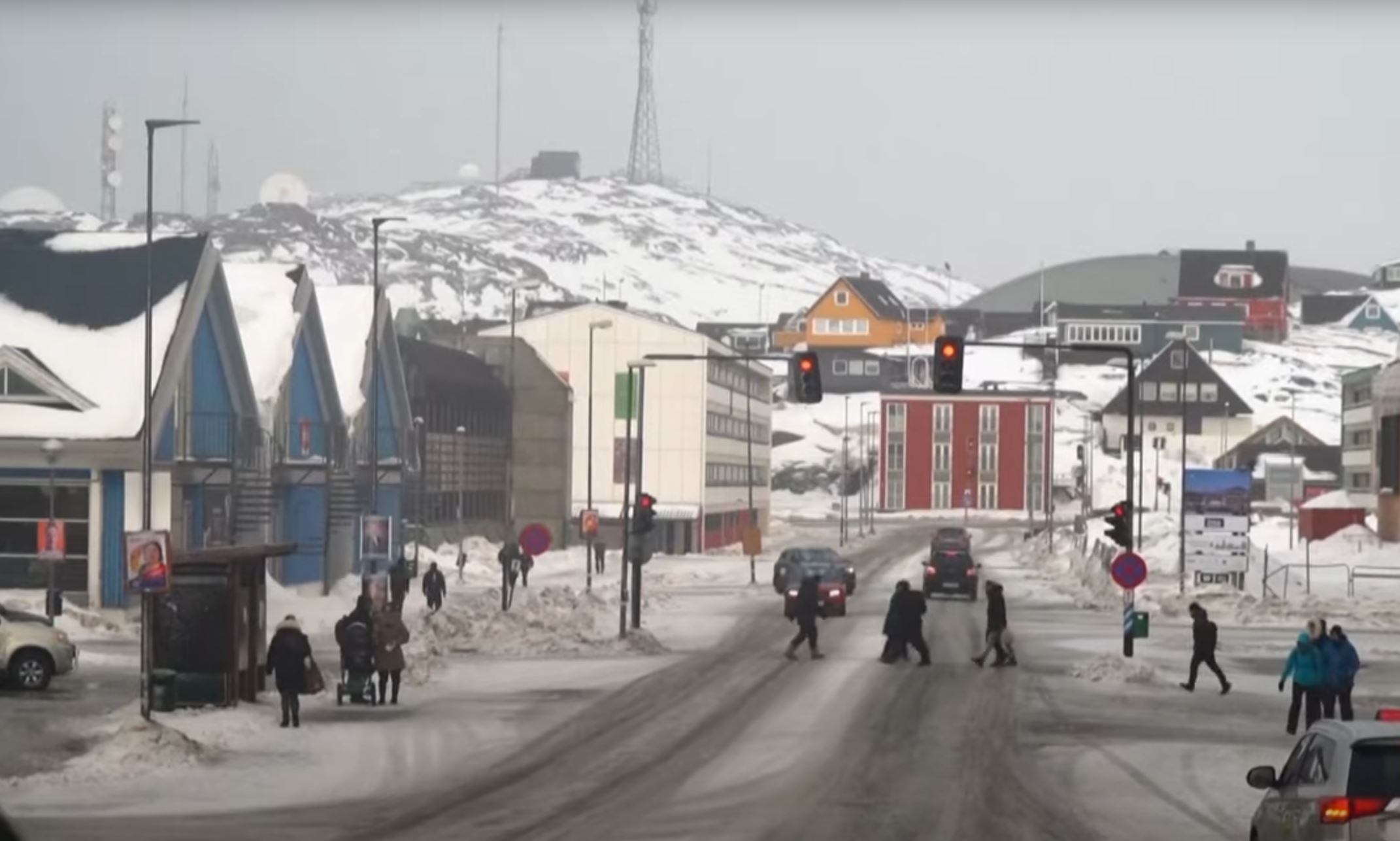
NUUK, Greenland — On February 6, 2026, Canada and France formally inaugurated diplomatic consulates in Greenland’s capital, marking a significant recalibration of Western engagement in the Arctic amid escalating geopolitical competition over the island’s critical mineral wealth and strategic position. The move signals deepening concern among NATO allies about maintaining influence in a territory increasingly courted by both Washington and Beijing—and one that sits at the heart of Nordic security architecture.
While Canada announced its intent to establish a Nuuk presence in late 2024 to strengthen Arctic cooperation, France accelerated its timeline following President Emmanuel Macron’s June 2025 visit, where he explicitly framed the consulate as a bulwark against unilateral acquisition attempts. His remarks targeted the Trump administration’s renewed push—since January 2025—to secure U.S. control over Greenland through economic pressure on Denmark and direct negotiations with Nuuk. This diplomatic manoeuvring occurs against a backdrop of Greenland holding the world’s eighth-largest rare earth element reserves, containing 25 of the EU’s 34 critical minerals, yet producing virtually none due to infrastructure deficits and stringent environmental standards.
Business Implications for Nordic Executives
For Nordic business leaders, these developments carry three immediate implications:
First, Greenland’s 2025–2029 Mineral Resources Strategy—released last January—prioritizes sustainable extraction with high environmental thresholds, creating both barriers and opportunities. While projects like Tanbreez (rare earths) and Citronen Fjord (zinc-lead) have attracted $50 million in recent financing, Wood Mackenzie projects multi-year development delays due to Greenland’s lack of ports, power infrastructure, and processing facilities. Nordic engineering, renewable energy, and maritime logistics firms possess competitive advantages to address these gaps—if they navigate Nuuk’s insistence on local benefit-sharing and environmental stewardship.
Second, the consulate openings reflect a broader Western strategy to counterbalance Chinese influence. China set a record with 14 container voyages through the Northern Sea Route in 2025, signalling growing Arctic commercial ambitions. With Greenland positioned between the Northwest Passage and transatlantic shipping lanes, its ports could become pivotal nodes in future Arctic trade corridors—a domain where Nordic shipping and port operators hold decades of operational expertise.
Third, Denmark’s constitutional relationship with Greenland remains the critical variable. Though Greenland gained expanded autonomy in 2009, Copenhagen retains control over foreign affairs and defence—a tension exacerbated by Trump’s threats to impose tariffs on Denmark if it blocks U.S. acquisition attempts. Yet Greenland’s March 2025 elections produced a unity government committed to gradual independence while deepening ties with European partners. For Nordic businesses, this creates a dual-track opportunity: partnering with Nuuk on resource development while maintaining channels through Copenhagen on regulatory frameworks.
The Nordic Position
Denmark’s position is uniquely complex—simultaneously Greenland’s sovereign guarantor and a NATO ally navigating U.S. pressure. Meanwhile, Norway, Sweden, and Finland have intensified Arctic coordination through the Nordic Arctic Programme 2025–2027, emphasizing resilient communities and sustainable development. This collective approach offers Nordic firms a differentiated value proposition versus American or Chinese competitors: trusted partnership grounded in shared Arctic governance principles dating to the 2008 Ilulissat Declaration.
Strategic Outlook
This diplomatic surge signals that Greenland’s era as a geopolitical afterthought has ended. Our next analysis will examine specific investment frameworks emerging under Greenland’s 2025–2029 Mineral Strategy—and which Nordic sectors (renewable microgrids, cold-climate logistics, environmental monitoring) are best positioned to win early contracts. To discuss how your organization can engage Nuuk’s emerging resource economy—or to share intelligence on Arctic supply chain developments—contact our editorial team at insights@nordicbusinessjournal.com. Join the conversation at NordicArcticStrategy.