
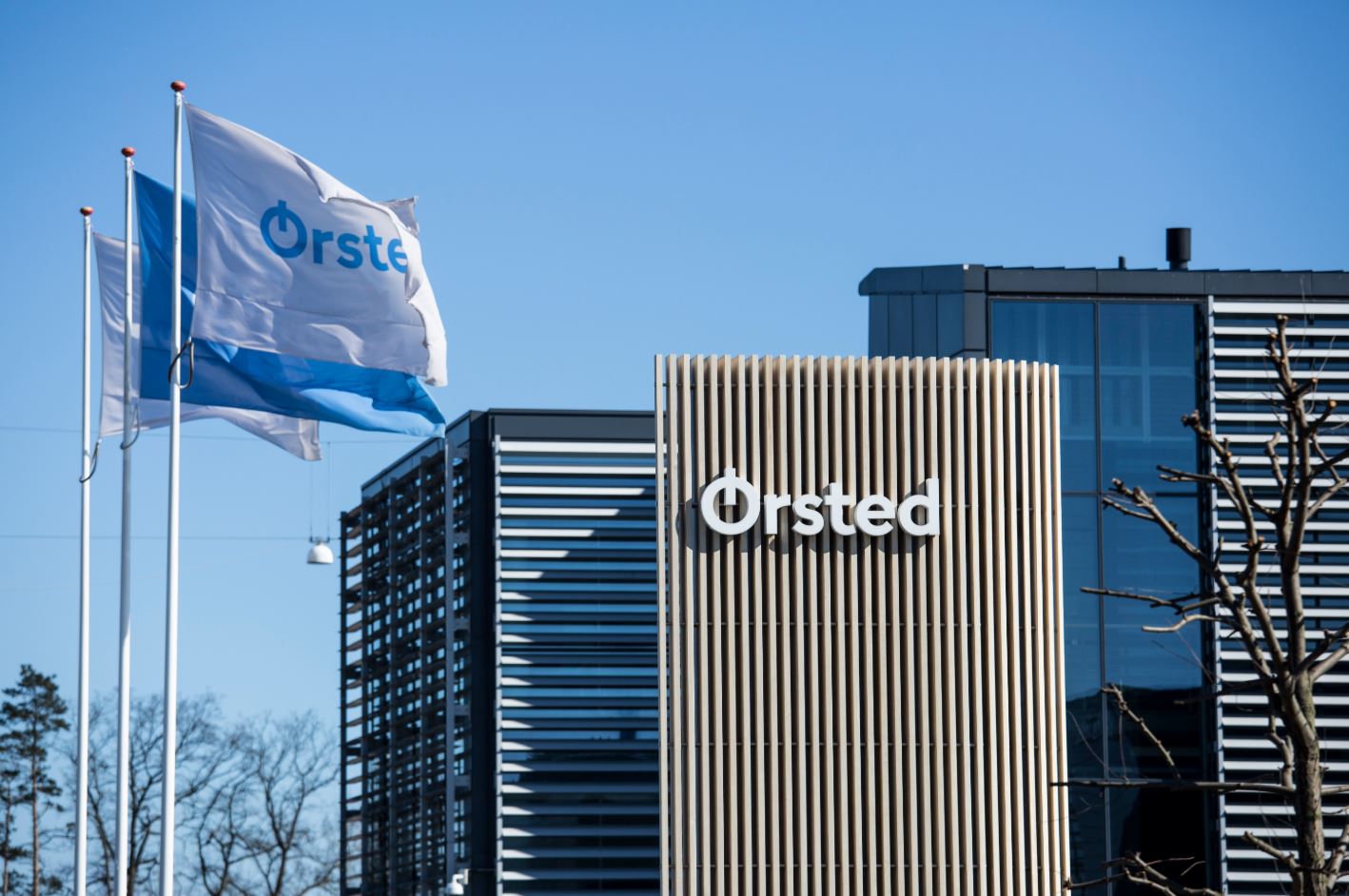
In a remarkable turn of events, Ørsted, Denmark’s renewable energy powerhouse, has announced a robust profit of 3.2 billion kroner for the past fiscal year. This marks a substantial recovery from the mere 16 million kroner profit recorded the previous year. Ørsted’s CEO, Rasmus Errboe, expressed his satisfaction with the company’s performance, calling 2025 a pivotal year for the company, which has undertaken significant steps to streamline operations and fortify its competitive edge in the global energy landscape.
Ørsted’s Financial Resilience: Key to a Sustainable Future
Despite the global economic uncertainties and challenges inherent in the energy sector, Ørsted’s performance in 2025 signals strong resilience. Errboe highlighted that the company has not only sharpened its focus on offshore wind but also laid down a solid financial foundation that positions Ørsted to capitalize on emerging opportunities in Europe and select markets in Asia-Pacific. This profitability comes after Ørsted has been through some stormy waters, including a leadership change, significant capital injections, and a series of legal battles, particularly in the United States.
The company’s success can largely be attributed to its strategy of doubling down on offshore wind, a sector in which Ørsted has become a global leader. The company’s renewed focus is evident in its major investments, including the recent 60 billion kroner capital injection, which has been hailed as the largest in Denmark’s corporate history. Notably, 30 billion kroner of this capital came from the Danish state, which retains a 50.1% stake in the company. This financial boost has given Ørsted the flexibility to expand its offshore wind operations and pursue large-scale projects in Europe and Asia, both of which are crucial for the company’s long-term growth.
Political Uncertainty in the US: A Thorn in Ørsted’s Side
However, while Ørsted’s business performance is strong, the company faces ongoing challenges tied to political and regulatory uncertainty in the United States. Ørsted, like other energy players, has found itself in the crosshairs of U.S. government policies that have the potential to significantly disrupt its operations. This includes ongoing litigation around the construction of two major offshore wind farms in the U.S.: Sunrise Wind and Revolution Wind, both located off the East Coast.
These projects have encountered significant delays and cost escalations due to a U.S. Department of the Interior decision in December 2025 to ban the construction of five large offshore wind farms. Two of these affected farms are directly linked to Ørsted’s operations, either in full or in part. Fortunately, the ban was overturned by a U.S. court, allowing Ørsted to continue construction of both projects.
However, Ørsted is not out of the woods yet. The company is still embroiled in a lawsuit with the U.S. government regarding concerns over potential radar interference from the offshore wind farms, a matter that could have serious national security implications. While the case remains sealed to the public, the U.S. court system has so far dismissed the government’s arguments. The final ruling is still pending, but it is clear that the political risk associated with these projects is not entirely behind Ørsted.
Looking Ahead: A New Era of Energy Leadership
While the political hurdles in the U.S. are far from resolved, Ørsted’s CEO remains optimistic. Errboe’s remarks in the company’s annual report indicate a long-term vision that centres on offshore wind and global market expansion. The completion of the Revolution Wind farm is expected by the end of 2025, with the Sunrise Wind project to follow in 2026. Despite the legal uncertainties, Ørsted is on track to become one of the most influential players in the global offshore wind market.
Beyond these two flagship projects, Ørsted’s broader strategy includes increasing its presence in emerging markets, particularly in Europe and Asia. As countries around the world transition to renewable energy, Ørsted is well-positioned to leverage its experience and technological expertise to meet growing demand. As the company shifts focus toward building sustainable, large-scale energy infrastructure, it will likely continue to see increasing profitability in the coming years—provided it can navigate the volatile political landscape in key regions like the United States.
A Broader Lesson: Political Uncertainty in Global Energy
The challenges Ørsted faces in the U.S. are a microcosm of the broader political risks confronting global energy companies. As the world transitions to renewable energy, political stability and regulatory certainty will become increasingly important for companies that operate across borders. Ørsted’s experience is a stark reminder of how political decisions, particularly those related to national security and energy policy, can disrupt long-term strategic plans.
This case also highlights the importance of diversification in a company’s energy portfolio. By focusing on offshore wind projects across multiple regions, Ørsted is able to hedge against potential risks in any single market. For other companies in the energy sector, Ørsted’s experience serves as a valuable lesson in managing geopolitical risk while seizing opportunities in the rapidly growing renewable energy market.
Looking Ahead: What’s Next for Ørsted?
As Ørsted continues to build its renewable energy empire, the next chapter of its journey will likely focus on addressing the ongoing political challenges in the U.S. while expanding its footprint in other high-growth markets. Future articles will dive deeper into the impact of global geopolitical risks on renewable energy companies and explore the innovative technologies driving the next generation of offshore wind farms.
For our readers, Ørsted’s story serves as a case study in resilience, innovation, and strategic vision. As renewable energy continues to take centre stage in the global economy, Ørsted’s journey will undoubtedly provide valuable lessons for business leaders and policymakers alike.
Stay tuned for our next article, where we’ll delve into how Ørsted and other global energy giants are adapting to the evolving regulatory landscape and positioning themselves for future growth.
Connect with us to share your thoughts and continue the conversation on the future of renewable energy. We’d love to hear your perspective and engage with our readers on how these developments are impacting your business strategy and operations.
By the Editorial Team at Nordic Business Journal