
Analysing Nordic Airport Competition and What Sweden’s Aviation Future Must Focus On
Early 2026 has delivered positive signs for Swedish aviation, with both Swedish airlines and Stockholm’s Arlanda Airport showing growth. However, a deeper look at the Nordic aviation landscape reveals a troubling trend. While Arlanda is indeed expanding, it is being outpaced by its closest competitor, Copenhagen Airport. This isn’t a temporary dip in performance – it’s a structural shift that could have long-term implications for Sweden’s international connectivity and competitiveness.
A Strong Start in January, but Copenhagen Sets the Bar
In January 2026, Sweden’s airports, operated by Swedavia, saw a total of over 2.2 million passengers. However, in the same period, Copenhagen Airport alone recorded 2.23 million passengers, marking its strongest January on record. This stark contrast highlights the growing gap in regional airport performance, as reported by Flygvärlden.
Stockholm Arlanda handled roughly 1.6 million passengers in January 2026, reflecting a 7% year-over-year growth. While these figures are positive, they must be viewed within context. The comparison isn’t with 2025, but with Copenhagen’s significant strides. The airport in Denmark grew by 14% in the same month, more than double Arlanda’s growth rate. This has to be viewed not as an anomaly but as a signal of a more pronounced trend: Copenhagen is gaining, and Arlanda is struggling to keep up.
The Domestic Market: More Stabilisation Than Revival
January 2026 marked the first full month of domestic flights concentrated at Arlanda following the closure of Bromma Airport. While domestic traffic at Swedavia’s airports increased by 14%, Arlanda saw a 12% uptick, which is a sign of recovery, but not a breakthrough.
It’s essential to note that the bar for improvement in this sector is relatively low. January 2025 was a particularly challenging month, marked by operational issues, cancelled flights, and low passenger confidence. Therefore, the 12% increase at Arlanda doesn’t reflect a robust recovery but rather a stabilization of a market that had been in turmoil. The reality is that domestic air traffic remains nearly 40% below pre-pandemic levels, and total traffic at Swedavia’s airports is still 21% lower than 2019 numbers.
This sets a ceiling on Arlanda’s potential for quick recovery. Despite growth, it remains far from the levels necessary to compete with Copenhagen and other European hubs.
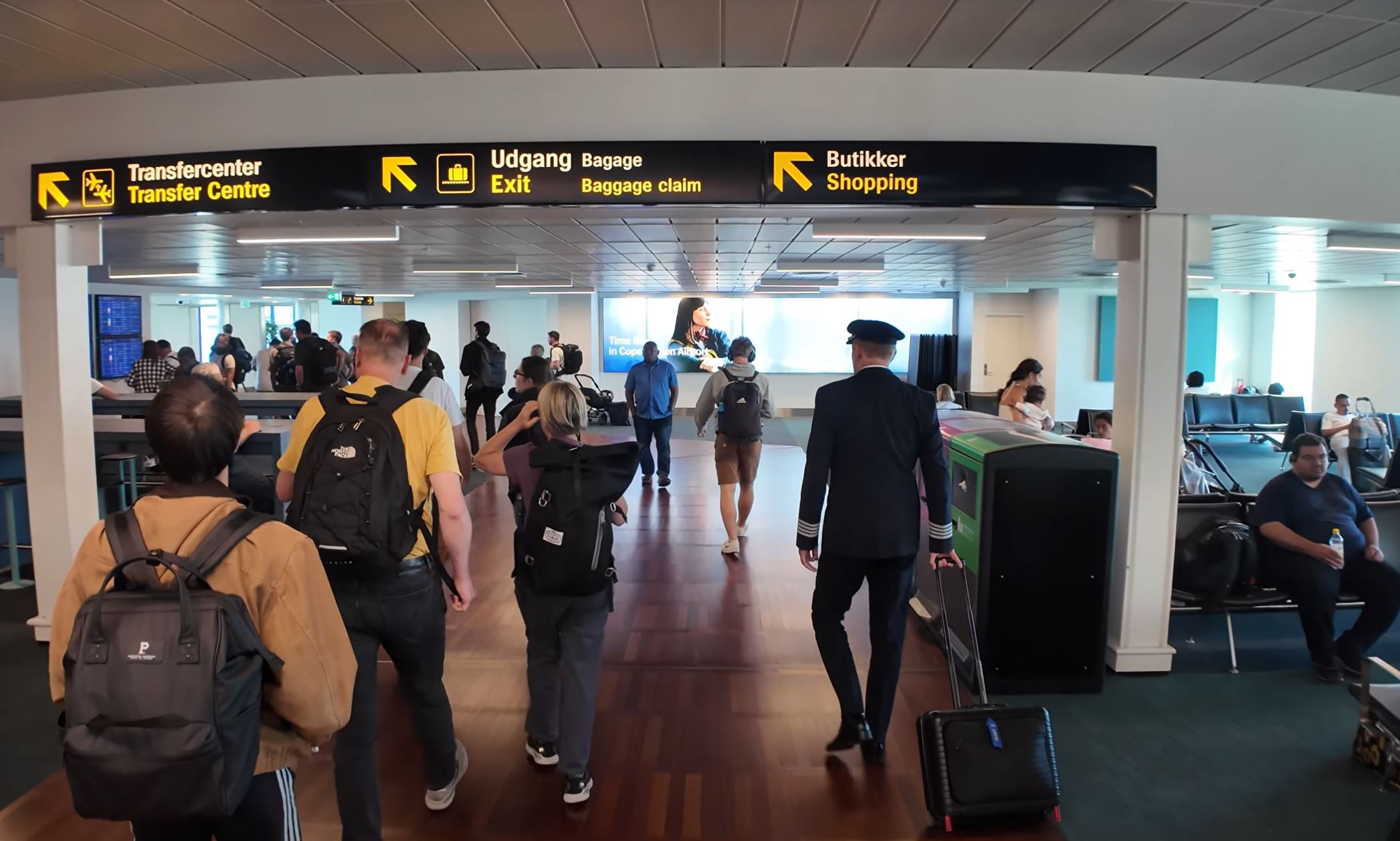
Copenhagen Gears Up: A Hub for Transfer Traffic
While Stockholm struggles with its recovery, Copenhagen is actively transforming into a global hub. The airport’s impressive 14% growth in January – fuelled by an increase in transfer passengers – reflects a deliberate strategy to enhance connectivity and service offerings.
A key factor in this is the complete integration of SAS into the SkyTeam alliance, which has boosted transfer traffic to Copenhagen from major global carriers like Delta Air Lines and Air France-KLM. Copenhagen is evolving into a seamless hub for onward connections, while Arlanda continues to operate primarily as a terminus for point-to-point flights.
In January, more than 612,000 passengers at Copenhagen were transfer travellers – over 200,000 more than the same month the previous year. This is no coincidence. Copenhagen’s ability to efficiently serve transfer traffic is not only a reflection of improved airport services but also of strategic investments in infrastructure and airline partnerships.
Investment Pace: Copenhagen Is Outpacing Arlanda
The investment differential between Copenhagen and Arlanda is also notable. Nearly 40% of aircraft flying into Copenhagen are from newer generations like the Airbus A320neo and Boeing 737 MAX. These aircraft not only improve fuel efficiency but also reduce operational costs for airlines, giving Copenhagen an edge in attracting major carriers.
By next year, that number is expected to increase to 50%. Meanwhile, Arlanda is still playing catch-up in terms of fleet modernization. As a result, Copenhagen can offer airlines lower operating costs, increased passenger capacity, and more frequent flights—factors that make the airport a more attractive option for international carriers.
On the infrastructure side, Copenhagen is expanding its Terminal 3, with completion slated for 2027. This will allow the airport to handle an even higher volume of passengers. In addition, biometric technology is being introduced for faster passenger flows, improving the overall travel experience.
Arlanda, in comparison, is focused on recovery, while Copenhagen is preparing for growth.
The Bigger Picture: Sweden’s Competitive Future at Risk
This isn’t just an issue of airport statistics – it’s a critical matter of Sweden’s international accessibility and future economic competitiveness. A report by WSP, titled “A Nation with Its Wings Clipped,” commissioned by the Swedish Transport Companies, highlights the socio-economic losses Sweden faces due to Arlanda’s sluggish development. For a month like January 2026, the losses are estimated to be between SEK 1.5 and 3 billion.
The competitive imbalance between Arlanda and Copenhagen is more than just an airport rivalry; it’s a matter of national interest. As Copenhagen’s growth accelerates, the benefits of increased direct connections – more investment, more routes, and an expanding airline base – create a positive feedback loop. The imbalance amplifies further, as more international carriers choose Copenhagen as their Nordic base, leading to a greater concentration of air traffic in Denmark.
Sweden, and particularly Stockholm, is being left behind in the race for international air connectivity. The results of this gap are not limited to passenger counts; they extend to long-term economic consequences, including the potential loss of investment, jobs, and business headquarters.
The Way Forward: Sweden Must Act Swiftly
Arlanda is making strides, but at a pace that is too slow to keep up with its regional rivals. The battle for air connectivity, corporate investment, and economic growth is intensifying in the Nordics, and right now, Copenhagen is pulling ahead.
Sweden must invest aggressively in its aviation infrastructure, align policy with the needs of international airlines, and develop a strategy that ensures Arlanda is not just recovering, but growing faster than its competitors. Without swift action, Sweden risks falling behind in the crucial competition for global air traffic and business connectivity.
In our next issue, we’ll explore the key steps Sweden must take to accelerate Arlanda’s growth and restore its competitive edge. We’ll dive deeper into the economic implications for Swedish industries and businesses if Sweden fails to respond to Copenhagen’s lead in the air travel space.
For now, we invite you to connect with us at Nordic Business Journal to continue the conversation and share your thoughts on the future of Sweden’s aviation industry. What changes would you like to see to ensure Arlanda remains competitive?
Contact us:
Nordic Business Journal Editorial Team
Email: editorial@nordicbusinessjournal.com
Follow us on social media for updates and insights!