
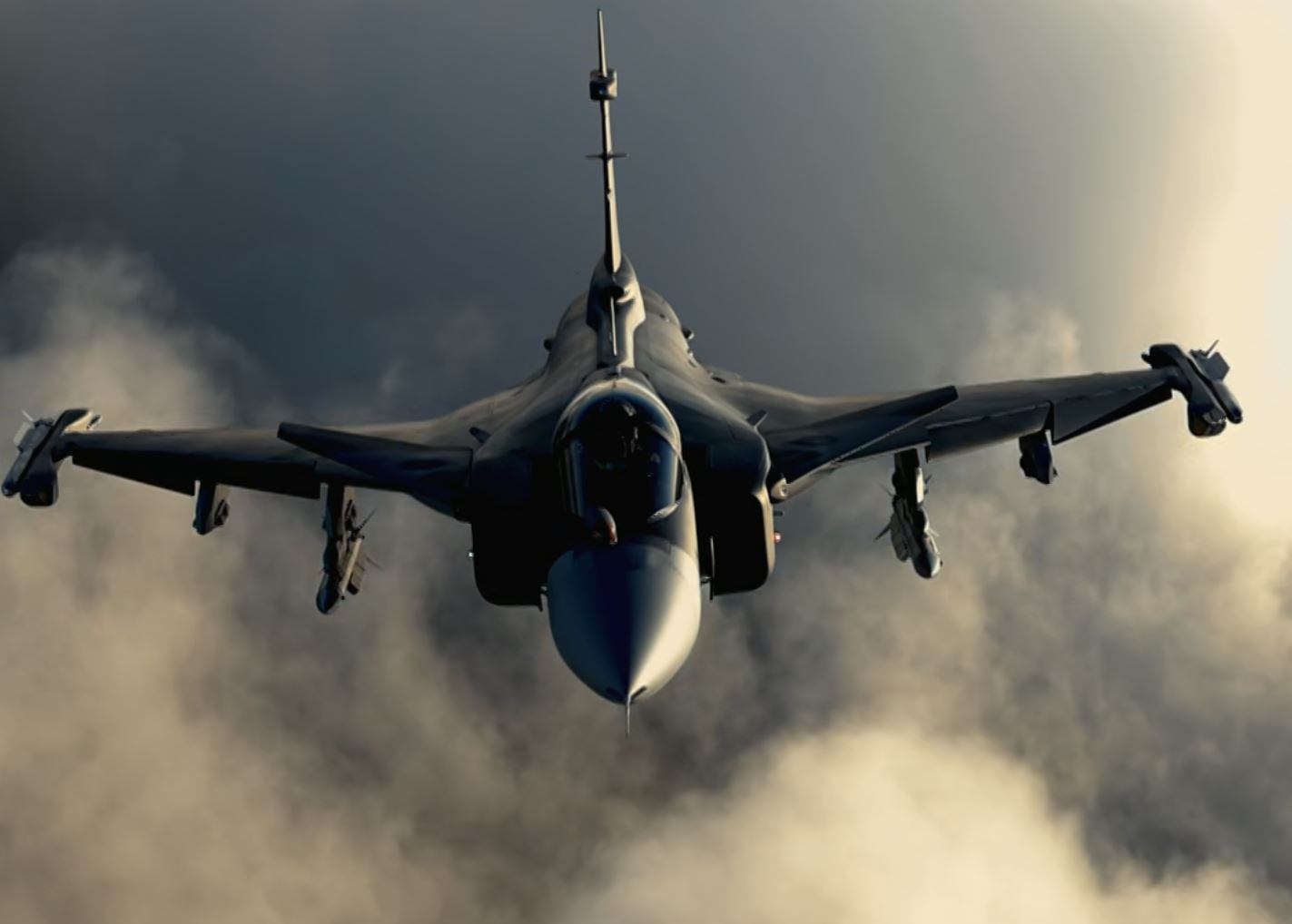
There is the growing assertion that global interest in Sweden’s Gripen fighter jet is accelerating. This is not merely aspirational—it is quantifiable. In late 2025 alone, Saab secured a €3.1 billion contract with Colombia for 17 Gripen E/F aircraft (deliveries 2026–2032), followed by Thailand’s SEK 5.3 billion order for four jets with deliveries beginning this year. The Philippines has entered active negotiations, while Ukraine has formally requested Gripen E capability assessments with potential deliveries starting in 2028. Most telling: Saab is aggressively expanding production capacity from 12 aircraft annually in Sweden to a combined 36 units per year through its Brazilian assembly line—anticipating demand that could reach 300 aircraft globally.
But for Nordic executives evaluating supply chain implications, the critical question isn’t whether interest is growing—it’s why, and whether this surge represents sustainable market transformation or a temporary geopolitical blip.
The Technological Catalyst: Software-Defined Warfare
The Gripen E’s appeal transcends traditional fighter jet metrics. Its architecture enables what Saab terms “capability insertion in days, not years”—a paradigm shift with profound industrial implications. Unlike legacy platforms requiring 18-month update cycles, the Gripen E’s model-based engineering allows near-perfect digital twins for rapid validation of hardware/software modifications. This became operational reality in June 2025 when an AI agent completed autonomous air combat manoeuvres aboard a Gripen E—a world-first integration made possible by its open-architecture software stack.
For defence procurement officers facing an evolving threat landscape, this matters immensely. Electronic warfare capabilities can be reconfigured via software updates rather than costly hardware retrofits. Sensor fusion algorithms can evolve with emerging threats. In an era where Ukraine’s battlefield innovations compress tactical adaptation cycles from years to months, the Gripen’s software-defined approach offers a compelling value proposition—particularly for nations unwilling or unable to commit to the F-35’s lifecycle costs.
The Nordic Paradox: Interoperability Without Homogeneity
Here lies the strategic tension for Nordic industry leaders. While Sweden operates Gripens, its Nordic neighbours have overwhelmingly chosen the F-35: Finland (64 aircraft on order), Norway (52 delivered/planned), and Denmark (27 on order). Yet Sweden’s Defence Minister recently emphasized that “in the Nordic cooperation, Finland, Denmark, and Norway are using the F-35; we’re using Gripens, but we still have a common Nordic air-power capability”.
This mixed-fleet reality presents both challenge and opportunity. Nordic defence ministers updated NORDEFCO agreements in 2025 under Finland’s chairmanship to enhance interoperability frameworks. For supply chain managers, this means:
– Dual-ecosystem readiness: Nordic suppliers must navigate two distinct industrial bases—Lockheed Martin’s tightly controlled F-35 supply chain versus Saab’s more flexible offset-driven model. Thailand’s Gripen deal includes a 100-billion-baht offset package directing Thai firms to produce bearings, clamps, and airframe components—a template potentially replicable in Nordic contexts.
– Software-defined manufacturing: As Gripen production scales, component suppliers face new requirements for rapid reconfiguration. Saab’s “software-defined fuselage” initiative—demonstrated with its Ruby UAV program—signals that even airframe manufacturing may shift toward agile, digitally validated production.
– Strategic hedging: With Nordic defence spending surging (Sweden: 2.8% of GDP in 2026; Norway: 3.4%; Denmark: +$1.6B increase), executives should assess whether their firms can serve both ecosystems. Companies like Nordic Aircraft already supply components across multiple Gripen variants, but expansion requires navigating complex offset negotiations and cybersecurity certifications.
The Geopolitical Accelerant
The Ukraine war fundamentally reshaped European defence calculus. Three years of attritional combat demonstrated that air superiority requires not just stealth but sustainability—high mission-capable rates, rapid turnaround, and affordable operations. The Gripen’s lower operating costs (approximately 60% of F-35 hourly rates) and 90%+ mission readiness in Swedish service make it attractive for nations building layered air defences rather than seeking singular platform dominance.
Yet executives must temper enthusiasm with realism. The F-35 remains dominant in European competitions—winning Finland’s HX program decisively and scoring 95% versus Gripen’s 33% in Canada’s technical evaluation. Gripen’s export success has concentrated in price-sensitive markets (Brazil, Thailand, Colombia) rather than peer competitors. Its future hinges on proving mixed-fleet interoperability at scale—a proposition still untested in high-intensity conflict.
Strategic Imperatives for Nordic Managers
1. Map dual-supply chain exposure: Audit your firm’s dependencies on F-35 versus Gripen ecosystems. Companies overly concentrated in one platform face vulnerability as national procurement strategies evolve.
2. Position for offset opportunities: As Gripen orders expand in Southeast Asia and Latin America, Nordic firms with precision manufacturing capabilities should engage Saab’s industrial cooperation office early—offset packages often allocate 30–50% of contract value to supplier development.
3. Invest in digital thread capabilities: Gripen’s model-based engineering demands suppliers capable of providing digital twins and rapid design iteration. Legacy manufacturing approaches will struggle to compete.
4. Monitor Nordic defence industrial policy: The EU’s European Defence Industrial Strategy (EDIS) aims for 40% collaborative procurement by 2030. Nordic governments may increasingly mandate cross-border industrial participation—creating openings for agile suppliers.
Next Steps For Readers
This analysis raises critical questions about Nordic industrial strategy in an era of platform diversification. In our next feature, we will investigate how Finnish and Swedish defence industrial cooperation—formalised in their December 2025 bilateral declaration—is creating concrete supply chain opportunities for mid-tier Nordic manufacturers beyond fighter jets, including naval systems and electronic warfare components.
Are you a Nordic supply chain executive navigating dual-platform strategies? Share your insights with our editorial team at insights@nordicbusinessjournal.com. We’re compiling executive perspectives for our Q2 Defence Industrial Outlook report—contributors will receive exclusive access to our supply chain resilience benchmarking data.
— Nordic Business Journal: Connecting Nordic Executives to Strategic Opportunity