
In an era where internet traffic forms the backbone of global communication, a revolutionary new project is poised to reshape how data flows across continents. Sweden’s ambitious venture, known as Polar Connect, is set to lay an unprecedented undersea cable that will traverse the Arctic and stretch from the heart of Sweden, through the frozen expanse of the North Pole, all the way to Asia. A bold initiative with significant geopolitical and economic implications, this project has captured the attention of both European and global stakeholders and has been identified as a strategic high priority by the European Union.
Estimated at a staggering SEK 21 billion, the Polar Connect initiative promises not only to fortify Sweden’s and Europe’s critical infrastructure but also to provide a safer and faster digital route across the globe. The cable will facilitate high-speed communication between Sweden, North America, and Asia while offering numerous opportunities for climate research, as sensors embedded in the cable will allow real-time monitoring of Arctic conditions.
Navigating the New Digital Route: Security and Efficiency
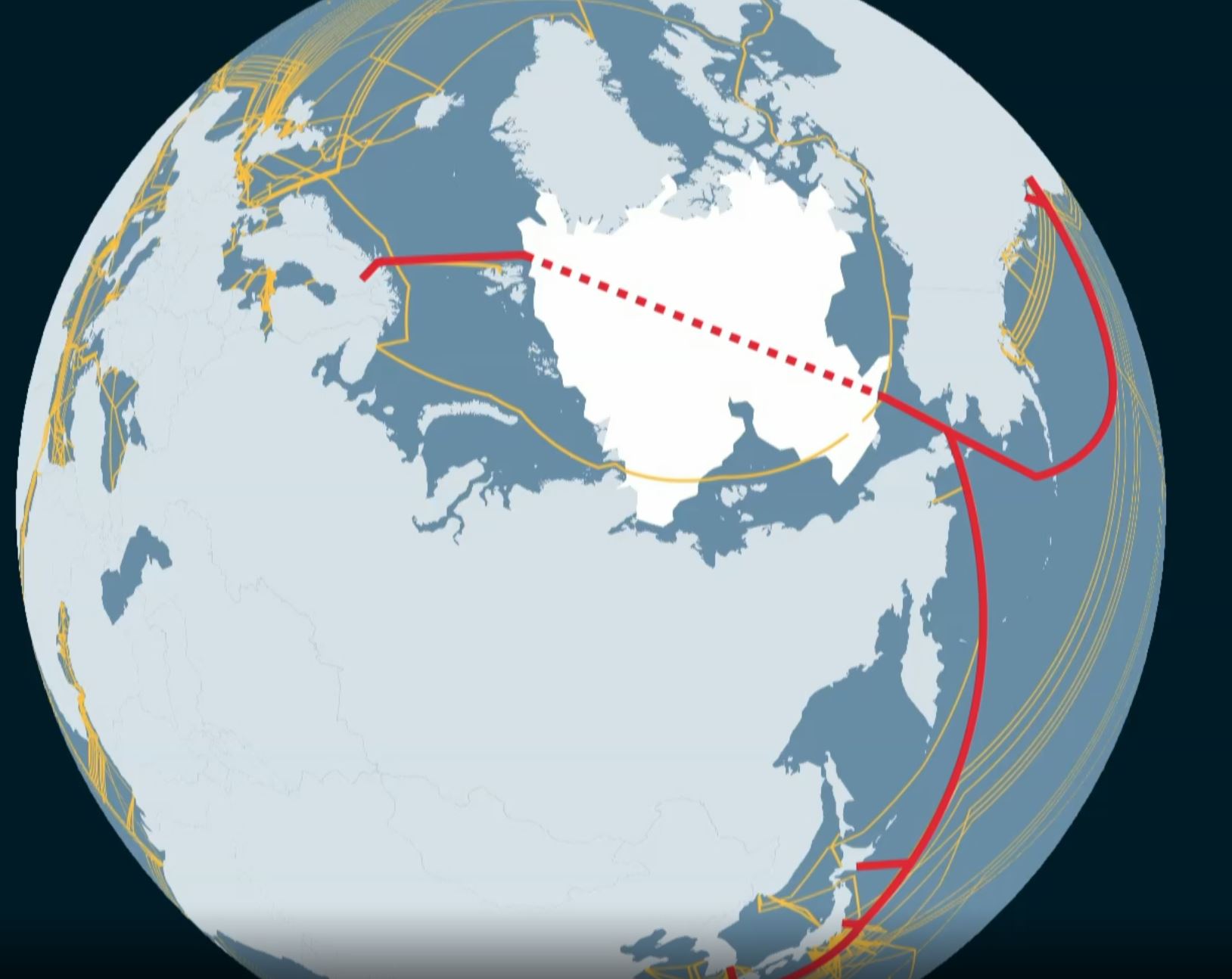
The rationale behind the project lies in its ability to bypass some of the world’s most geopolitically sensitive areas. By using the shortest route to Asia, measuring just 10,500 kilometres, Polar Connect provides a more secure alternative to the conventional path via the Suez Canal and other high-risk zones. With current global tensions and the increasing risks associated with traditional undersea cable routes, the project promises a safer passage for the data that powers economies worldwide.
Katarina Bjelke, Director General of the Swedish Research Council, aptly explains that a cable under the Arctic ice, located several kilometres below the surface, will be much harder to sabotage than those situated along conventional routes. This crucial aspect addresses concerns regarding potential threats to internet traffic and the security of digital infrastructure, making it an attractive alternative for European and global stakeholders alike.
A Consortium-Driven Initiative
The Polar Connect project is a Nordic collaborative effort, designed to meet both scientific and business needs. The cable system, originating in Kiruna, Sweden, will stretch through Norway, Svalbard, and the Arctic Ocean before reaching destinations in Asia and North America. The infrastructure will be built and managed by a consortium that includes Swedish authorities, the Swedish Research Council, and various private and public stakeholders.
Real-time climate monitoring is another key benefit of this venture. The cable’s embedded sensors will provide invaluable data on the Arctic environment, offering researchers the ability to track temperature and salinity changes with unprecedented accuracy. This data could revolutionize our understanding of climate change and its effects on the Arctic ecosystem, providing crucial insights for the scientific community and policymakers.
Investment in the Future: The Role of Government and Private Sector
The Swedish government’s commitment to this ambitious project is clear, with SEK 118 million already allocated for research and development. However, to ensure the successful implementation and sustainability of Polar Connect, additional private investments and partnerships will be necessary. The involvement of companies like Global Connect, which specializes in telecom and digital infrastructure, ensures that the project will be both commercially viable and capable of meeting the future demands for data traffic.
Moreover, the project has sparked interest from a range of international stakeholders. Collaborations are being formed with governments and private companies across North America, Japan, and South Korea to establish a new digital highway, which will not only enhance connectivity but also improve resilience in the global telecommunications network.
Looking Ahead: A Strategic Investment for the Future
The Polar Connect project’s significance extends far beyond Sweden. As a cornerstone of Europe’s digital security and a key enabler of scientific research in the Arctic, this cable represents a strategic investment in both national and global infrastructure. Its ability to strengthen the resilience of digital networks and mitigate risks associated with traditional routes ensures its importance on the global stage.
While the road to completion is long, with an estimated finish date of around 2030, Polar Connect represents a glimpse into the future of telecommunications. It underscores the growing need for alternative and secure routes to accommodate the ever-increasing volume of data that powers the modern world.
Preparing for the Next Leap: A Look at the Future of Global Connectivity
As this groundbreaking project takes shape, it will undoubtedly be a subject of ongoing interest and discussion. The next steps will involve overcoming the significant technical and logistical challenges of laying the cable beneath the Arctic ice, while also navigating the complex political landscape of international collaboration.
In the upcoming issue of the Nordic Business Journal, we will take a closer look at how projects like Polar Connect are part of a broader trend towards digital sovereignty and the growing importance of securing critical infrastructure in the face of an evolving geopolitical climate. We will also explore how Nordic businesses and governments are positioning themselves at the forefront of these transformative developments in global connectivity.
Connect with Us
As always, we encourage our readers to engage with us on this exciting development. Whether you’re an investor, a researcher, or a business leader, Polar Connect offers tremendous opportunities for collaboration and innovation. Stay tuned for more insights in our next issue and don’t hesitate to reach out to us for further discussions on how your business can get involved in shaping the future of global communications.