
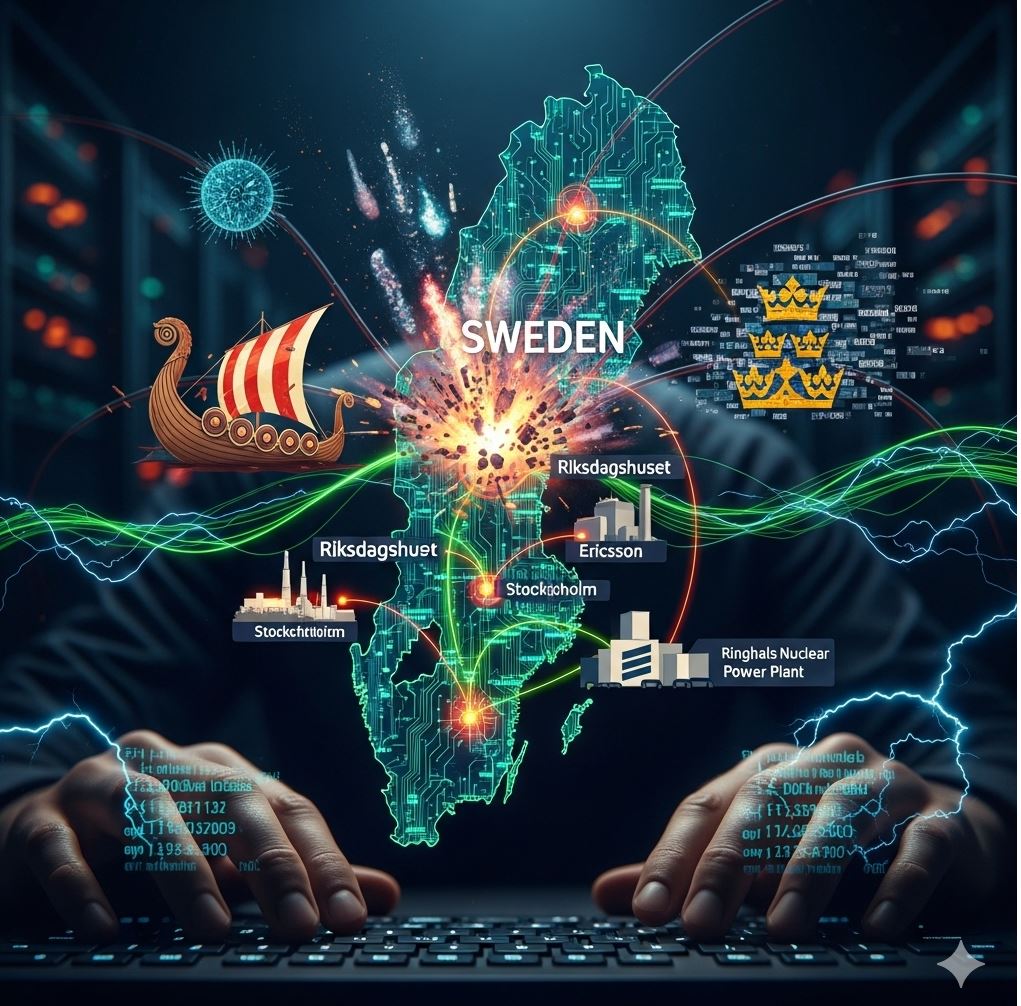
Sweden’s cyber threat landscape has entered a new phase of intensity—and consequence. According to Check Point’s latest data, Swedish organisations faced an average of 2,135 cyberattacks per week in January 2026, a 39% year-on-year surge that outpaces the European average of 20% growth. But beneath these statistics lies a strategic inflection point for Nordic business leaders: the convergence of regulatory transformation, AI-accelerated threats, and supply chain fragility is reshaping cybersecurity from an IT concern into a core boardroom priority.
The Target Triad: Public Sector, Telecom, Healthcare
The public sector remains the primary attack vector—followed closely by telecom and healthcare—precisely because these domains carry outsized societal responsibility and operate complex, interdependent supply chains. The August 2025 ransomware attack on IT provider Miljödata, which disrupted services across 200+ Swedish municipalities and exposed environmental data for millions of citizens, exemplifies this vulnerability. When a single third-party vendor fails, cascading operational paralysis follows—exactly the outcome sophisticated threat actors now engineer.
Critically, Sweden’s recent NATO accession has amplified its geopolitical profile. Nation-state cyber operations targeting Swedish infrastructure surged 315% in 2025, with nearly half of all Nordic ransomware incidents now concentrated within Sweden’s borders. This shift demands that private enterprises—particularly those supporting critical infrastructure—reassess their role in national cyber resilience.
The AI Double-Edged Sword
While AI tools promise efficiency gains, their uncontrolled deployment creates novel attack surfaces. Check Point’s 2026 Cyber Security Report reveals that AI-driven attacks contributed to a 70% global increase in weekly incidents since 2023. For Nordic executives, the imperative is clear: AI governance frameworks must now sit alongside financial controls in risk management protocols. Notably, the EU AI Act—which entered its first enforcement phase in 2026—explicitly mandates robust cybersecurity measures for high-risk AI systems, making technical safeguards a legal requirement rather than a discretionary investment.
Regulatory Catalyst: NIS2 Implementation
Sweden’s new Cybersecurity Act (2025:1506), implementing the EU’s NIS2 Directive, entered into force on January 15, 2026. This legislation expands mandatory security requirements across 18 critical sectors and introduces stringent incident reporting obligations. Non-compliance carries significant financial penalties and reputational damage—particularly as the Swedish Data Protection Authority has already processed 70+ incident reports stemming from recent supply chain breaches. For boards, this means cybersecurity oversight can no longer be delegated solely to CISOs; directors now bear personal accountability for demonstrating “appropriate” security measures under evolving legal standards.
Strategic Imperatives for Nordic Leadership
1. Map Third-Party Exposure: 60% of Swedish citizens expect a society-disrupting cyber incident within two years. Audit all vendors supporting critical operations—especially in public-sector supply chains where breach impacts cascade across municipalities and healthcare providers.
2. Integrate AI Governance: Establish clear usage frameworks for generative AI tools that address data leakage, prompt injection risks, and model poisoning—threats now actively exploited by adversaries.
3. Quantify Cyber Risk Financially: With the Nordic cybersecurity market projected to grow from USD 14.92 billion (2026) to USD 22.25 billion by 2031, security investment is shifting from cost centre to strategic differentiator. Frame security spend in terms of operational continuity value, not just compliance.
4. Prepare for Board Scrutiny: Nordic corporate boards are increasingly demanding cyber-risk briefings as part of fiduciary duty reviews. Document security posture against NIS2 requirements now to avoid governance gaps during 2026 audit cycles.
Looking ahead
Our next analysis will examine how Nordic industrial firms are hardening operational technology (OT) environments against ransomware—a growing threat as manufacturing digitization accelerates. We’ll profile three Swedish enterprises that transformed cyber resilience into competitive advantage through supply chain collaboration.
Connect with Nordic Business Journal’s security desk at insights@nordicbusinessjournal.com to share your organisation’s cyber governance challenges. We’re curating executive roundtables on NIS2 compliance strategy for Q2 2026—limited seats available for CISOs and board risk committee chairs.