
In a bold move, the European Commission recently unveiled an industrial plan that could reshape the EU’s approach to economic competitiveness. With the launch of this new strategy, dubbed the Industrial Action Agenda (IAA), the EU is attempting to level the playing field with global economic giants like the US and China. The aim is clear: to safeguard Europe’s industrial base and ensure that public investments primarily benefit EU-based jobs and manufacturing. However, as with any ambitious reform, the proposal has sparked both support and controversy, with significant implications for key industries and the broader European economy.
Europe’s Strategic Shift: A Response to Global Competition
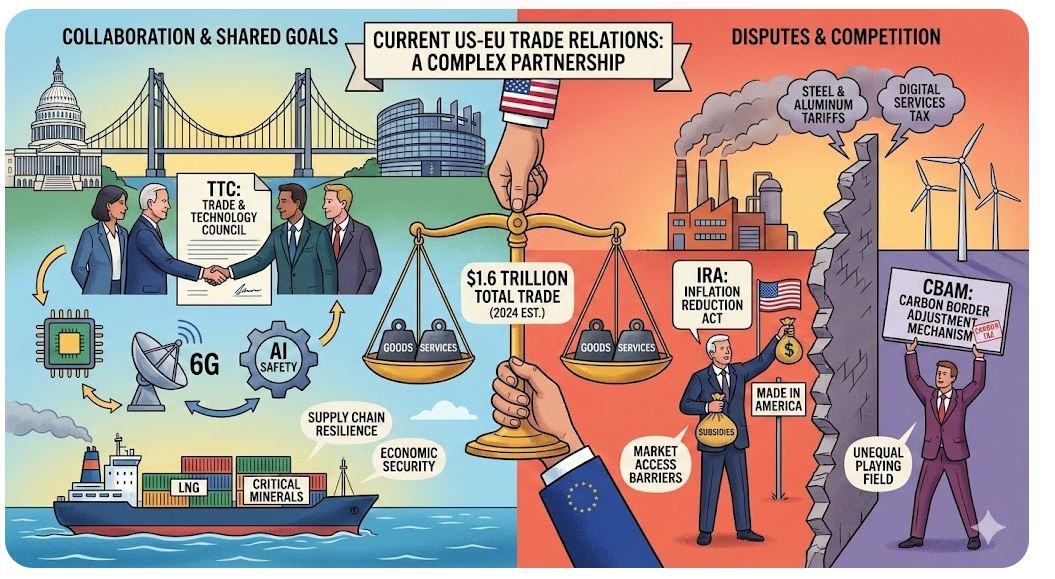
Historically, Europe has been known for its commitment to free trade and open markets. However, the increasing influence of protectionist policies in the US and China, particularly in sectors such as clean energy and high-tech manufacturing, has prompted the EU to reconsider its approach. The IAA plan represents a shift toward safeguarding European industry, especially in sectors critical to economic security, such as steel, cement, aluminum, automotive components, and green technologies.
The Commission’s plan proposes stricter procurement guidelines and enhanced public support for industries that create and retain jobs within the EU. This includes requirements for electric vehicles (EVs), renewable energy technologies, and batteries, all of which must meet new thresholds for local production to qualify for public subsidies and investments. For instance, under the new rules, at least 70% of the components in an EV must be sourced from within the EU to access public funding.
This industrial push is not merely about reducing dependency on foreign imports—it’s also about promoting sustainability and ensuring that Europe’s green transition is driven by local innovation. Green technologies like solar panels, wind power, and nuclear energy are also included in the strategy, with new standards set for their production and integration.
The Controversy: Sweden’s Skepticism and the European Divide
While the plan has been described by some as a historic shift, it has not been without its detractors. Sweden, in particular, has raised significant concerns over the proposal’s potential impact on Europe’s competitiveness. Minister of Energy and Industry, Ebba Busch, has openly criticized the approach, warning that it could harm the EU’s industrial base rather than bolster it. Sweden’s position aligns with broader concerns that the EU is attempting to replicate protectionist strategies without fully understanding their long-term economic consequences.
Critics argue that the push for more local production requirements could increase costs, stifle innovation, and lead to inefficiencies within European industries. Sweden’s cautious stance is rooted in a belief that the EU should focus more on fostering a competitive environment through deregulation, rather than imposing stringent mandates on procurement and investment. The concern is that such policies could place unnecessary burdens on manufacturers, especially in countries with already high labor costs like Sweden.
The Green Transition: A New Era of Investment?
One of the most compelling aspects of the IAA is its focus on the green economy. As the EU strives to meet its climate goals, the industrial strategy places a heavy emphasis on critical industries for the green transition, such as electric vehicles, battery production, and renewable energy technologies. However, the success of these initiatives will depend largely on how well the EU can balance its industrial ambitions with environmental sustainability goals.
Europe is already a leader in the global green tech market, but to maintain that position, the IAA is pushing for increased investment in domestic manufacturing capabilities. This move is expected to reduce the EU’s dependency on countries like China for critical raw materials and finished products, particularly in the battery and electric vehicle sectors. The EU’s push for a higher degree of domestic manufacturing could prove crucial as global competition intensifies, but only if the necessary investments in research, development, and infrastructure are made.
Looking Ahead: Opportunities and Challenges for European Industry
The IAA marks a turning point for European industry, but its success is not guaranteed. The proposals must undergo the usual scrutiny by the EU Council of Ministers and the EU Parliament before they can be approved, and this process is likely to be contentious. With a wide range of stakeholders involved—from member states to multinational corporations—negotiations will be challenging. In particular, countries like Sweden, which have voiced concerns over the protectionist nature of the plan, will likely continue to push for modifications that protect their own economic interests.
Moreover, the effectiveness of the plan will depend on how well the EU can balance its industrial policy with the need to remain competitive in the global marketplace. While protectionist measures may offer short-term benefits in certain sectors, they could also lead to inefficiencies and higher costs for European consumers and businesses in the long run.
One key area for future attention will be how the EU addresses the broader structural issues facing its industrial base, such as the need for modernization and digital transformation. The green transition must go hand-in-hand with the digital transition to ensure that European industries can remain competitive and adaptable in the years ahead.
The Road Ahead: Preparing for Future Challenges
As the IAA plan moves through the legislative process, European businesses and policymakers must prepare for the challenges ahead. The policy shift may spark a wave of investments in key industries, but it also carries risks. The next phase will require careful consideration of how to balance industrial growth with market efficiency and innovation.
In our next article, we will explore the specific impacts of these new procurement rules on industries such as electric vehicles and renewable energy. We’ll analyze the potential opportunities and threats posed by the shift to a more protectionist industrial policy and provide insights into how businesses can adapt to these changes.
Stay connected with us for continued updates and analysis on the evolving industrial landscape in Europe. Follow us for in-depth coverage on how these policies unfold and shape the future of European competitiveness.
For a more comprehensive discussion, don’t hesitate to reach out with your thoughts, questions, or to share your experiences navigating these changes in the EU’s industrial landscape.