
As Stockholm cements its position as Europe’s undisputed unicorn factory, a bureaucratic time bomb is ticking beneath the foundations of Sweden’s startup ecosystem. New data reveals that foreign entrepreneurs—precisely the cohort that birthed Klarna, Spotify, and King—now face a 93 percent rejection rate for residence permits, prompting venture capitalists, technical universities, and industry bodies to question whether Sweden is systematically shutting the door on its own prosperity.
The statistics landing on desks at the Stockholm Chamber of Commerce this spring make for sobering reading. In 2025, only seven percent of foreign self-employed individuals and entrepreneurs were granted residence permits to establish or run businesses in Sweden. The remaining 93 percent were shown the door.
These aren’t asylum seekers or low-skilled labour migrants. These are founders with business plans, often with capital, frequently with technical expertise, and almost always with the kind of ambition that built Sweden’s enviable tech reputation over the past two decades. The 93 percent figure represents a seismic shift from historical norms—just a few years ago, approval rates for this category hovered around 61 percent.
Adding insult to injury, those who do run the gauntlet face average processing times of 16 months over the past five-year period. For a tech startup operating on venture capital timelines, sixteen months can span the entire journey from seed funding to Series A—or to insolvency.
The Perfect Storm: How Policy Intersects with Practice
What we are witnessing is not administrative incompetence but the predictable outcome of deliberate policy choices colliding with a regulatory framework never designed for modern entrepreneurship.
The government has progressively tightened labour immigration through multiple channels: increased subsistence requirements linked to median wages, the abolition of “track change” provisions that previously allowed asylum seekers with job offers to convert to work permits, and now the imminent introduction of a strict wage floor set at 90 percent of Sweden’s median salary—currently calculated at SEK 33,390 monthly.
For the self-employed, however, the hurdles are qualitatively different. Unlike employed professionals who can point to a fixed salary meeting the maintenance requirement, entrepreneurs must demonstrate business viability, relevant experience, and sufficient financial resources to cover both personal living expenses and business operations—all while the Migration Agency scrutinises whether the business was registered suspiciously close to the application date.
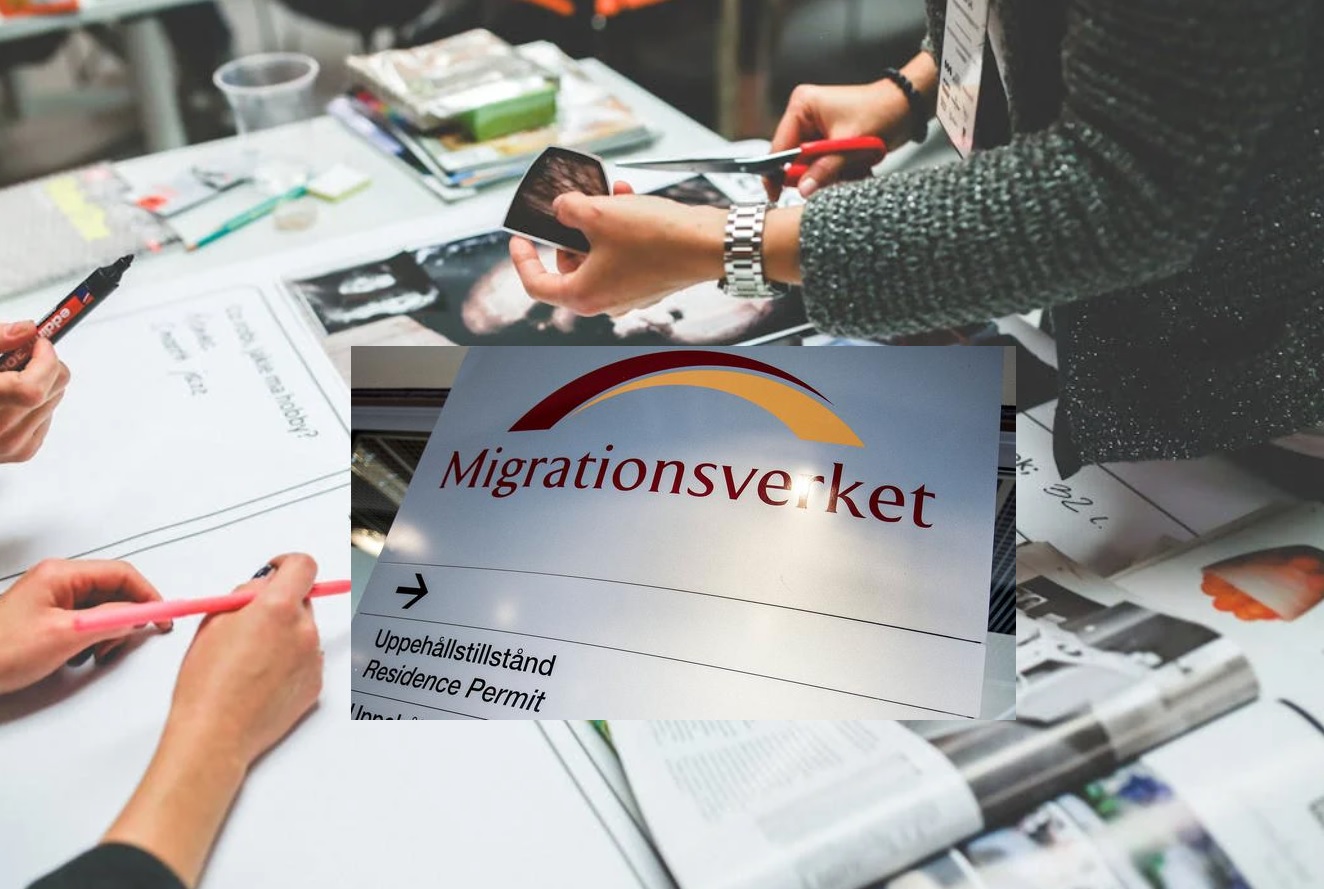
The Swedish Migration Agency’s position is legally defensible: they implement politically decided laws designed to combat abuse and exploitation. The Swedish National Audit Office has criticised the agency’s control systems as insufficiently effective against errors and misuse, creating political pressure to tighten rather than liberalise enforcement. With penalty fees for non-compliance set to double in June 2026—reaching nearly 237,000 SEK for serious infractions—the message to bureaucrats is clear: when in doubt, reject.
The KTH–VC Axis: Why Universities and Capital Align
The backlash has crystallised around an unlikely coalition: technical universities and venture capital firms.
KTH Royal Institute of Technology, which attracts international doctoral students and researchers from across the globe, finds itself in the uncomfortable position of training founders who cannot remain in the country to commercialise their research. “Promising people risk being forced to leave in the middle of the research or startup journey,” notes one researcher familiar with the dynamics.
For venture capital, the calculus is brutally simple. Firms invest millions in startups whose key employees—often founders themselves—may be denied residence permits through no fault of the company. This introduces unacceptable uncertainty into investment decisions. Why fund a Swedish deep tech startup if the CTO faces deportation roulette, when equivalent talent in Switzerland, Canada, or Singapore can secure permits in weeks?
The Confederation of Swedish Enterprise has previously documented cases of innovative entrepreneurs stuck in a “bureaucratic vacuum” for up to two years, while competitor nations process similar applications in weeks or months. For startups operating in global markets, where speed to execution separates winners from zombies, Sweden’s 16-month average is existential.
The Government’s Two-Step: Fast Tracks and Closed Doors
To characterise the government as simply anti-immigration would be to miss the nuance—and the tension—in current policy.
Migration Minister Johan Forssell has explicitly stated that “Sweden should be the obvious destination for international expertise”. In a mid-2025 opinion piece, Forssell and a business council unveiled nine measures to strengthen Sweden’s appeal to top talent, including a fast-track system for highly qualified labour migrants that has reportedly reduced processing times for complete applications to an average of 18 days.
The government also proposes removing the link between work permits and specific employers, allowing migrants to change jobs without reapplying, and extending permit periods for probationary employment.
Yet for entrepreneurs—the very individuals who create jobs rather than fill them—the fast track remains stubbornly closed. The self-employed category operates outside these efficiencies, subject to discretionary assessments that produce the 93 percent rejection rate.
This bifurcation creates a perverse incentive structure: Sweden welcomes those who will work for established companies but discourages those who would build new ones. For a nation whose entire postwar prosperity narrative rests on industrial innovation, the irony appears lost on policymakers.
Sectoral Implications: Where the Pain Will Be Felt
If current trajectories hold, the damage will not be evenly distributed across the economy. Three sectors face particular exposure:
Deeptech and Hard Science: Startups emerging from university research environments typically involve founders with PhDs, often international, frequently without Swedish language skills. These ventures require long development horizons and substantial capital—exactly the profile that the Migration Agency’s requirement for “relevant experience” and “robust business plans” struggles to assess. When a deep tech founder’s permit application is rejected, years of public investment in their education and research depart with them.
Gaming and Creative Industries: Sweden’s gaming sector—home to Minecraft, Candy Crush, and Battlefield—thrives on international creative talent. Yet gaming startups often feature flat ownership structures, irregular income streams, and founders whose “relevant experience” may not fit traditional employment categories. The Migration Agency’s preference for salaried employment with fixed monthly income maps poorly onto an industry where project-based compensation and profit-sharing predominate.
Climate and Greentech: As Europe accelerates its green transition, Sweden’s advantages in clean technology should position it as a magnet for climate entrepreneurs. Yet climate tech often requires pilot projects, demonstration plants, and extended development phases before generating revenue—difficult to reconcile with maintenance requirements designed for straightforward employment.
The Migration Agency’s Bind
It would be unfair to place sole responsibility on the Migration Agency’s case officers. They operate within a legal framework designed by politicians and scrutinised by auditors demanding rigorous abuse prevention.
The Swedish National Audit Office’s criticism of inadequate controls creates institutional risk-aversion. When rejecting an application carries no penalty but approving one that later proves problematic invites censure, rational bureaucrats choose rejection. The 93 percent figure is not necessarily evidence of xenophobia—it is the predictable outcome of asymmetric incentives.
Moreover, the government’s announcement of new offences for “exploitation of foreign labour” and “trade with work permits,” carrying prison sentences of up to four years, signals that the political wind continues blowing toward restriction rather than facilitation. The message to the Migration Agency is unambiguous: your job is to police the gates, not to welcome newcomers.
What Success Looks Like: Lessons from Competitors
Sweden’s challenge is not unique. Across the OECD, nations compete for mobile talent. But competitors have adopted approaches that Sweden might usefully study.
Canada’s Global Skills Strategy processes work permit applications for designated companies within two weeks. Singapore’s EntrePass explicitly targets foreign entrepreneurs with clear criteria and transparent processing. Germany’s Chancenkarte (Opportunity Card) uses a points system allowing job-seeking before employment is secured.
These systems share common features: predictability, transparency, and recognition that entrepreneurs differ from employees. None require 16-month waits or produce 93 percent rejection rates.
The contrast matters because talent is not captive. The Indian software engineer considering Stockholm also considers Berlin, Toronto, and Austin. The Iranian founder weighing Sweden also weighs the Netherlands’ orientation visa and Portugal’s startup regime. When Sweden’s processing times stretch to 16 months and approval odds drop to 7 percent, the calculation writes itself.
The Growth Calculus
Stefan Östlund, a voice in this debate, frames the stakes in terms any business reader understands: “problems in the future” meaning fewer companies founded, fewer jobs created, and a diminished tax base.
Sweden possesses the ingredients for continued tech leadership: world-class research universities, deep capital markets, digital infrastructure, and a culture of early adoption. But ingredients do not constitute a meal. The missing element is the people who combine them—and those people increasingly receive rejection letters.
The Confederation of Swedish Enterprise’s estimate of a “bureaucratic vacuum” consuming two years of entrepreneurs’ lives represents not just individual hardship but collective opportunity cost. In two years, a competitor nation can incorporate, raise capital, build product, acquire customers, and establish market position. Sweden’s 16-month processing window consumes that entire period before the entrepreneur can legally begin.
For a nation whose economic model depends on continuous renewal through new enterprises, this is not migration policy—it is industrial policy by neglect.
Conclusion: The Unresolved Contradiction
Sweden today contains two contradictory realities. On one hand, the government proclaims ambition to attract global talent, streamlines permits for highly qualified employees, and celebrates Stockholm’s unicorn status. On the other, foreign entrepreneurs face 93 percent rejection rates, 16-month waits, and a regulatory apparatus seemingly designed for a twentieth-century economy of factories and fixed employment.
The contradiction cannot persist indefinitely. Either the government will extend its fast-track logic to entrepreneurs, recognising that job-creators deserve at least the same treatment as job-takers, or the entrepreneurs will go elsewhere, and Sweden’s innovation economy will gradually atrophy.
The Migration Agency, for its part, will continue implementing whatever laws Parliament provides. If those laws require 16-month processing and produce 93 percent rejection, the agency will deliver precisely that. The responsibility for changing outcomes rests with the politicians who write the laws and the business community that must articulate what is at stake.
For now, the 93 percent figure stands as both warning and indictment: warning that Sweden’s innovation ecosystem faces an existential threat, and indictment of a system that cannot distinguish between genuine entrepreneurs and those who would abuse it. Until that distinction can be made reliably and rapidly, the entrepreneurs will go elsewhere—and Sweden will wonder, a decade hence, where the next Spotify went.
FOLLOW-UP: In our next issue, we examine how competitor nations are structuring their entrepreneur visa regimes and what Sweden can learn from Canada’s Global Skills Strategy, Germany’s Opportunity Card, and Singapore’s EntrePass. Which models deliver both integrity and accessibility? And what would it take to implement them in the Swedish context?
CONNECT WITH US: Share your experiences—whether as an entrepreneur navigating the system, an investor affected by permit denials, or a policymaker shaping reform. Your insights inform our reporting. Reach out to our editorial team at editors@nordicbusinessjournal.com or follow us on LinkedIn for daily updates on Nordic business and policy.
Analysis based on Stockholm Chamber of Commerce data, Swedish Migration Agency statistics, government announcements including the January 2026 agreement on wage requirements, and interviews with venture capital and university stakeholders. All statistics current as of March 2026.