
Europe has entered a new phase in its security and industrial trajectory. According to data released in March 2024 by the Stockholm International Peace Research Institute (SIPRI), the continent has become the world’s largest arms-importing region. Between 2014–2018 and 2019–2023, European imports of major weapons increased by 94 percent.
This is more than a statistical spike. It signals a structural shift in how European governments allocate resources, how defence supply chains are organized, and where long-term industrial opportunities will emerge. For Nordic businesses and investors, the change carries direct strategic implications.
The Geopolitical Catalyst
The immediate trigger is clear: the war in Ukraine.
Since Russia’s full-scale invasion in 2022, European governments have moved beyond deterrence and toward active military reinforcement. The result is a rapid increase in procurement across NATO and EU member states.
According to Mathew George, much of the increase reflects both support to Ukraine and broader rearmament across Europe.
Ukraine itself absorbed a significant share of global deliveries. Roughly 9.7 percent of all major arms transfers worldwide between 2019 and 2023 went to Ukraine alone. Yet the larger story lies elsewhere: over 90 percent of the growth reflects procurement by other European countries rebuilding their own capabilities.
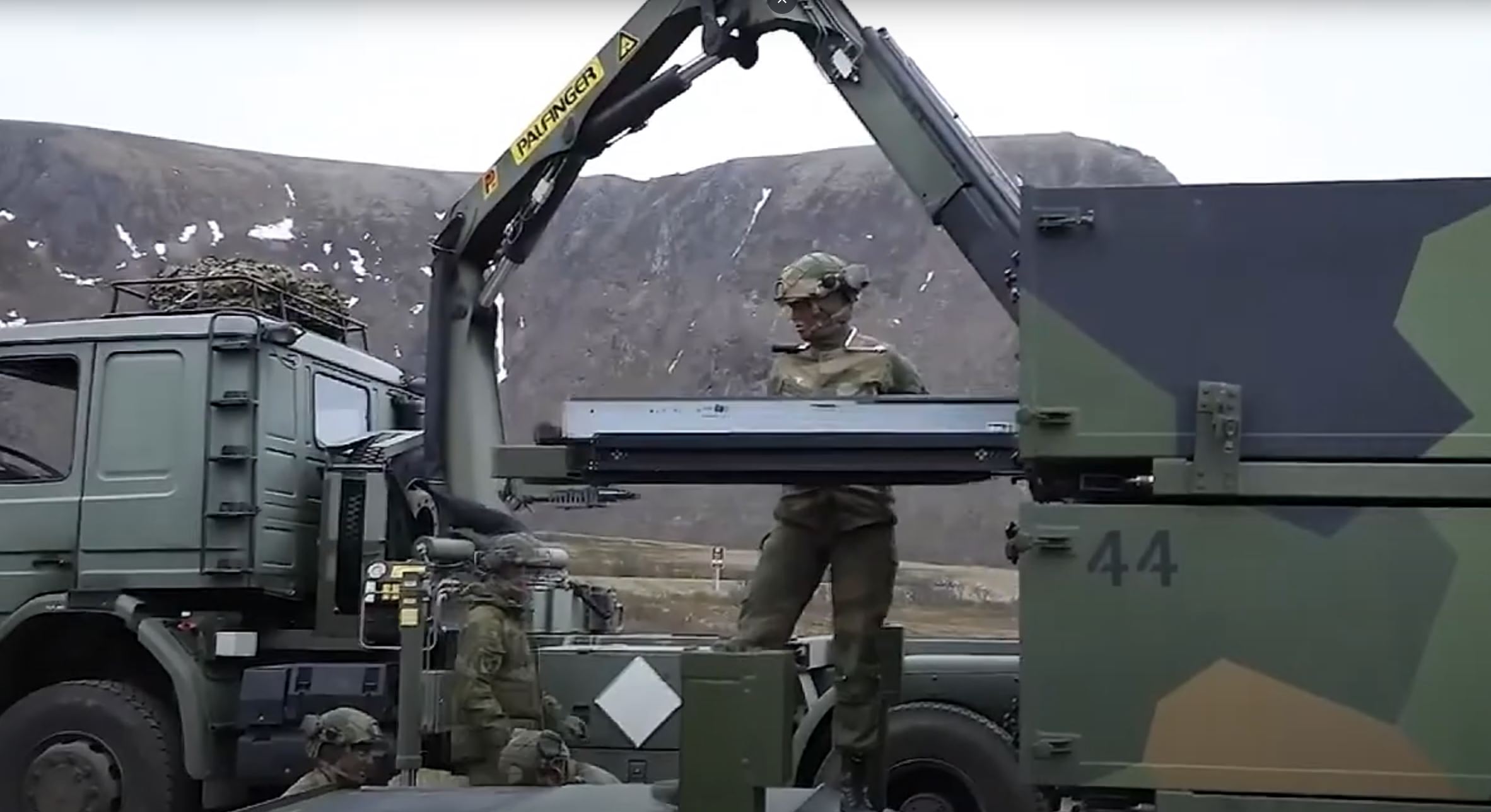
Europe’s Import Surge in Context
SIPRI measures arms transfers using five-year periods to smooth annual fluctuations. The most recent data show a dramatic shift toward Europe even while global transfers slightly declined.
Table 1. Change in Major Arms Transfers
| Metric | 2014–2018 (Index) | 2019–2023 (Index) | Change |
| Europe – volume of major arms imports | 100 | 194 | +94% |
| Global – volume of arms transfers | 100 | 96.7 | −3.3% |
| Europe – share of global imports | — | 21% of global imports | — |
Two details stand out:
• Europe’s imports nearly doubled while the global total slightly declined.
• Europe alone accounted for 21 percent of all global arms imports in 2019–2023.
Within Europe, Ukraine represented about 23 percent of all imports, making it the largest European arms importer and the fourth largest globally.
Earlier projections sometimes suggested imports could triple in the 2021–2025 period. Those estimates came from scenario modelling based on post-2014 defence plans. The verified SIPRI data show a massive increase, though closer to a doubling than a tripling.
Who Supplies Europe?
The surge in demand has deepened Europe’s reliance on external suppliers, particularly the United States.
Table 2. Top Suppliers to Europe (Share of European Arms Imports, 2019–2023)
| Supplier | Share of European Imports |
| United States | ~55% |
| Germany | 6.4% |
| France | 4.6% |
The shift toward American equipment is striking. The U.S. share of European imports increased from 35 percent in 2014–2018 to about 55 percent in 2019–2023.
This reliance is now driving political pressure within the EU to strengthen domestic production and shorten supply chains.
Global Export Landscape
Europe’s surge is part of a broader transformation in the global defence market.
Table 3. Largest Arms Exporters (2019–2023)
| Rank | Exporter | Share of Global Exports | Trend vs 2014–2018 |
| 1 | United States | 42% | +17% |
| 2 | France | 11% | +47% |
| 3 | Russia | Top three exporter | −53% |
| 4 | China | Major exporter | — |
| 5 | Germany | Major exporter | — |
Together, the top five exporters account for roughly 75 percent of all global arms exports.
Russia’s sharp decline reflects both sanctions and domestic production demands caused by the Ukraine war.
What This Means for the Nordic Region
For Nordic companies, this shift represents more than geopolitical turbulence. It signals a decade-long industrial expansion.
Three areas matter most.
1. A Nordic Defence Industrial Boom
The Nordic region sits at the center of NATO’s northern defence corridor. With Finland and Sweden now integrated into NATO’s defence planning, the region’s industrial capacity is gaining strategic importance.
Several companies already illustrate this trend:
• Saab AB in Sweden is seeing sustained demand for platforms such as the Saab JAS 39 Gripen E fighter and the Carl Gustaf recoilless rifle.
• Norway’s Kongsberg Gruppen has become a key supplier of advanced missile systems, including the Naval Strike Missile.
• Finland’s defence sector is integrating rapidly with Western supply chains, opening opportunities for joint ventures and subcontracting across Europe.
For investors, the takeaway is straightforward: Nordic defence firms are moving from niche suppliers to central nodes in NATO’s industrial ecosystem.
2. Supply Chain Resilience
Europe’s heavy dependence on U.S. equipment exposes logistical vulnerabilities.
Long delivery times, export licensing processes, and trans-Atlantic supply chains have created pressure to expand European production. Governments in Brussels and across NATO capitals are now pushing for greater sovereign capability.
Nordic firms specializing in:
• advanced metals
• electronics
• propulsion components
• ammunition manufacturing
are positioned to fill critical gaps in European defence supply chains.
3. Defence Spending Is Becoming a Baseline
For decades, Europe operated under what economists called the “peace dividend.” Defence budgets shrank as governments prioritized social spending and infrastructure.
That era has ended.
NATO’s target of 2 percent of GDP on defence is increasingly viewed as a minimum rather than a ceiling. Several European states are already planning higher long-term spending levels.
For businesses, this means:
• long-term demand visibility for defence contractors
• sustained procurement pipelines
• public budget shifts that may crowd out investment in other sectors
The fiscal implications will shape European economies for the next decade.
The Road Ahead
Europe is now attempting to rebalance its defence procurement toward internal production. Initiatives such as the European Sky Shield Initiative reflect a broader strategy: strengthen European manufacturing while reducing dependence on external suppliers.
For Nordic industry, the opportunity is substantial but not automatic.
The main constraints will be:
• production capacity
• skilled labour shortages in advanced manufacturing
• compliance with export regulations
Companies capable of scaling production quickly while maintaining regulatory compliance will capture the largest share of the new defence market.
A Structural Shift in Europe’s Economy
The broader conclusion is hard to ignore.
The “peace dividend” that shaped European budgets after the Cold War has been replaced by something different: a security premium embedded in national spending.
For the Nordic region, that shift brings both responsibility and opportunity. Defence production, advanced manufacturing, and dual-use technologies are likely to become central pillars of the region’s industrial future.
Editorial Note: Next Research Direction
A logical next step for analysis would examine where smaller Nordic firms can enter this expanding ecosystem.
Suggested feature:
The Nordic Defence Supply Chain: Investment Opportunities in Dual-Use Technologies
Potential areas include:
• autonomous systems
• cyber defence infrastructure
• ammunition and energetic materials
• advanced sensors and electronics
These segments offer entry points for Nordic SMEs seeking to integrate with larger defence primes.