
Sharp monthly decline raises alarms over tariff impacts and shifting demand as businesses brace for prolonged uncertainty
New data from Statistics Denmark reveals a dramatic contraction in Danish exports to the United States in January, with outbound trade across the Atlantic falling by 26 percent compared to December. Exports dropped by DKK 8.9 billion, landing at a total of DKK 25.9 billion for the month—a significant blow that dragged down the nation’s overall export performance by 5.9 percent.
While monthly fluctuations in trade data are not uncommon, the severity of this decline has caught the attention of economists and business leaders, who view it as a potential early indicator of structural headwinds in transatlantic commerce.
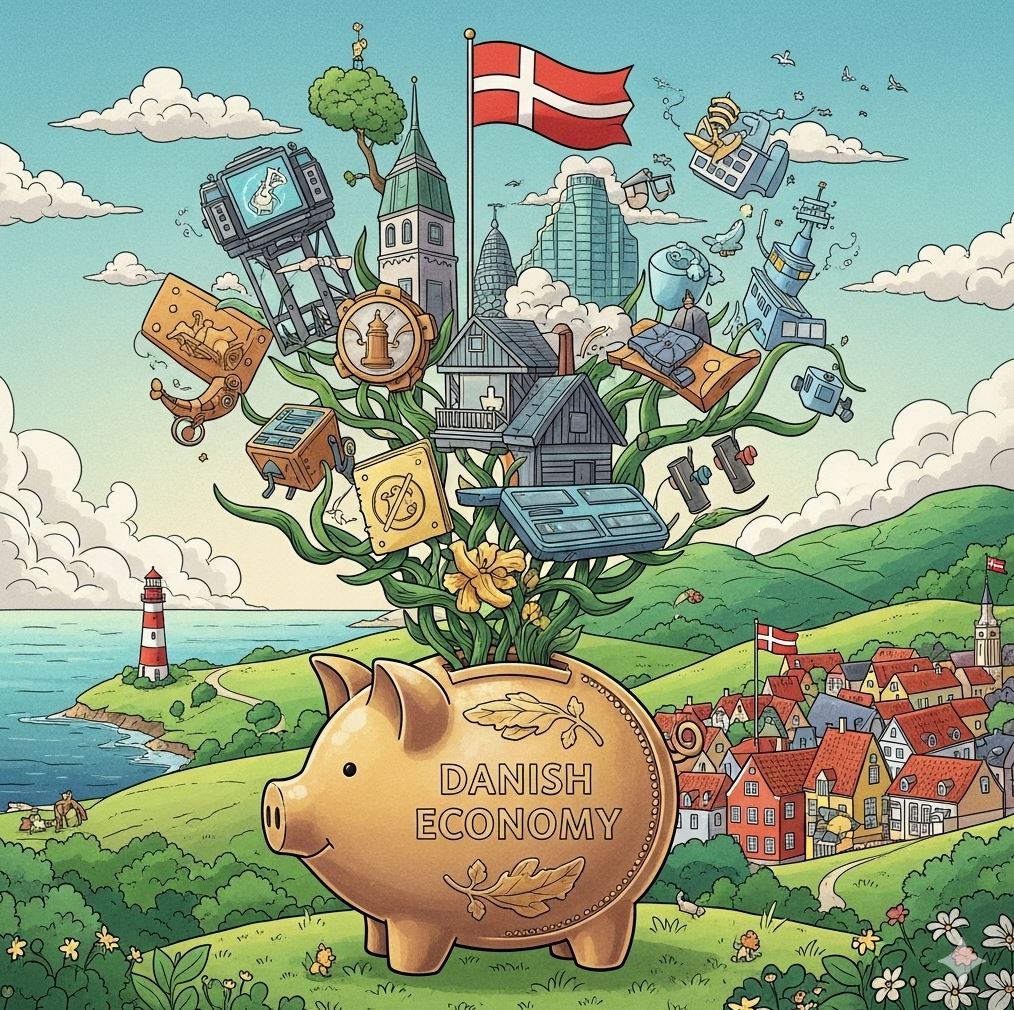
A “Big Blow” to the Economy
Tore Straumer, Chief Economist at the Danish Chamber of Commerce, described the figures as worrying. “Today’s grim export figures are unfortunately a big blow to the economy,” Straumer said. “This could very well be a sign that the higher tariffs and the weakening of the American economy have begun to weaken our exports to the US.”
The United States has long been one of Denmark’s most important non-European trading partners, serving as a key market for Danish pharmaceuticals, machinery, and agricultural products. January’s drop suggests that even well-established trade corridors are now vulnerable to shifting macroeconomic conditions across the Atlantic.
Beyond the Headline: Analysis of the Decline
A deeper look into the data suggests the decline is not merely seasonal. While January often sees a slowdown following year-end stockpiling, a 26 percent month-on-month drop exceeds typical cyclical patterns. Analysts point to two primary drivers:
1. Tariff Uncertainty and Trade Policy: Although the Biden administration has maintained most Trump-era tariffs on select European goods, new discussions around trade barriers and protectionist measures in an election year may be causing Danish exporters to adopt a “wait and see” approach. Sectors with thin margins, such as food production and manufacturing, appear to be pulling back the most.
2. Cooling US Demand: The American economy, while resilient, has shown signs of softening in early 2024. High interest rates and inflation concerns have tightened corporate budgets, reducing demand for imported capital goods and intermediate products—areas where Danish companies have traditionally excelled.
The Domino Effect on Danish Industry
The ripple effects of this decline are already being felt across the Danish supply chain. With total exports down 5.9 percent, logistics firms, freight forwarders, and component suppliers are reporting reduced activity. For small and medium-sized enterprises (SMEs) heavily reliant on the US market, the contraction poses a direct threat to first-quarter earnings.
“This is a wake-up call for export-heavy SMEs,” says Henrik Søndergaard, trade analyst at Nordic Trade Insights. “Diversification is no longer just a strategy—it’s a necessity. Relying too heavily on any single market, even one as large as the US, exposes companies to geopolitical and macroeconomic shocks.”
A Changing of the Guard?
Some observers suggest the January figures may signal a longer-term realignment. As the US pushes for domestic manufacturing resurgence through initiatives like the Inflation Reduction Act and CHIPS Act, European exporters may find themselves competing in a more protectionist environment. For Danish companies, this means that innovation and niche specialization will be critical to maintaining a foothold.
Conversely, the decline could also present opportunities in other markets. With the EU exploring new trade agreements in Southeast Asia and Latin America, Danish exporters might consider pivoting toward faster-growing regions to hedge against US volatility.
Looking Ahead
As the first quarter unfolds, all eyes will be on February and March data to determine whether January was an anomaly or the beginning of a sustained downturn. Upcoming trade missions and diplomatic engagements between the EU and US may also play a pivotal role in stabilizing the trade environment.
In our next issue, we will explore how Danish SMEs are adapting to US market uncertainty—examining real-world case studies of companies pivoting toward Asia and the Middle East, and what lessons can be drawn for the wider Nordic business community.
Connect with Us
Did this analysis spark questions about your own export strategy? We’d love to hear from you. Follow Nordic Business Journal on LinkedIn for daily insights, or reach out to our editorial team at editor@nordicbusinessjournal.com with suggestions for future topics. If you’re navigating US trade challenges and would like to share your experience for an upcoming feature, please get in touch.