
Mojtaba Khamenei issues first public warning, vowing to keep Strait of Hormuz closed amid escalating US-Israeli conflict
Iran’s newly appointed Supreme Leader Mojtaba Khamenei has issued his first public statement since taking power, demanding the immediate closure of all US military bases in the Middle East and warning that Iran will target these installations if they remain operational.
The 56-year-old cleric, who succeeded his father Ayatollah Ali Khamenei following the elder leader’s assassination in a joint US-Israeli strike on February 28, 2026, declared that the Strait of Hormuz must remain closed to pressure what he termed “the enemy”.
Strategic Chokepoint and Economic Fallout
The Strait of Hormuz, the 33-kilometer-wide waterway between Iran and Oman, handles approximately 20 million barrels of oil daily—representing roughly 20-25% of global seaborne petroleum trade. Its closure has already sent Brent crude prices surging past $100 per barrel, with Iranian officials now threatening $200 oil if the conflict continues.
The Revolutionary Guard Corps (IRGC) has declared full control over the strait, and on March 11, an IRGC spokesperson stated that “not one litre of oil” would pass through for vessels linked to the US, Israel, or their allies. Three ships were hit by projectiles in the strait on March 11 alone, including a Thai-flagged cargo vessel.
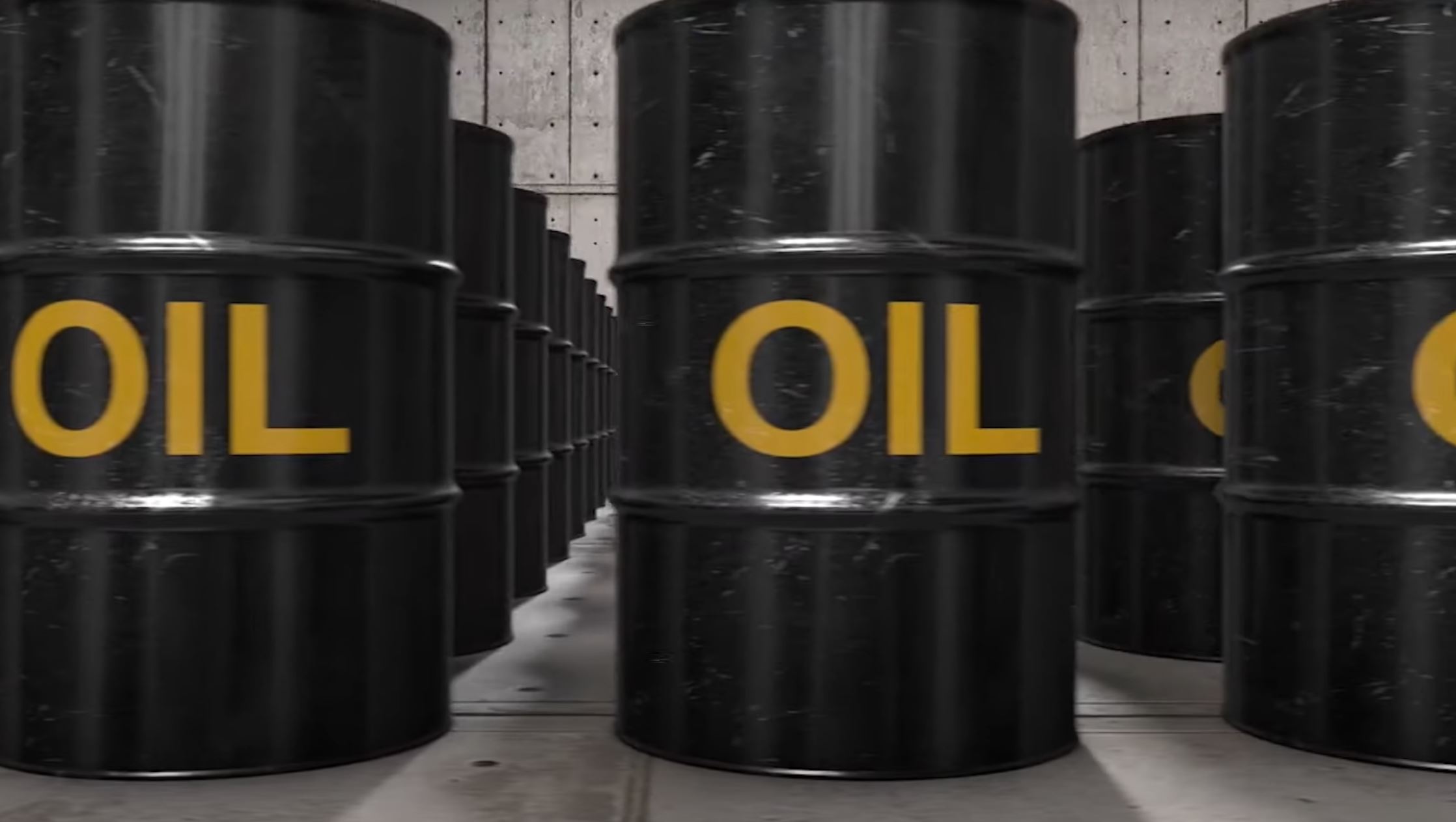
Historic IEA Intervention Insufficient
The International Energy Agency (IEA) announced on March 10, 2026, that its 32 member countries would release 400 million barrels from emergency reserves—the largest coordinated stock release in history. The United States will contribute 172 million barrels, while Sweden has pledged 2 million barrels.
However, market analysts view this as inadequate. Stephen Innes of SPI Asset Management described the measure as “like using a garden hose to put out a burning oil refinery,” noting that export volumes through Hormuz have collapsed to less than 10% of pre-conflict levels.
IEA Executive Director Fatih Birol acknowledged the “unprecedented scale” of market challenges, stating that “oil markets are global so the response to major disruptions needs to be global too”.
Succession Amid Crisis
Mojtaba Khamenei’s appointment on March 8, 2026, by Iran’s 88-member Assembly of Experts signals regime continuity rather than reform. A mid-ranking religious scholar with no previous formal government position, the younger Khamenei maintains close ties to the IRGC and his late father’s influential office.
The new leader faces immediate challenges: his father, wife, and several family members were killed in the February 28 strikes, while Mojtaba himself sustained injuries. Multiple high-ranking military figures, including Defence Council Secretary Ali Shamkhani and IRGC Commander Mohammad Pakpour, were also confirmed killed.
In his statement, Khamenei emphasized that revenge for these “martyrs” remains an Iranian priority: “A limited part of this revenge has so far taken concrete form, but until it is completely achieved, this matter will remain among our priorities”.
Regional Reactions and Diplomatic Positioning
Oman and Iraq have extended congratulations to the new leader, with Oman’s Sultan Haitham bin Tariq Al Said sending formal cables of support. Iraqi Prime Minister Mohammed Shia al-Sudani expressed confidence in Khamenei’s ability to manage this “sensitive stage”.
US President Donald Trump, meanwhile, has encouraged commercial shipping to continue transiting the strait despite the risks, stating, “I think you’re going to see great safety, and it’s going to be very, very quickly”. US Energy Secretary Chris Wright indicated that military escorts for tankers could commence by month’s end, though current military resources remain focused on offensive operations against Iran.
Analysis: What Nordic Business Leaders Should Watch
Energy Security Implications: The Nordic region’s energy diversification efforts—accelerated following the 2022 European energy crisis—face renewed pressure. Norway’s position as Europe’s largest oil and gas supplier becomes strategically vital as Middle Eastern supplies falter.
Shipping and Insurance Costs: Maritime risk premiums for Gulf transit have likely spiked dramatically. Nordic shipping companies should evaluate alternative routes and contractual force majeure provisions.
Reserve Strategy: Sweden’s participation in the IEA release (2 million barrels) represents a proportional contribution, but Nordic energy independence remains vulnerable to prolonged disruption. The 400-million-barrel release covers approximately 20 days of lost Hormuz transit—insufficient for a sustained conflict.
Diplomatic Positioning: The Nordic states’ traditional mediation roles may prove valuable as Gulf tensions escalate. Finland and Sweden’s recent NATO accession adds complexity to their regional engagement.
FACTS: Strait of Hormuz
- Location: Between Iran and Oman, connecting Persian Gulf to Gulf of Oman and Arabian Sea
- Width: 33 kilometres at narrowest point
- Daily Flow: ~20 million barrels (20% of global petroleum consumption)
- Primary Destinations: Asian markets (China, Japan, India, South Korea)
- Alternatives: Limited pipeline capacity; most Gulf production has no practical bypass route
Follow-Up Direction
Nordic Business Journal will continue monitoring this crisis with particular attention to:
- European energy price impacts and potential recessionary effects
- Nordic defence industry opportunities amid regional militarisation
- Sanctions enforcement and compliance challenges for Nordic multinationals
- Humanitarian supply chain disruptions affecting aid organisations
Connect with us: For analysis tailored to your sector or to contribute expert commentary, contact our editorial team at editor@nordicbusinessjournal.com or follow our live coverage at www.nordicbusinessjournal.com/iran-crisis.
Sources: Al Jazeera , AP News , CNN , NBC News , NPR , IEA , U.S. EIA