
For the first time in three decades, the foundational legal framework governing the Nordic region is poised for a significant overhaul. The Helsinki Agreement—often referred to as the “Nordic Constitution”—has not undergone major revision since 1995, a time preceding the EU memberships of Finland and Sweden and the modern era of Arctic geopolitics.
This week, Nordic governments announced the formation of a commission tasked with amending the agreement. While the stated immediate goal is to equalize the participation of the autonomous territories—Greenland, the Faroe Islands, and Åland—with the sovereign states, key stakeholders argue this mandate is too narrow. For the Nordic business community, the scope of this revision is not merely a matter of parliamentary procedure; it is a determinant of future regional stability, investment security, and cross-border operational efficiency.
The Push for Autonomy and Equality
The catalyst for this reform is long-standing friction regarding the status of the North Atlantic autonomous regions. Historically, the Nordic Council has operated on a state-centric model, leaving Greenland, the Faroe Islands, and Åland with limited voting rights despite their critical strategic and economic importance.
“It has been a top priority for the Danish and Faroese presidencies,” says Morten Dahlin, Denmark’s Minister for Nordic Cooperation. He characterises the commission’s formation as a “historic step” toward rectifying this imbalance.
The urgency is palpable. In 2024, the Greenlandic government temporarily paused participation in Nordic Council sessions, signalling that without equal status, their engagement in the framework could cease entirely. Mariane Paviasen, a prominent politician from Greenland’s IA party and member of the 2024 working group, underscores the stakes: “If we are not treated equally and seen as equals with the other countries, we cannot continue in the Nordic Council. Then we must find others who will cooperate with us.”
Business Implication: For industries involved in Arctic resource extraction, shipping, and renewable energy, the political integration of Greenland and the Faroe Islands is vital. Ambiguity in their status creates regulatory friction for cross-border projects. Equalising their standing could streamline permitting processes and clarify jurisdictional responsibilities in the resource-rich Arctic zone.
The Debate Over Scope: Speed vs. Comprehensiveness
While the governments prioritise speed to secure the autonomy agreement by the upcoming Nordic Council session in October, the Nordic Council itself advocates for a broader modernisation.
In 2024, a Nordic Council working group submitted ten proposals for updating the Helsinki Agreement. These included critical additions regarding defence and security policy, climate action, border obstacles, and civil security.
Ville Väyrynen, President of the Nordic Council, argues that focusing solely on autonomy is insufficient. “The Nordic governments’ desire to strengthen the position of Greenland, the Faroe Islands and Åland… is just one of several points that need to be addressed and updated,” he stated.
Kristina Háfoss, Council Director of the Nordic Council, expressed cautious optimism but noted the limitations of the current mandate. “We had hoped that the governments would take on board the entire recommendation… The governments have chosen to proceed with a narrow mandate initially.”
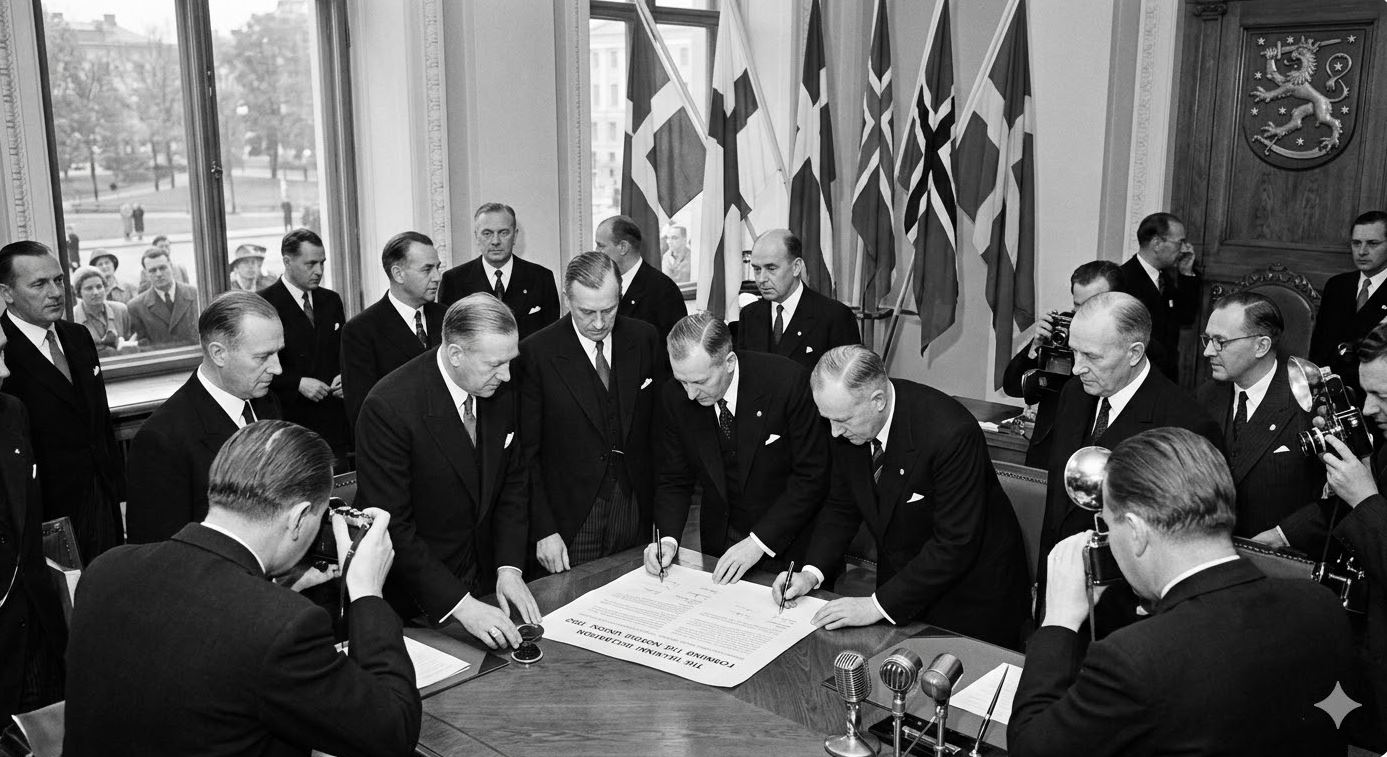
Analysis: The Strategic Blind Spots
From a business and strategic perspective, the exclusion of defence, security, and climate from the immediate constitutional amendment presents a potential risk profile for the region.
1. Security and Defence Integration
The source text notes that Defence Ministers already cooperate via NORDEFCO. However, in an era of heightened geopolitical tension in the Baltic and Arctic seas, formalizing defence cooperation within the Helsinki Agreement would signal a deeper, more binding commitment. For the private sector, particularly in telecommunications, energy infrastructure, and logistics, a constitutional mandate on security ensures that critical supply chains are protected under a unified Nordic doctrine, rather than disparate national policies.
2. The Labor Market and Border Obstacles
The Nordic region prides itself on a fluid labour market. Yet, “border obstacles” remain a persistent complaint from businesses operating across the Øresund or between Norway and Sweden. Updating the constitution to explicitly mandate the removal of administrative barriers would directly benefit SMEs and multinational corporations alike, reducing compliance costs and facilitating talent mobility.
3. Climate and Energy Security
With the Nordic region aiming to be the world’s first fossil-free region, a constitutional commitment to joint climate policy would de-risk long-term green investments. It would provide the legislative backbone for cross-border energy grids and carbon capture projects, assuring investors that political shifts in one capital will not derail regional infrastructure.
The Path Forward
Morten Dahlin explains that the narrow mandate is a pragmatic choice to ensure the autonomy issue is resolved quickly. “If we want to achieve that equality, this needs to not take years. If we have to look at the other things, we can’t achieve it by the fall,” Dahlin notes.
However, Karen Ellemann, Secretary General of the Nordic Council of Ministers, suggests the door remains open. “Logically there will still be focus on how to further focus and streamline formal Nordic cooperation,” she says, emphasising that the current decision sends a signal of unity amidst geopolitical unrest.
Conclusion: A Test of Nordic Resilience
The amendment of the Helsinki Agreement is more than a diplomatic formality; it is a stress test for Nordic cooperation. While equalising the status of the autonomous regions is a necessary and welcome step, the reluctance to immediately incorporate defence and climate into the constitutional framework suggests a tension between political expediency and long-term strategic vision.
For the Nordic business community, the ideal outcome is a “Helsinki 2.0” that not only resolves internal status disputes but also fortifies the region against external shocks. As the commission begins its work, stakeholders should watch closely to see if the “October deadline” remains a hard stop, or if the pressing realities of security and sustainability force a broader agenda before the ink is dry.
Editor’s Note & Next Steps
Follow-Up Direction:
In our next issue, the Nordic Business Journal will dive deeper into the economic implications of Arctic integration. We will analyse how the new status of Greenland and the Faroe Islands could reshape the mining, fisheries, and renewable energy sectors, featuring interviews with industry leaders currently navigating the regulatory landscape of the North Atlantic.
Connect With Us:
We value the insights of our readership. Are you operating across Nordic borders? Have you encountered regulatory obstacles that a revised Helsinki Agreement should address?
- Share your perspective: Contact our editorial team at editorial@nordicbusinessjournal.com
- Join the conversation: Follow our analysis on LinkedIn @NordicBusinessJournal
- Subscribe: Ensure you receive our quarterly deep-dive reports on Nordic policy and markets.
Stay informed. Stay ahead.