
As geopolitical competition intensifies and domestic pressures mount, Greenland’s healthcare system has become the unlikely battleground for the future of the Kingdom—and a litmus test for Copenhagen’s commitment to its Arctic partner.
Strategic Context: Healthcare as Sovereignty
When all 27 Greenlandic candidates for the Danish Folketing unanimously demand increased investment in the territory’s healthcare infrastructure, it signals more than a budgetary shortfall—it represents a fundamental recalibration of the Danish-Greenlandic partnership in an era of heightened Arctic geopolitics.
The timing is strategically significant. Following the March 2025 Greenlandic general election—which saw the pro-business Democrats secure a historic plurality amid unprecedented international attention—the new coalition government led by Prime Minister Jens-Frederik Nielsen has positioned healthcare investment as a cornerstone of its reform agenda. This aligns with a landmark September 2025 agreement where Denmark committed 1.6 billion Danish kroner ($253 million) for healthcare and infrastructure through 2029, including coverage of medical treatment costs for Greenlandic patients at Danish hospitals—a shift that alleviates substantial fiscal pressure on Nuuk.
Yet, as candidates from across Greenland’s political spectrum converge on this issue, the message is clear: Copenhagen’s recent commitments, while substantial, address symptoms rather than structural causes.
The Workforce Crisis: A Market Failure Requiring Structural Solutions
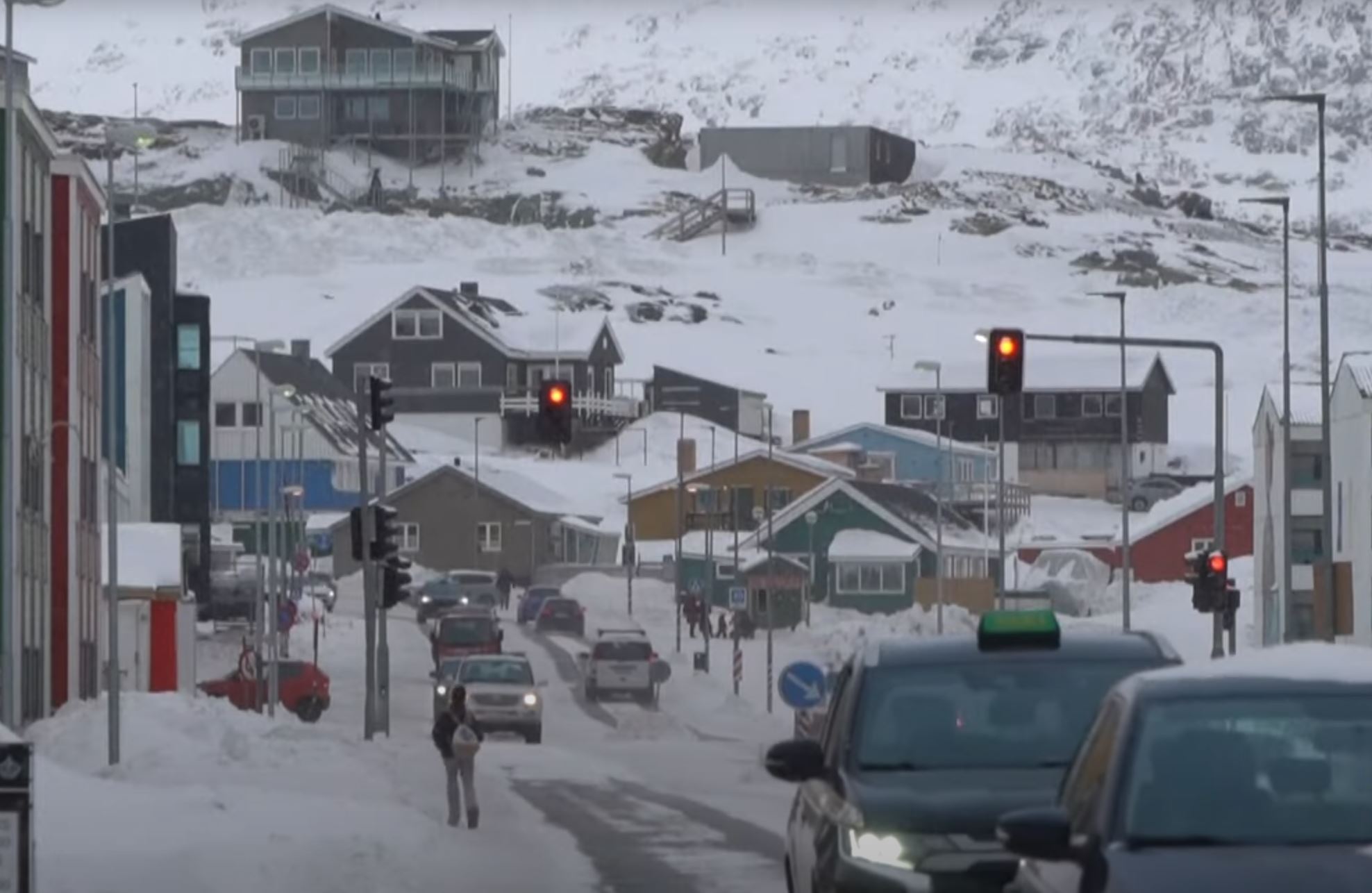
Greenland’s healthcare system faces a recruitment crisis that defies conventional market solutions. Despite competitive public sector wages—characteristic of the Nordic welfare model—the territory struggles to retain medical professionals in a high-cost, geographically dispersed environment where 57,000 inhabitants are spread across a landmass roughly the size of Western Europe.
“We cannot have a healthcare system that does not work,” states Kuupik Kleist (IA), former Greenlandic Premier and veteran of the self-government negotiations. His assessment carries particular weight given his role in establishing Greenland’s autonomy framework in 2009. The acknowledgment that current arrangements constitute “a declaration of bankruptcy” for self-government—his words—reveals the severity of the structural constraints facing Nuuk’s policymakers.
The Danish National Bank’s April 2025 analysis underscores these challenges: “Widespread personnel shortages in welfare areas” persist despite multi-year healthcare agreements, with the system constrained by “diseconomies of scale” inherent to serving a small, dispersed population across vast distances. The bank notes that while Greenland’s public sector is organized according to Scandinavian principles, “universal and uniform services are difficult to provide across the country.”
Geopolitical Implications: Healthcare in the Shadow of Great Power Competition
The healthcare debate has acquired unexpected geopolitical dimensions following former U.S. President Donald Trump’s February 2026 announcement—subsequently debunked—that the U.S. would deploy a hospital ship to address alleged care deficiencies. Greenlandic leaders swiftly rejected the overture, with Prime Minister Nielsen emphasizing that “we have a public health care system where treatment is free for citizens… That is not how it works in the USA”.
This incident, however spurious, highlights a critical vulnerability: healthcare infrastructure has become a vector for external influence in the Arctic. As Danish Foreign Minister Lars Løkke Rasmussen noted in January 2026, responding to reports of potential U.S. direct payments to Greenlanders, “there’s no way that U.S. will pay for a Scandinavian welfare system in Greenland”—a recognition that welfare provision underpins political allegiance within the Kingdom framework.
For business leaders and policymakers, the lesson is clear: investments in Greenlandic healthcare are not merely social expenditures but strategic stabilizers in an increasingly contested region. The alternative—persistent service gaps—creates openings for rival powers to exploit governance deficiencies for geopolitical gain.
Economic Analysis: Beyond the Block Grant Paradigm
The candidates’ unified stance on healthcare investment—coupled with reservations about increasing the frozen block grant—reveals a sophisticated economic strategy. By advocating for targeted investments over expanded transfers, Greenlandic politicians are pursuing a dual objective: addressing immediate service deficiencies while preserving the long-term trajectory toward economic independence.
This approach aligns with the Democrats’ post-election agenda. Following their March 2025 victory, the party has stressed economic reform and diversification away from fisheries dependence, even as it maintains Denmark as the preferred partnership vehicle toward eventual independence. The 2025-2029 framework agreement represents a template for this “investment over aid” philosophy, directing funds toward productive infrastructure—including a new landing strip in Ittoqqortoormiit and deep-water port in Qaqortoq—that enhances economic capacity alongside welfare provision.
Anna Wangenheim, Greenland’s Minister of Health and Demokraatit candidate, encapsulates this strategic thinking: “If we get other investments, then we can negotiate that the block grant should be lowered accordingly… the block grant should not become a sleeping bag”. This framing transforms healthcare investment from dependency maintenance into capacity building—a crucial distinction for international investors monitoring Greenland’s economic trajectory.
Legal Certainty: The Governance Dimension
Beyond infrastructure and funding, candidates uniformly stress legal certainty as a prerequisite for sustainable development. The controversies surrounding forced child placements in Danish municipalities—where Greenlandic families have faced disproportionate intervention rates—have eroded trust in the Kingdom’s administrative coherence.
The abolition of parental competence surveys (FKU) in 2024 addressed specific grievances, but candidates including Aka Hansen (Siumut) and Juno Berthelsen (Naleraq) identify systemic gaps: “On paper we are Danish citizens, which means there is no protection for us as indigenous people,” Hansen notes, while Berthelsen emphasises that “a lot of work is needed to ensure that a fair process takes place”.
These concerns extend to Greenland itself, where Danish responsibility for corrections and policing has generated case backlogs that violate reasonable processing standards. Doris J. Jensen (Siumut) identifies “too many backlogs of cases that delay the process”—inefficiencies that undermine both individual rights and investor confidence in the territory’s governance framework.
Business Implications: Reading the Signals
For Nordic Business Journal readers, the unified Greenlandic position offers several actionable insights:
1. Investment Timing: The convergence of Danish funding commitments, Greenlandic political will, and geopolitical necessity creates a favourable environment for healthcare-related investments—from telemedicine infrastructure to specialised medical services and pharmaceutical logistics.
2. Partnership Structures: The preference for “investments” over “grants” suggests opportunities for public-private partnerships that align commercial returns with public service delivery, particularly in areas where Danish and Greenlandic authorities share responsibility.
3. Risk Mitigation: The legal certainty agenda indicates forthcoming regulatory refinements that may reduce operational uncertainties for businesses engaged in Greenland, particularly those involving cross-border personnel and compliance frameworks.
4. Strategic Positioning: As Greenland pursues economic diversification beyond fisheries, healthcare infrastructure development represents both a direct opportunity and an enabling condition for broader sectoral growth—including tourism, research, and extractive industries requiring occupational health services.
Conclusion: The Partnership Test
The unanimity among Greenlandic candidates—spanning unionists and independence advocates, social democrats and liberals—demonstrates that healthcare investment has transcended partisan politics to become a fundamental expectation of the Danish-Greenlandic relationship. For Copenhagen, meeting these expectations is not merely a matter of fiscal allocation but a demonstration of the Kingdom’s continued relevance as Greenland navigates between autonomy aspirations and great power attention.
As the new Danish government takes shape following the March 2026 elections, its approach to Greenlandic healthcare demands will signal broader intentions regarding Arctic strategy, indigenous partnership, and the economic integration of the Realm. The candidates have spoken with one voice; the response will define the next chapter of this unique constitutional arrangement.
What’s Next: Nordic Business Journal will continue monitoring the implementation of the 2025-2029 framework agreement and its impact on Greenlandic economic capacity. Our next feature will examine emerging opportunities in Arctic healthcare technology and telemedicine infrastructure—subscribe to ensure you receive this critical analysis.
Connect With Us: Follow Nordic Business Journal for ongoing coverage of Arctic business dynamics, or contact our editorial team to contribute expertise on Nordic-Greenlandic commercial relations.
This analysis incorporates reporting through March 2026. For the latest developments in Danish-Greenlandic relations and Arctic business intelligence, visit our digital platform.