
European boardrooms have a new line item on their risk registers: Beijing’s export license. What began as a U.S.-China tariff spat has metastasised into a structural choke point for European industry. Over the past five years, China’s export restrictions on critical minerals and dual-use products have tripled. Today, nearly one in three members of the European Chamber of Commerce in China report direct disruption — with one unnamed manufacturer already down €250 million in lost revenue, according to Chamber President Jens Eskelund.
The damage is disproportionate to the materials involved. Rare earths, antimony, gallium, germanium, and high-purity graphite often represent <1% of a finished product’s bill of materials. Yet without them, assembly lines stop. Automotive, aerospace, semiconductors, green tech and defence are all exposed. As Eskelund puts it: “You don’t get a little yellow EU star for behaving nicely towards the Chinese.”
What’s New Since the Original Story: 2025-2026 Developments
| Development | Impact on Nordic/EU Firms | Date |
| Two waves of rare-earth export controls | April & October 2025 controls now require end-use certificates; Oct wave suspended until Nov 2026 but uncertainty remains | Apr/Oct 2025 |
| Antimony shipments to EU frozen | Zero shipments to EU since October 2024 after controls, prices up >300% | Oct 2024-Mar 2025 |
| 70% of EU firms in China reviewed supply chains | 25% are building alternative supply chains outside China; 22% have no viable alternative for critical inputs | Dec 2025 report |
| New Chinese regulation criminalising supply-chain exit | Investigating or moving supply chains out of China due to “political pressure” can trigger travel bans. Conflicts with EU due-diligence laws | Launched Jan 2026 |
| G7 coordination + EU “economic security doctrine” | G7 agreed to diversify suppliers and coordinate response. EU Commission will review trade defences by Q3 2026 and may mandate diversification | Oct 2025-Dec 2025 |
| Brussels-Beijing Export Control Dialogue | In-person/virtual meetings launched to negotiate rare earth access for EU auto sector | Oct 2025 |
Analysis: Why This Isn’t Just Another Trade Dispute
1. Dual Circulation has become Dual Leverage
Xi Jinping’s 2020 “dual circulation” strategy was designed to insulate China’s domestic economy while increasing foreign dependence on Chinese inputs. That doctrine is now operational. China controls 80-90% of global rare earth supply chains. The October 2025 controls expanded beyond raw minerals to cover “the value chain and… extensive extraterritorial provisions,” per EU Commissioner Valdis Dombrovskis. In practice: a German sensor made in Malaysia using Chinese gallium still needs a Beijing license.
2. The squeeze is asymmetric and intentional
China is not distinguishing between U.S. and EU firms. Yet the pain is not equal. Nordic cleantech and advanced manufacturing are collateral damage in a U.S.-China confrontation, a point recently underscored at European Chamber briefings in Shanghai. With 22% of EU firms having no alternative to Chinese inputs, “decoupling” is a slogan, not a strategy.
3. The new criminal liability changes the calculus
Previous export controls created cost and delay. The January 2026 regulation creates personal legal risk for executives and auditors who map supply chains — the exact activity EU supply chain due-diligence laws require. Compliance teams now face a direct conflict of laws.
4. Diversification is happening, but slowly and at a cost
The Chamber finds 10% of firms are actively building supply chains outside China, while 25%+ are “onshoring further into China” to secure access. Pharma and machinery are localising; IT, telecom and retail are exiting. For Nordic SMEs, the capital cost of dual sourcing is prohibitive. The result: a two-speed Europe, where only large caps can afford resilience.
What Nordic Business Leaders Should Do Now
Short-term: 0-6 months
– Map Tier-2/Tier-3 exposure: 40% of firms report China is processing licenses slowly. Assume 90-day delays for any component with REE, antimony, gallium, germanium, graphite, or magnets.
– Stress-test contracts: Force majeure clauses rarely cover export licenses. Renegotiate with customers and suppliers now.
– Join collective licensing: The EU-China Export Control Dialogue is seeking sectoral solutions for automotive. Engage via your industry association to be included.
Medium-term: 6-24 months
– Qualify “China+1” suppliers: Japan responded to China’s 2010 rare earth embargo by diversifying, recycling, and stockpiling. The EU Commission may make diversification mandatory. Vietnam, Brazil, and Australia are scaling REE separation.
– Invest in circularity: EU plans to “prioritise support for EU businesses reducing foreign dependencies”. Magnet recycling and urban mining will see subsidies.
– Legal-structure review: Separate China-for-China operations from global supply to reduce extraterritorial licensing risk.
Long-term: 2-5 years
– Bet on policy alignment: The Commission will propose new trade defences and “Buy European” rules for strategic sectors by Q3 2026. Nordic firms that localize processing of critical materials will have a home-field advantage.
– Scenario plan for escalation: Macron calls the EU-China trade deficit “a matter of life or death for European industry”. Tariffs are now openly discussed. Model a 25% tariff scenario.
The Bottom Line for Nordic Readers
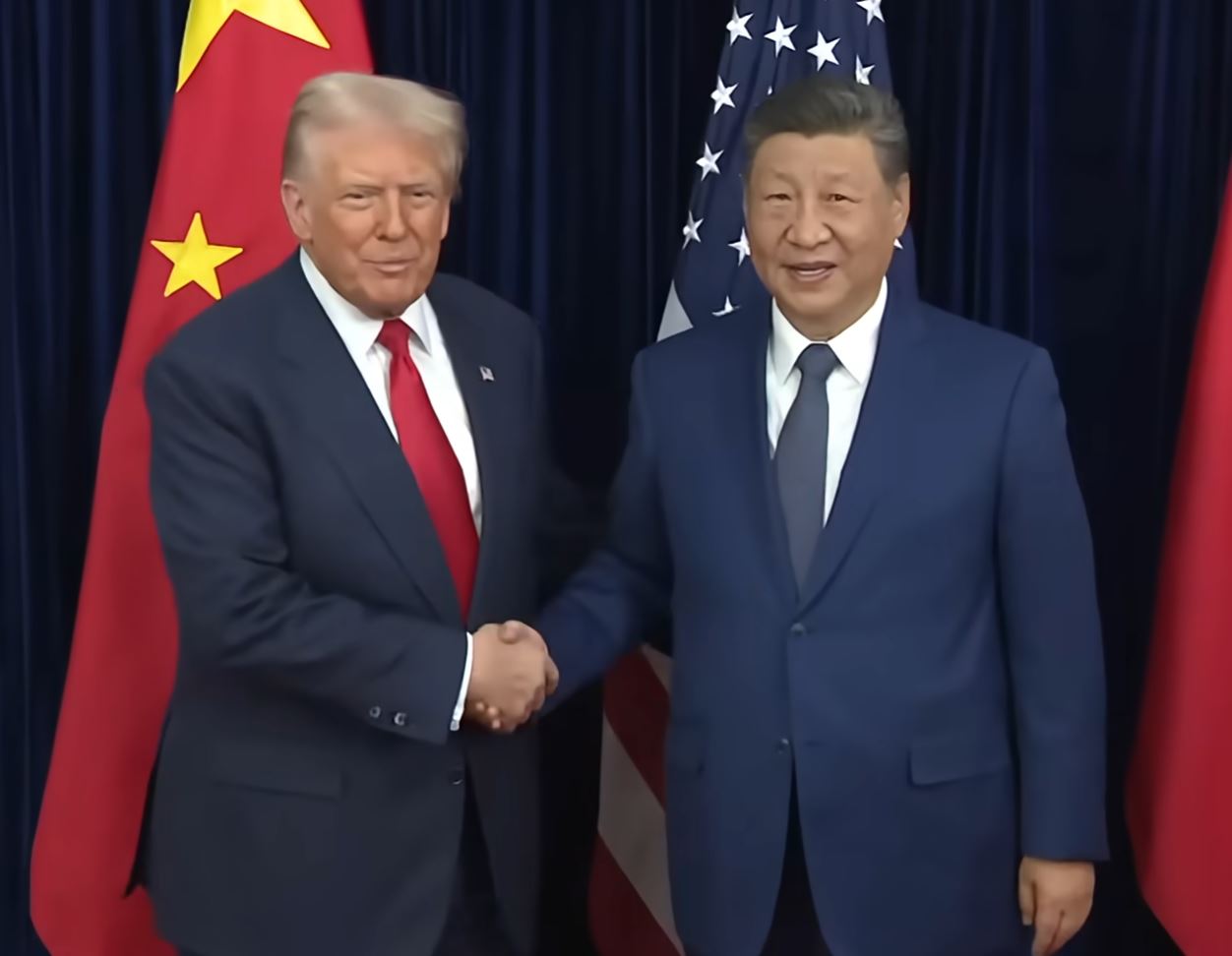
China spent two decades building this leverage. Even if U.S.-China relations thaw after the expected Trump-Xi summit in Korea, the export control regime is institutionalised. For Nordic companies, “behaving nicely” is not a strategy. Resilience is. The firms that survive will be those that treat supply chain design with the same seriousness as product design: dual-sourced, capitalized, and compliant with two conflicting legal systems.
What’s Next & Connect With Us
In our June issue, Nordic Business Journal will publish an investigative follow-up: “The Nordic Recycling Play: Who’s Actually Breaking China’s Grip on Rare Earths?” We’ll profile three Nordic startups scaling magnet recycling and map new EU funding streams available under the Economic Security Doctrine.
Join the conversation: Are export controls affecting your supply chain? Share your experience confidentially at tips@nordicbusinessjournal.com or join our closed-door CEO roundtable in Stockholm on May 14. Subscribe at www.nordicbusinessjournal.com to get early access to our Supply Chain Risk Index, launching next month.