
Sweden’s Gripen Jets Intercept Tu-22M3 Nuclear-Capable Bombers in a Telling Display of Baltic Airspace Tensions
The Incident
In a significant demonstration of both Russian military posturing and Nordic-NATO defensive readiness, two Russian Tupolev Tu-22M3 strategic bombers were intercepted over the Baltic Sea after being detected by Swedish air surveillance systems. The aircraft, capable of carrying nuclear weapons, entered Baltic airspace via the Gulf of Finland — a narrow but strategically critical corridor between Finland and Estonia — before tracking southward past the Swedish island of Gotland, continuing as far south as the latitude of Denmark’s island of Bornholm, and then returning eastward into Russian-controlled airspace.
The Russian bombers did not travel alone. They were accompanied by a rotating escort of multiple fighter aircraft of varying types — a detail that underscores the coordinated and deliberate nature of the mission.
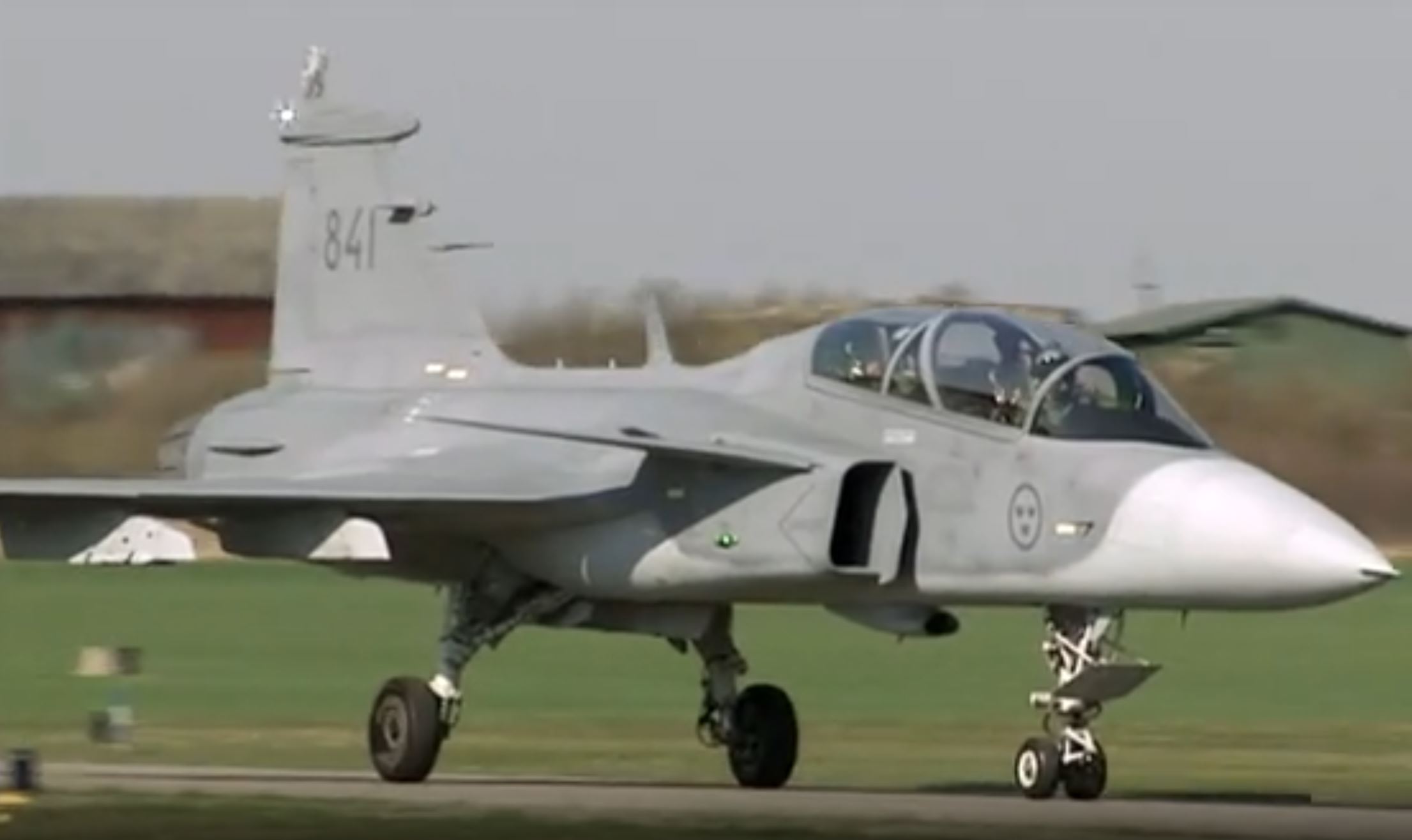
Two JAS 39 Gripen aircraft from Sweden’s standing incident preparedness forces were scrambled to intercept and identify the aircraft. Danish Air Force fighter jets subsequently joined the operation, providing a visible demonstration of allied coordination.
“We identified the planes northeast of Gotland and followed them along the island,” confirmed Lieutenant Colonel Robert Krznaric, Chief of Operations for the Swedish Air Force. “We monitor our immediate area together with our allies and launch for identification and acquisition. We do this continuously against Tu-22M3s and against other aircraft that we find interesting. We are also up to show presence so that no one violates our airspace.”
The Aircraft: What Is the Tu-22M3?
Understanding the significance of this incident requires context around the aircraft involved. The Tupolev Tu-22M3 “Backfire-C” is a Soviet-designed, supersonic, long-range strategic and maritime strike bomber that remains one of Russia’s most consequential aerial assets. Key characteristics include:
– Nuclear capability: The Tu-22M3 can carry nuclear-armed cruise missiles and gravity bombs, making any deployment geopolitically significant.
– Range and payload: With a combat range exceeding 2,400 kilometres and a payload capacity of up to 24,000 kg, the aircraft is designed for both anti-ship and deep-strike land attack missions.
– Active use in Ukraine: Variants of the Tu-22M have been used extensively by Russia to conduct cruise missile strikes against Ukrainian cities and infrastructure, making their presence near Nordic airspace doubly concerning.
– Base of operations: The bombers are frequently linked to the Olenya Air Base on the Kola Peninsula — roughly 400 kilometres from the Swedish border — which gained international attention on July 27, 2024, when Ukrainian drone forces struck the facility in a high-profile operation that demonstrated remarkable reach deep into Russian territory.
According to aviation monitoring website AviVector, the two bombers involved in this specific incident were in the process of repositioning from the Olenya base to the Soltsy Air Base, ostensibly to participate in what was described as a four-hour military exercise. Whether this operational repositioning was the primary motive or a cover for intelligence gathering and signalling remains a subject of analysis.
Pattern of Behaviour: This Is Not Isolated
What makes this incident particularly noteworthy for defence analysts and business leaders alike is not the incident itself, but the pattern it represents. Lieutenant Colonel Krznaric was candid on this point:
“It’s not the first time — they’ve flown in the Baltic Sea before. I can only speculate that it will happen again because they’ve been here before.”
Indeed, a review of recent incidents confirms a deliberate and escalating pattern:
November 2023
Two Tu-22M3 bombers departed from the Olenya base, entered the Baltic via the Gulf of Finland corridor, flew near Gotland, and returned north. The mission exceeded five hours in duration.
Early 2024
A more complex and operationally advanced mission was conducted, again involving heavy bombers transiting through the Gulf of Finland corridor. This time, the operation included in-flight refuelling — a capability that dramatically extends mission range and loiter time — and also lasted approximately five hours. In-flight refuelling capability signals a level of operational preparation that goes well beyond a simple show-of-force exercise.
The Current Incident
The most recent interception follows the same geographic route — the Gulf of Finland corridor, past Gotland, toward Bornholm — but with increased escort complexity and higher international visibility, particularly given Sweden’s now-confirmed NATO membership status.
Sweden’s NATO Integration: A Game Changer for Baltic Security
Perhaps the most strategically significant dimension of this story is what has changed in the broader geopolitical landscape. Sweden formally joined NATO in March 2024, ending over 200 years of military non-alignment. This shift has materially altered the calculus of Baltic airspace security.
Lieutenant Colonel Krznaric acknowledged this directly: “We have a better situational picture today when we are in NATO.”
This is more than a diplomatic platitude. Sweden’s accession to NATO means:
1. Real-time intelligence sharing with all 32 NATO member states, significantly enhancing early warning capability for Russian bomber movements.
2. Integrated air defence architecture, meaning Swedish radar, Gripen intercepts, and Danish Air Force assets now operate as part of a unified NATO air policing framework rather than through bilateral coordination alone.
3. Article 5 deterrence — any violation of Swedish airspace is now, in principle, a violation against all NATO members, raising the political and military cost of Russian miscalculation.
4. Increased allied air policing presence — NATO members regularly contribute aircraft to Baltic Air Policing missions, meaning the days of Sweden operating largely alone in identifying Russian incursions are over.
For Russian military planners, Sweden’s NATO membership fundamentally changes the risk profile of Baltic provocations. The Gulf of Finland corridor — once a relatively exposed passage between two neutral nations — now runs between two NATO members (Finland joined in April 2023, Sweden in March 2024), creating what amounts to a NATO-flanked chokepoint for Russian bomber operations.
Business and Economic Implications: Why This Matters Beyond the Cockpit
For readers of the Nordic Business Journal, the question is not simply one of military hardware and airspace sovereignty. Russian strategic bomber flights along NATO’s northern flank carry direct and indirect implications for business operating environments across the region.
1. Defence Industry Opportunity
Sweden’s Saab AB, the manufacturer of the JAS 39 Gripen, is directly in the spotlight during incidents such as this. The Gripen’s performance in real-world intercept missions serves as live marketing for the platform internationally. Saab is currently marketing the Gripen E/F variant to multiple nations, and every credible interception mission strengthens the case for Nordic-made defence solutions. Watch for increased procurement interest from Baltic states and other NATO partners.
2. Nordic Defence Spending Trajectory
Finland, Sweden, Denmark, and Norway are all either meeting or moving toward exceeding NATO’s 2% GDP defence spending benchmark. This represents a multi-billion-euro structural shift in government expenditure — creating significant opportunities across aerospace, cybersecurity, logistics, intelligence technology, and defence infrastructure contracting.
3. Shipping and Maritime Risk Premiums
The Baltic Sea is one of the world’s busiest maritime trade corridors, handling enormous volumes of Nordic exports, energy transit, and container shipping. Persistent military tension and airspace incidents in the region contribute to elevated risk assessments by insurers and freight operators. Businesses dependent on Baltic Sea logistics should monitor how escalating Russian activity may influence shipping insurance premiums and route planning.
4. Energy Security Linkages
The Olenya Air Base — the frequent departure points for these bomber missions — sits on the Kola Peninsula, a region of extreme strategic importance to Russia’s nuclear deterrent posture and Arctic energy ambitions. Instability signalling from this location has implications for Arctic energy corridor development and the broader Nordic energy security conversation, particularly as liquefied natural gas (LNG) infrastructure in the region continues to expand.
5. Investor Confidence and Nordic Resilience
For international investors, incidents like this serve as data points in broader geopolitical risk modelling. However, the Nordic states have consistently demonstrated institutional resilience, transparent governance, and credible defensive capability — factors that continue to make the region an attractive destination for foreign direct investment despite elevated regional tensions.
Analytical Assessment: What Is Russia Signalling?
At the strategic level, Russia’s recurring use of nuclear-capable Tu-22M3 bombers on long, visible transits through the Baltic corridor serves several messaging objectives simultaneously:
– Normalisation of presence: By repeating the same routes regularly, Russia attempts to condition Baltic states and NATO into accepting Russian strategic aviation as a permanent feature of the airspace environment.
– Testing NATO integration: Each incident is partly a reconnaissance of how rapidly and effectively newly integrated NATO members — particularly Sweden and Finland — coordinate responses.
– Domestic political theatre: High-profile bomber missions are consumed by Russian domestic media as demonstrations of military strength and geopolitical relevance.
– Nuclear signalling: The deliberate use of nuclear-capable platforms, rather than conventional patrol aircraft, carries an implicit message about Russia’s willingness to invoke its nuclear deterrent posture in the context of the ongoing war in Ukraine.
That said, it is important to note that Russian bombers in this incident did not violate Swedish or any NATO member’s airspace. They operated in international airspace, which they are legally entitled to use. The Swedish Air Force’s response — interception, identification, escort, and documentation — was measured and professional, precisely the response that NATO protocols require.
Looking Ahead: The Arctic and Baltic Nexus
As Russia’s conventional military capacity is degraded by ongoing losses in Ukraine, analysts increasingly expect Moscow to lean more heavily on its strategic aviation and nuclear deterrent forces to project power and maintain geopolitical relevance. This makes incidents like the Baltic Tu-22M3 transit not anomalies, but a new baseline for Nordic security planning.
For Nordic governments, businesses, and investors, the message is clear: the era of a stable, low-tension Baltic security environment is over. The institutions, alliances, and industrial capabilities that were once viewed as legacy infrastructure are now front-line assets. Adapting to this reality — commercially, strategically, and politically — is the defining challenge of the decade for Nordic leaders.
Nordic Business Journal is committed to bringing our readers the most relevant geopolitical and defence-related business intelligence affecting the Nordic and Baltic region. This article is part of our ongoing series on Nordic security, NATO integration, and regional economic resilience.
Coming Next in Nordic Business Journal
“The Business of Baltic Defence: Who Wins the Nordic Arms Spending Surge?”
In our next edition, we go deep into the commercial landscape reshaping Nordic defence procurement — from Saab’s Gripen to drone technology startups, cybersecurity firms, and the infrastructure contractors building tomorrow’s NATO northern flank. We examine which companies are positioned to capture value from the region’s historic defence investment cycle and what it means for Nordic capital markets.
Don’t miss it — and connect with us below.
Stay Connected with Nordic Business Journal
– Website: www.nordicbusinessjournal.com
– LinkedIn: Nordic Business Journal — Follow us for daily Nordic market intelligence
– Newsletter: Subscribe to our weekly briefing for executive-level analysis delivered directly to your inbox
– Editorial Enquiries & Contributions: editor@nordicbusinessjournal.com
Nordic Business Journal | Defence & Geopolitical Risk Edition
© Nordic Business Journal. All rights reserved. Reproduction in whole or in part without written permission is prohibited.