
The United States has renewed interest in expanding its military footprint in Greenland, reportedly exploring up to three sites that could host air and naval facilities. Recent visits by US defence personnel to southern Greenland—most notably to Narsarsuaq—have intensified debate in Copenhagen, Nuuk and Reykjavik about the political, economic and commercial ramifications of a deeper American presence in the Arctic.
What we know
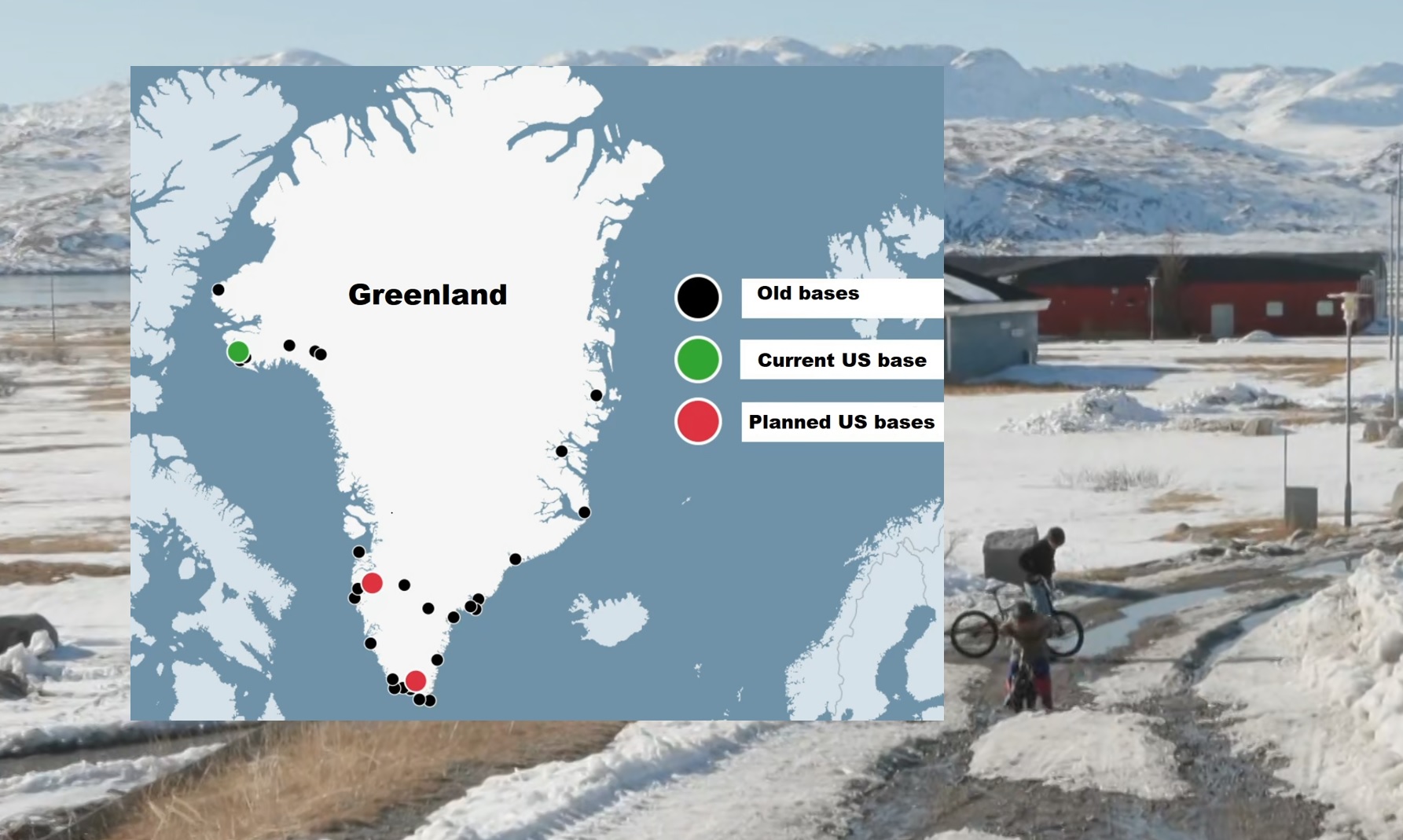
– US officials have inspected facilities in southern Greenland, including the airfield and harbour at Narsarsuaq, historically the Bluie West 1 base during World War II. That site later became a civilian airfield with limited operations and local tourist infrastructure.
– In March, US Northern Command briefed the US Senate that it is evaluating potential airstrips and deep-sea ports in Greenland to improve defensive reach into the Arctic, particularly to support fighter jets, tanker aircraft and maritime operations.
– Reporting by international outlets has identified potential interest in sites such as Kangilussuaq (Kangerlussuaq) and Narsarsuaq; both offer runway capacity and relatively stable southern weather—important factors for fixed-wing operations and logistics.
– The United States currently operates one major military installation in Greenland—Pituffik (Thule) Space Base in the far northwest. Any expansion would require negotiations among Greenland, Denmark and the US under the long-standing defence relationship that binds the Kingdom of Denmark.
Geostrategic drivers
– Great-power competition: Russia’s Arctic military modernization and China’s growing polar ambitions have elevated Greenland’s strategic value for the US and NATO. Forward basing would shorten response times and improve surveillance, logistics and missile-defence options in the North Atlantic and Arctic approaches.
– Climate change and accessibility: As Arctic ice retreat increases seasonal navigability and opens new trans-Arctic routes, control of ports and airfields becomes more consequential for security and commerce.
– Space and satellite infrastructure: Greenland’s high-latitude locations are valuable for missile warning, space surveillance and polar-orbit communications—sectors that blend defence and commercial technology investments.
Economic and business implications for the Nordics
Opportunities
– Infrastructure contracts: runway refurbishment, port upgrades, fuel storage, cold-climate construction and telecommunication backhaul would create opportunities for Nordic engineering and construction firms familiar with Arctic conditions.
– Logistics and services: longer-term basing implies demand for shipping, cold-chain logistics, local supply, catering and facilities management—areas where Danish, Norwegian and Icelandic companies could partner with Greenlandic operators.
– Renewable-energy projects: new bases will increase local energy demand; hybrid microgrids, hydrogen pilot projects and modular wind solutions can reduce fossil-fuel dependence and appeal to governments mindful of environmental obligations.
– Technology and security services: surveillance systems, secure communications, satellite ground-stations and Arctic-optimized maintenance services represent growth areas for Nordic defence-adjacent tech firms.
Risks and constraints
– Political and legal hurdles: Greenland has expanded self-government and wants a greater say in foreign deployments on its soil. Any US basing requires not just Danish approval but meaningful Greenlandic consent; public opinion and Greenland’s economic priorities will shape outcomes.
– Environmental and social concerns: military construction in fragile Arctic ecosystems raises risks—from fuel spills to disruptions of local livelihoods and hunting areas—that could provoke local resistance and reputational costs for contractors.
– Procurement uncertainty: military projects can be long, politically sensitive and prone to delays. Firms should expect protracted negotiations, strict security requirements, and high standards for environmental and social governance (ESG).
– Geopolitical escalation: closer military ties with the US may affect Denmark’s and Greenland’s relations with Russia and other Arctic actors, carrying strategic and trade risks.
Practical guidance for Nordic businesses
– Monitor diplomacy and timelines: developments will unfold through multi-lateral talks; keep close to official channels in Copenhagen and Nuuk and to procurement notices in NATO and US systems.
– Build local partnerships: collaborate with Greenlandic businesses and municipalities to ensure community buy-in and local job-creation commitments—this will improve bids and reduce political friction.
– Prioritise ESG and transparency: rigorous environmental safeguards, community consultation plans and visible benefit-sharing will be decisive selection criteria and mitigate reputational risk.
– Invest in Arctic capabilities: firms with proven cold-weather construction experience, modular logistics, off-grid energy and secure communications will be best positioned to compete.
– Consider dual-use opportunities: projects that combine civilian value (port modernisation, regional air connectivity, renewable energy) with defence needs can attract multi-source funding and reduce political resistance.
Likely scenarios
– Incremental expansion: the most probable near-term path is selective, small-to-medium sized investments—runway hardening, modest port upgrades and pre-positioned logistics—rather than a sudden large-scale basing program. This approach minimises political friction and spreads cost.
– Conditionality and leverage: Greenland is likely to seek economic guarantees and infrastructure upgrades that serve long-term civilian needs—tourism, freight links and power—alongside any defence agreement.
– Multi-year horizon: even if political agreement is reached, planning, environmental review and construction in the Arctic take years. Businesses should prepare for staged opportunities rather than immediate windfalls.
US interest in Greenland is a significant strategic signal that has direct commercial implications for Nordic economies. For companies in construction, energy, logistics and security technology, the potential market is real—but success demands patient engagement with Greenlandic stakeholders, a strong ESG offering and technical readiness for Arctic conditions. Policymakers should balance strategic cooperation with measures that protect local interests and environmental integrity.
What next
Our next piece will drill into concrete business cases: how Nordic firms can structure bids for Arctic infrastructure projects, with a focus on legal pathways, financing models and successful public–private partnership examples. If you’d like that analysis, or want to discuss partnership opportunities and RFP monitoring for Greenlandic contracts, contact the Nordic Business Journal team at editor@nordicbusinessjournal.com and follow us on LinkedIn for updates.