
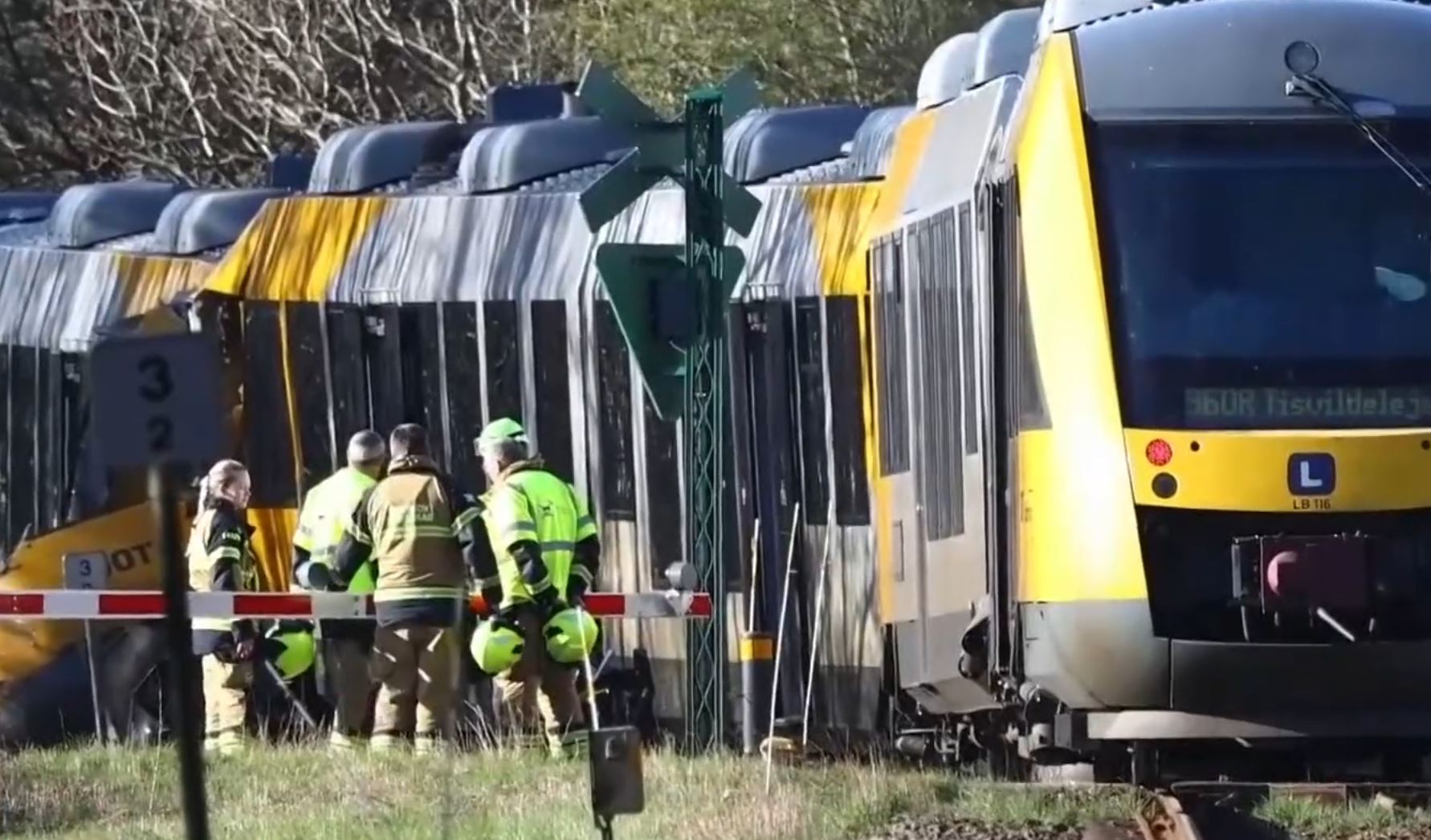
Early on Thursday, 23 April 2026, two local commuter trains collided head‑on on the Gribskov Line between Hillerød and Kagerup, roughly 40 km north of Copenhagen. At least 17 people were injured; four were initially listed in critical condition and were airlifted to Rigshospitalet in Copenhagen. The crash occurred at about 06:30 local time in a wooded, single‑track section of the line.
Initial reporting and technical commentary point to human error — a driver appearing to have passed a stop signal — as the proximate cause. Crucially, the section involved is not fitted with a full automatic train protection system that would have intervened and stopped a train that ran a signal. That combination — single‑track operation, a restrictive timetable in dense commuter periods, and limited automatic safeguards — created the conditions for a classic head‑on collision.
Why this matters to business readers
Denmark’s rail network has long enjoyed a strong safety reputation. Yet this collision is the second significant accident within a year, following the August 2025 derailment near Tinglev — and the recent cluster of incidents has forced a public and political reassessment of how rail safety is financed and managed.
For Nordic businesses and investors these are the practical implications:
Operational risk and service reliability: Accidents that close lines, even temporarily, ripple through regional economies. Commuter disruption reduces productivity; supply chain and last‑mile logistics that rely on intermodal rail connections can be delayed or rerouted at higher cost.
Liability and insurance exposure: Operators and infrastructure managers may face increased claims and regulatory penalties. Insurers will re‑price rail liability and business interruption pools if accident frequency or severity appears to be rising.
Capital allocation and procurement opportunities: A renewed push to install automatic train protection and modern signalling could create demand for signalling systems, onboard equipment retrofits, telecommunications, and software for traffic management.
Workforce and operational costs: If systemic issues include fatigue, rostering or training deficits, operators will need to invest more in staffing and human‑factors programs — a recurring operating cost rather than a one‑off capital expense.
Technical and policy analysis: what the collision reveals
1) Legacy signalling vs. automatic protection
Many European rail networks are moving to European Train Control System (ETCS) — part of ERTMS — to provide continuous, interoperable train protection. Where automatic systems are absent, human overrides, misread signals and procedural lapses remain the last line of defence. The Gribskov collision suggests parts of Denmark’s secondary and local network still rely on less robust protection measures, leaving single‑track sections particularly exposed.
2) Single‑track vulnerability
Single‑track lines economize capital but raise operational complexity. They require precise signalling, dispatching and fail‑safe interlocking to prevent opposing movements. Business cases that favour low‑cost single track must factor in the higher marginal cost of modern signalling or the increased systemic risk.
3) Human factors and organisational culture
Passing a signal at danger is a known accident precursor in rail safety studies globally. Root causes often include fatigue, pressure to keep schedules, ambiguous procedures, or insufficient reinforcement of safety culture. Addressing these requires investment in training, rostering systems that limit fatigue, and an empowered safety management function — not just hardware.
4) Acceleration vs. prioritisation of investments
Installing ETCS or similar systems across a network is capital‑intensive and takes time. Policymakers face tradeoffs: accelerate full‑network upgrades with higher short‑term expenditure, or prioritize high‑risk single‑track and commuter corridors first. This decision will shape procurement cycles and contractor opportunities in the coming years.
Economic trade-offs and a cost‑benefit frame
Upgrading signalling is expensive — but so are accidents. For public finance and corporate boards, the question is not only “how much?” but “how fast?” Presenting the investment decision as strictly a capital expense ignores recurrent costs of accidents (medical, legal, service interruption, reputational loss) and the value of avoided fatalities and serious injuries. A pragmatic, staged approach could prioritise:
– Highest‑risk corridors (dense commuter routes, single‑track bottlenecks).
– Interim low‑cost protections (automatic trip devices, TPWS‑style interventions).
– Parallel investments in dispatch systems, training, and fatigue‑management.
Market opportunities and who stands to gain
Signalling and systems integrators: Suppliers of ETCS, wayside and onboard equipment, and traffic‑management software are the obvious beneficiaries.
Telecom and cyber‑security vendors: Modern signalling relies on robust comms and secure networks, expanding opportunities for private suppliers.
Maintenance and predictive‑analytics providers: Greater sensorisation of track and rolling stock opens markets for condition‑based maintenance providers and AI platforms.
Training, human‑factors and consulting: Programs to modernize rostering, simulation training, and safety management systems will be in demand.
Policy momentum and likely next steps
Expect immediate political pressure for:
– Targeted safety audits of secondary and single‑track lines.
– Temporary operational changes (reduced speeds, stricter dispatch controls) while measures are implemented.
– A public review of the ETCS/ERTMS rollout timeline and possible budget reallocation to accelerate high‑risk deployments.
Longer term, Denmark is likely to formalize a prioritised upgrade plan: focused investment on commuter and freight corridors where capacity constraints and safety risks coincide. The government will also confront a public appetite for quicker results, which may translate into accelerated procurement and greater oversight of operators.
What operators and corporate stakeholders should do now
– Conduct a rapid risk assessment of route networks, identifying single‑track and signal‑limited sections and quantifying passenger and freight exposure.
– Accelerate short‑term mitigations (automatic train stop installations, stricter dispatch protocols, temporary speed limits).
– Review staffing, rostering and training policies to reduce human‑factor risk.
– Engage with suppliers and policymakers to shape the procurement timeline and ensure tenders include options for staged rollout and interoperability.
This tragic collision on the Gribskov Line is a reminder: even in countries with excellent safety records, legacy infrastructure and gaps in automatic protection can create catastrophic risk. For Nordic businesses and policymakers, the collision reframes rail safety as an investment decision with immediate economic, operational and political consequences. The coming months will show whether Denmark treats this as an impetus to accelerate modern signalling, or opts for piecemeal measures that leave systemic vulnerabilities in place.
What we’ll cover next and how to connect
Next in Nordic Business Journal: an in‑depth analysis of ETCS/ERTMS rollout options for Denmark and the Nordic region — cost estimates, financing models, procurement timing, and supplier landscape. We’ll also outline specific investment opportunities for private sector partners.
Connect with us: send tips, data or partnership inquiries to editorial@nordicbusinessjournal.com and follow Nordic Business Journal on LinkedIn for updates. If you represent a supplier, operator or public authority and would like to contribute data or be interviewed for our next piece, please contact the newsroom.